

Supernova Explosions May Have Erased Life on Earth Twice
New Research Supports Supernova Connection
Researchers describe this as “a great illustration of how massive stars can serve as both creators and destroyers of life.” While supernovae can be catastrophic, they also disperse the heavy elements essential for life throughout the cosmos.
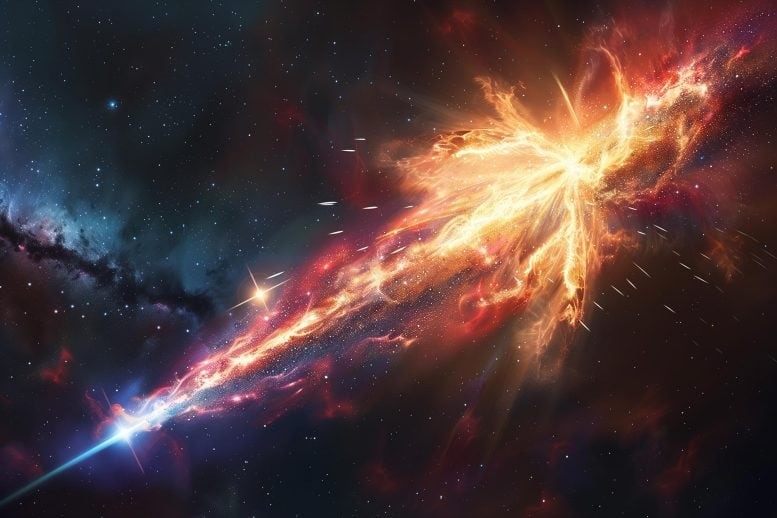
Figure 1. Supernova Explosions Could Have Destroyed Life on Earth Twice.
Supernovae occur when massive stars exhaust their fuel, cool down, and collapse under their own gravitational pressure. These explosions are the most powerful events ever observed by humanity. Figure 1 shows Supernova Explosions Could Have Destroyed Life on Earth Twice.
Mapping Stellar Threats
To reach their conclusions, researchers conducted a comprehensive “census” of massive stars within a kiloparsec—about 3,260 light-years—of the Sun.
By examining the distribution of these massive OB stars, the team aimed to better understand star cluster and galaxy formation, using the Milky Way as a model. Their analysis also helped determine how frequently these stars form across our galaxy.
This stellar survey enabled the scientists to estimate the supernova rate within the galaxy—an important metric not only for studying supernovae and their remnants, like black holes and neutron stars, but also for future advancements in gravitational wave detection, a key tool in exploring the universe’s structure and origins.
As part of their study, the team calculated the supernova rate within 20 parsecs (around 65 light-years) of Earth and compared it with the timing of mass extinction events that may have been triggered by such nearby explosions.
When comparing these data sets, the researchers found strong support for the theory that a supernova explosion was responsible for the late Devonian and Ordovician extinction events—two of the five major mass extinctions in Earth’s history.
“We calculated the supernova rate near Earth and found it to be consistent with the rate of mass extinction events linked to external factors like supernovae,” said Dr. Wright.
Astronomers estimate that one or two supernovae, or perhaps even fewer, occur each century in galaxies like the Milky Way. The good news is that only two stars, Antares and Betelgeuse, are close enough to potentially go supernova within the next million years. Both, however, are more than 500 light-years away, and previous computer simulations suggest that a supernova at this distance would likely have little to no impact on our planet.
What Are Supernovae?
Supernovae are explosive events that occur when massive stars reach the end of their lives. After exhausting their nuclear fuel, these stars collapse under their own gravity and explode in a burst of energy. These explosions are incredibly powerful, often outshining entire galaxies for brief periods and spreading heavy elements necessary for life across the universe.
Mass Extinctions Linked to Supernovae
New research suggests that supernovae may have been responsible for two of Earth’s five major mass extinctions: the Ordovician and late Devonian events. By studying the rate of supernovae in our galaxy, scientists found that supernova activity closely aligns with the timing of these extinction events. This supports the theory that nearby supernova explosions could have caused significant harm to life on Earth.
Mapping Stellar Threats
To understand the connection, researchers mapped the distribution of massive OB stars near the Sun, using this data to estimate the rate of supernovae within the Milky Way. The study revealed that the supernova rate in our region of the galaxy matches the periods of mass extinctions. This mapping also aids in understanding how stars form and how stellar remnants like black holes and neutron stars shape the universe.
The Supernova Rate and Its Impact
The researchers calculated the supernova rate within 65 light-years of Earth and compared it with the timing of mass extinction events. Their findings support the idea that supernovae may have played a key role in wiping out life during specific periods in Earth’s history. While supernovae are relatively rare, their impact can be catastrophic, potentially stripping Earth’s atmosphere and causing widespread destruction.
Future Risks and the Good News
While supernovae continue to occur in galaxies like the Milky Way, the current threat to Earth is low. Only two stars, Antares and Betelgeuse, are considered close enough to potentially go supernova within the next million years. Fortunately, both are more than 500 light-years away, and simulations suggest that their explosions would not significantly affect Earth, providing some reassurance against future supernova threats.
Source: SciTECHDaily
Cite this article:
Priyadharshini S (2025), Supernova Explosions May Have Erased Life on Earth Twice, AnaTechMaz, pp.345
Recent Post
-
Asteroid 2024 YR4 Triggers Global Alert – Now on Course to Possibly Strike the Moon Instead
Astronomers utilized the 2.5-meter Nordic Optical Telescope (NOT) in La Palma, Canary Islands...
-

Two Dying Stars Discovered Only 150 Light Years Away Set to Explode 10 Times Brighter Than the Moon
That's a huge discovery! Type Ia supernovae are critical for measuring cosmic...
-

Magnetic Origins: New Study Unravels Black Hole Mystery
The research team originally set out to model a star’s life cycle—from its formation to its...
-

No Signs, Big Revelations: How Null Results Shape Our Search for Life
According to researchers, surveying between 40 and 80 Earth-like exoplanets and finding no...
-
Celestial Spectacle: Hubble Captures Breathtaking Image of a Dying Star
Planetary nebulae like this one emerge during the closing chapters of a giant star’s life...
-

Starless Galaxies? Scientists Investigate the Universe’s Darkest Halos
Galaxies are believed to form at the centers of dark matter halos—vast regions of...
-

Alien Fermentation on Titan? Tiny Microbes Could Exist in Saturn’s Icy Moon Ocean
Titan, Saturn’s largest moon, is a bizarre and alien world. Its surface is lined with rivers ...
-
Juno’s Near Miss: Jupiter’s Harsh Radiation Forces Spacecraft into Safe Mode
On April 4, NASA’s Juno spacecraft entered safe mode twice during a close flyby of Jupiter...
-

New AI Algorithm Analyzes Neutron Star Collisions 3,600 Times Faster Than Conventional Techniques
Real-time computation is essential because it allows astronomers to respond immediately...
-
New Seismic Study Suggests Possibility of Life Beneath Mars' Surface
SEIS detects seismic waves caused by natural events such as Marsquakes and meteorite impacts...
-

A Star Was Ejected at A Million MPH – Unveiling A Hidden Black Hole
Stellar-mass black holes, such as the famous Cygnus X-1, form when massive stars collapse at...
-

Astrophysicists Reveal Millions of Interstellar Objects May Be Hidden Within Our Solar System
We know from our own solar system that giant planets stir up a bit of chaos in space...
-

Tiny Solar Jet Causes 200,000x Surge in Rare Helium-3, Astonishing Scientists
The NASA/ESA Solar Orbiter has recently detected the highest concentration of the rare helium...
-
Scientists May Have Finally Unlocked A 60-Year-Old Cosmic Mystery
After sixty years of searching, we may have finally uncovered the source of the universe’s most...
-
Supernova Explosions May Have Erased Life on Earth Twice
Researchers describe this as “a great illustration of how massive stars can serve as both...