

Asteroid 2024 YR4 Triggers Global Alert – Now on Course to Possibly Strike the Moon Instead
Tracking from the Canary Islands
Astronomers utilized the 2.5-meter Nordic Optical Telescope (NOT) in La Palma, Canary Islands—an essential instrument long used by Finnish researchers to monitor near-Earth objects—to obtain precise measurements of the asteroid's position and movement.
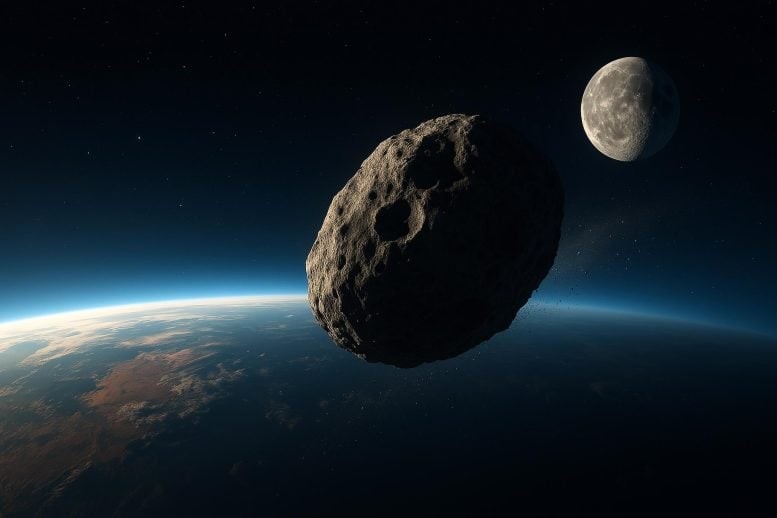
Figure 1. Asteroid 2024 YR4 Sparks Global Concern – Potential Lunar Impact Detected.
“We’ve been concentrating on determining the asteroid’s exact location and motion, along with analyzing its rotation, size, and shape. These details are key to improving our predictions of its future path and refining thelikelihood of any potential impact,” explains Gray. Figure 1 shows Asteroid 2024 YR4 Sparks Global Concern – Potential Lunar Impact Detected.
“Our latest observations highlight the critical role NOT continues to play in global planetary defense efforts,” adds Fedorets.
Lunar Impact Risk Emerges
In mid-February, asteroid 2024 YR4 reached a peak impact probability of 3%—the highest ever recorded for an asteroid of its size capable of posing a serious threat, according to historical impact risk estimates.
Observations were temporarily paused as the brightness of the full moon obscured the asteroid’s faint signal. However, Finnish researchers were the first to resume data collection after the full moon phase. Their updated observations led to a sharp reduction in the asteroid’s impact probability, which now sits at less than 0.001%.
At the same time, new data has revealed a different, albeit smaller, concern: there is now a 4% chance the asteroid could collide with the Moon instead.
“If 2024 YR4 were to strike the Moon, it could release debris from both the lunar surface and the asteroid itself, potentially endangering satellites and other human infrastructure in space,” explains Academy Professor Karri Muinonen.
James Webb Delivers Crucial Infrared Data
On March 26th, the James Webb Space Telescope successfully observed asteroid 2024 YR4, providing essential infrared data. Postdoctoral researcher Eric MacLennan, a key member of the team analyzing the asteroid’s thermal properties, highlighted the telescope’s unique role—currently the only one capable of measuring thermal emission directly.
“The asteroid’s initial size estimate was based solely on visible light, which is influenced by both its dimensions and surface reflectivity. Infrared thermal emission, however, gives us a much clearer measurement of its true size. Our first attempt to detect this on March 8 wasn’t successful, so it was a relief when we finally received usable images,” MacLennan explains.
Following detailed analysis, the team concluded there’s a 95% probability the asteroid’s diameter falls between 46 and 74 meters. This refined measurement is vital for evaluating the potential consequences of a lunar impact.
Although the threat to Earth has significantly diminished, both ground-based and space-based observatories will continue monitoring YR4 through April or May 2025. After that, the asteroid will no longer be visible from Earth until its next close approach in 2028.
Nordic Observatories Prove Invaluable
In February, the Nordic Optical Telescope (NOT) emerged as one of the fastest and most precise contributors of data among global observatories involved in planetary defense—a reflection of the sustained commitment and expertise of its staff, engineers, students, and scientists from the Nordic countries.
Space Situational Awareness Expands
In Finland, the responsibility for assessing the risks posed by near-Earth objects lies with the National Land Survey. This role will soon be shared with the newly forming Space Situational Awareness Center. The center, currently under development, will play a crucial role in monitoring not only asteroid threats but also other space-related hazards, including space weather, orbital debris, and satellite activity.
Source: SciTECHDaily
Cite this article:
Priyadharshini S (2025), Asteroid 2024 YR4 Triggers Global Alert – Now on Course to Possibly Strike the Moon Instead, AnaTechMaz, pp.331
Recent Post
-
Asteroid 2024 YR4 Triggers Global Alert – Now on Course to Possibly Strike the Moon Instead
Astronomers utilized the 2.5-meter Nordic Optical Telescope (NOT) in La Palma, Canary Islands...
-

Two Dying Stars Discovered Only 150 Light Years Away Set to Explode 10 Times Brighter Than the Moon
That's a huge discovery! Type Ia supernovae are critical for measuring cosmic...
-

Magnetic Origins: New Study Unravels Black Hole Mystery
The research team originally set out to model a star’s life cycle—from its formation to its...
-

No Signs, Big Revelations: How Null Results Shape Our Search for Life
According to researchers, surveying between 40 and 80 Earth-like exoplanets and finding no...
-
Celestial Spectacle: Hubble Captures Breathtaking Image of a Dying Star
Planetary nebulae like this one emerge during the closing chapters of a giant star’s life...
-

Starless Galaxies? Scientists Investigate the Universe’s Darkest Halos
Galaxies are believed to form at the centers of dark matter halos—vast regions of...
-

Alien Fermentation on Titan? Tiny Microbes Could Exist in Saturn’s Icy Moon Ocean
Titan, Saturn’s largest moon, is a bizarre and alien world. Its surface is lined with rivers ...
-
Juno’s Near Miss: Jupiter’s Harsh Radiation Forces Spacecraft into Safe Mode
On April 4, NASA’s Juno spacecraft entered safe mode twice during a close flyby of Jupiter...
-

New AI Algorithm Analyzes Neutron Star Collisions 3,600 Times Faster Than Conventional Techniques
Real-time computation is essential because it allows astronomers to respond immediately...
-
New Seismic Study Suggests Possibility of Life Beneath Mars' Surface
SEIS detects seismic waves caused by natural events such as Marsquakes and meteorite impacts...
-

A Star Was Ejected at A Million MPH – Unveiling A Hidden Black Hole
Stellar-mass black holes, such as the famous Cygnus X-1, form when massive stars collapse at...
-

Astrophysicists Reveal Millions of Interstellar Objects May Be Hidden Within Our Solar System
We know from our own solar system that giant planets stir up a bit of chaos in space...
-

Tiny Solar Jet Causes 200,000x Surge in Rare Helium-3, Astonishing Scientists
The NASA/ESA Solar Orbiter has recently detected the highest concentration of the rare helium...
-
Scientists May Have Finally Unlocked A 60-Year-Old Cosmic Mystery
After sixty years of searching, we may have finally uncovered the source of the universe’s most...
-
Supernova Explosions May Have Erased Life on Earth Twice
Researchers describe this as “a great illustration of how massive stars can serve as both...