

New Seismic Study Suggests Possibility of Life Beneath Mars' Surface
Reading the Planet’s Interior
SEIS detects seismic waves caused by natural events such as Marsquakes and meteorite impacts. These waves—classified as P-waves, S-waves, and surface waves—travel through Mars and help scientists map its internal structure. By analyzing how these waves move through the planet’s subsurface layers, researchers can infer the composition and detect potential materials like water.
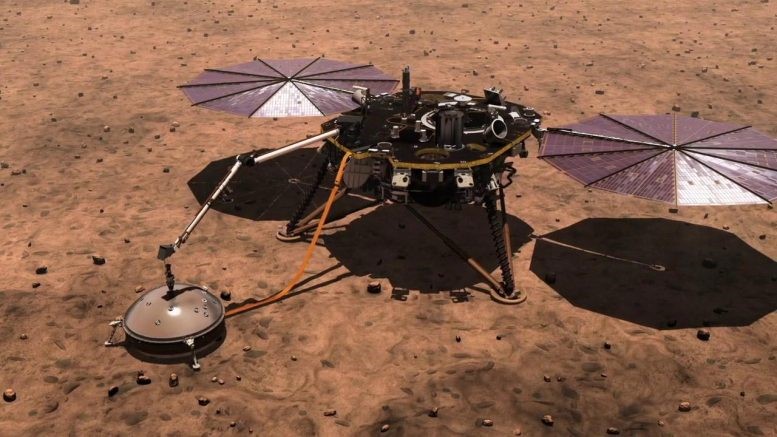
Figure 1. Seismic Study Hints at Potential Life Beneath Mars' Surface.
P-waves and S-waves are especially useful in understanding Mars’ geology. They provide insights into the density and composition of subsurface rocks. For instance, S-waves travel more slowly than P-waves and cannot pass through liquid water, making them a key indicator when searching for underground water reservoirs. Figure 1 shows Seismic Study Hints at Potential Life Beneath Mars' Surface.
The presence, absence, and arrival times of S-waves help reveal the structure of Mars’ subsurface. Additionally, since P-waves travel more quickly through denser materials and more slowly through less dense ones, their velocity can be used to estimate material density and detect changes along their path. SEIS seismic data has identified boundaries at depths of approximately 10 km and 20 km, based on variations in seismic wave speeds.
These boundaries were previously thought to reflect abrupt changes in porosity (the amount of empty space within rocks) or chemical composition. However, researchers Katayama and Akamatsu propose a new interpretation: the seismic discrepancies may indicate the presence of water. According to their study, the data suggests a transition zone between dry and water-filled cracks beneath the Martian surface.
Laboratory Experiments Support the Hypothesis
To test their hypothesis, Katayama and Akamatsu conducted laboratory experiments measuring seismic velocity through rocks similar in composition and structure to typical Martian crustal rocks. They used diabase from Rydaholm, Sweden, known for its evenly sized plagioclase and orthopyroxene grains, which closely resemble Martian rocks.
Using a piezoelectric transducer—an instrument that generates and detects seismic waves through electrical energy—they measured both P-wave and S-wave velocities in dry, wet, and frozen diabase samples. The results showed significant differences in seismic velocity under each condition. These differences support the idea that the seismic boundaries detected at depths of 10 km and 20 km on Mars may be caused by a transition from dry to wet rock, rather than by changes in porosity or chemical composition.
Their findings lend strong support to the hypothesis that liquid water exists beneath the Martian surface today. As Katayama notes, “Many studies suggest the presence of water on ancient Mars billions of years ago, but our model indicates the presence of liquid water on present-day Mars.”
The Mystery Beneath Mars
For years, scientists have wondered whether liquid water—and possibly life—could exist beneath Mars' surface. While surface conditions are too harsh to support life as we know it, seismic data collected by missions like NASA’s InSight have revealed strange boundaries deep underground. These layers could hint at changes in rock type, but a new study suggests something even more exciting: the presence of underground water.
Earth Rocks, Martian Clues
To understand what these Martian seismic layers mean, researchers turned to Earth rocks—specifically, diabase from Rydaholm, Sweden. This rock is chemically and structurally similar to what’s believed to make up Mars' crust. By studying how seismic waves move through dry, wet, and frozen versions of this rock in the lab, scientists hoped to decode the Martian subsurface.
Seismic Sound Waves Tell All
Using piezoelectric transducers (devices that send and receive seismic waves), the team measured P-waves and S-waves—types of energy that travel through rock. The results were clear: wet, dry, and frozen rocks each let waves pass through differently. The velocity of these waves changed significantly depending on the water content in the rock, helping scientists identify what might be happening beneath Mars’ surface.
Water, Not Just Rock
The seismic boundaries found around 10 km and 20 km deep on Mars had puzzled scientists. Thanks to the lab experiments, researchers now believe these aren’t just changes in rock type or porosity—they could signal a transition from dry to wet rock. That means liquid water might still exist below the surface of Mars—protected from the freezing, dry environment above.
What This Means for Life
Water is essential for life as we know it. If Mars has pockets of liquid water underground, it could also host microbial life, much like deep-Earth or deep-ocean life forms here on Earth. As Katayama put it: “Our model indicates the presence of liquid water on present-day Mars.” This seismic discovery is one more step in the search for extraterrestrial life—and possibly, a future destination for exploration missions.
Source: SciTECHDaily
Cite this article:
Priyadharshini S (2025), New Seismic Study Suggests Possibility of Life Beneath Mars' Surface, AnaTechMaz, pp.340
Recent Post
-
Asteroid 2024 YR4 Triggers Global Alert – Now on Course to Possibly Strike the Moon Instead
Astronomers utilized the 2.5-meter Nordic Optical Telescope (NOT) in La Palma, Canary Islands...
-

Two Dying Stars Discovered Only 150 Light Years Away Set to Explode 10 Times Brighter Than the Moon
That's a huge discovery! Type Ia supernovae are critical for measuring cosmic...
-

Magnetic Origins: New Study Unravels Black Hole Mystery
The research team originally set out to model a star’s life cycle—from its formation to its...
-

No Signs, Big Revelations: How Null Results Shape Our Search for Life
According to researchers, surveying between 40 and 80 Earth-like exoplanets and finding no...
-
Celestial Spectacle: Hubble Captures Breathtaking Image of a Dying Star
Planetary nebulae like this one emerge during the closing chapters of a giant star’s life...
-

Starless Galaxies? Scientists Investigate the Universe’s Darkest Halos
Galaxies are believed to form at the centers of dark matter halos—vast regions of...
-

Alien Fermentation on Titan? Tiny Microbes Could Exist in Saturn’s Icy Moon Ocean
Titan, Saturn’s largest moon, is a bizarre and alien world. Its surface is lined with rivers ...
-
Juno’s Near Miss: Jupiter’s Harsh Radiation Forces Spacecraft into Safe Mode
On April 4, NASA’s Juno spacecraft entered safe mode twice during a close flyby of Jupiter...
-

New AI Algorithm Analyzes Neutron Star Collisions 3,600 Times Faster Than Conventional Techniques
Real-time computation is essential because it allows astronomers to respond immediately...
-
New Seismic Study Suggests Possibility of Life Beneath Mars' Surface
SEIS detects seismic waves caused by natural events such as Marsquakes and meteorite impacts...
-

A Star Was Ejected at A Million MPH – Unveiling A Hidden Black Hole
Stellar-mass black holes, such as the famous Cygnus X-1, form when massive stars collapse at...
-

Astrophysicists Reveal Millions of Interstellar Objects May Be Hidden Within Our Solar System
We know from our own solar system that giant planets stir up a bit of chaos in space...
-

Tiny Solar Jet Causes 200,000x Surge in Rare Helium-3, Astonishing Scientists
The NASA/ESA Solar Orbiter has recently detected the highest concentration of the rare helium...
-
Scientists May Have Finally Unlocked A 60-Year-Old Cosmic Mystery
After sixty years of searching, we may have finally uncovered the source of the universe’s most...
-
Supernova Explosions May Have Erased Life on Earth Twice
Researchers describe this as “a great illustration of how massive stars can serve as both...