

New AI Algorithm Analyzes Neutron Star Collisions 3,600 Times Faster Than Conventional Techniques
Real-time computation is essential because it allows astronomers to respond immediately to neutron star mergers, which emit not only gravitational waves but also visible light and other electromagnetic radiation. Swift and precise analysis of gravitational-wave data enables scientists to quickly pinpoint the source, allowing telescopes to be directed toward the event in time to capture these fleeting signals.

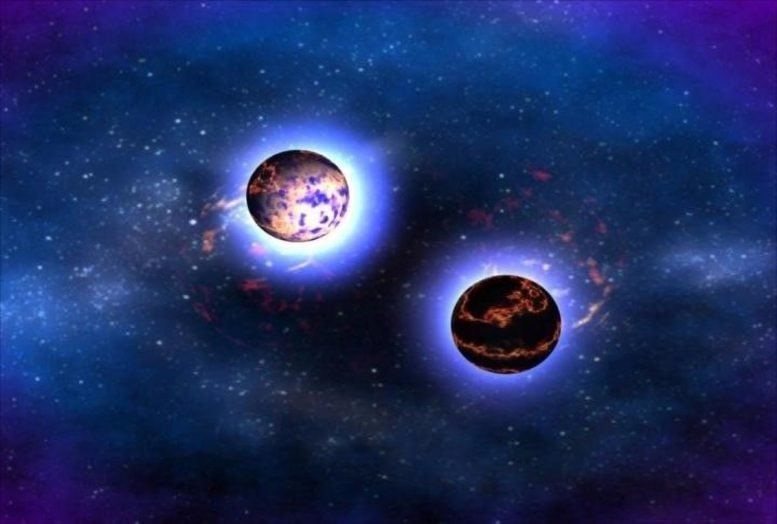
Figure 1. AI Breakthrough Accelerates Neutron Star Collision Analysis by 3,600x
As Maximilian Dax, lead author of the study and a Ph.D. student at the Max Planck Institute for Intelligent Systems, ETH Zurich, and the ELLIS Institute Tübingen, explains: Figure 1 shows AI Breakthrough Accelerates Neutron Star Collision Analysis by 3,600x
“Rapid and accurate analysis of the gravitational-wave data is crucial to localize the source and point telescopes in the right direction as quickly as possible to observe all the accompanying signals.”
This new real-time method could become the benchmark for analyzing neutron star mergers, giving the global astronomy community a crucial time advantage once the LIGO-Virgo-KAGRA (LVK) detectors identify an event.
“Current rapid analysis algorithms used by the LVK make approximations that sacrifice accuracy. Our new study addresses these shortcomings,” explains Jonathan Gair, group leader in the Astrophysical and Cosmological Relativity Department at the Max Planck Institute for Gravitational Physics in the Potsdam Science Park.
In contrast, the new machine learning framework precisely determines key characteristics of the neutron star merger—such as masses, spins, and location—in just one second, without relying on such approximations. This enables a 30% improvement in pinpointing the sky position of the event.
Thanks to its speed and accuracy, the neural network provides essential data that supports coordinated observations between gravitational-wave detectors and electromagnetic telescopes. This enhances the search for visible light and other signals from the merger, ensuring optimal use of valuable telescope time.
Catching a Neutron Star Merger in the Act
“Gravitational wave analysis is particularly challenging for binary neutron stars, so for DINGO-BNS, we had to develop various technical innovations. This includes, for example, a method for event-adaptive data compression,” explains Stephen Green, UKRI Future Leaders Fellow at the University of Nottingham.
Bernhard Schölkopf, Director of the Empirical Inference Department at MPI-IS and at the ELLIS Institute Tübingen, emphasizes the broader impact: “Our study showcases the effectiveness of combining modern machine learning methods with physical domain knowledge.”
DINGO-BNS could ultimately enable the detection of electromagnetic signals before and during the actual collision of neutron stars. “Such early multi-messenger observations could provide new insights into the merger process and the subsequent kilonova, which are still mysterious,” says Alessandra Buonanno, Director of the Astrophysical and Cosmological Relativity Department at the Max Planck Institute for Gravitational Physics.
Source: SciTECHDaily
Cite this article:
Priyadharshini S (2025), New AI Algorithm Analyzes Neutron Star Collisions 3,600 Times Faster Than Conventional Techniques, AnaTechMaz, pp.339
Recent Post
-
Asteroid 2024 YR4 Triggers Global Alert – Now on Course to Possibly Strike the Moon Instead
Astronomers utilized the 2.5-meter Nordic Optical Telescope (NOT) in La Palma, Canary Islands...
-

Two Dying Stars Discovered Only 150 Light Years Away Set to Explode 10 Times Brighter Than the Moon
That's a huge discovery! Type Ia supernovae are critical for measuring cosmic...
-

Magnetic Origins: New Study Unravels Black Hole Mystery
The research team originally set out to model a star’s life cycle—from its formation to its...
-

No Signs, Big Revelations: How Null Results Shape Our Search for Life
According to researchers, surveying between 40 and 80 Earth-like exoplanets and finding no...
-
Celestial Spectacle: Hubble Captures Breathtaking Image of a Dying Star
Planetary nebulae like this one emerge during the closing chapters of a giant star’s life...
-

Starless Galaxies? Scientists Investigate the Universe’s Darkest Halos
Galaxies are believed to form at the centers of dark matter halos—vast regions of...
-

Alien Fermentation on Titan? Tiny Microbes Could Exist in Saturn’s Icy Moon Ocean
Titan, Saturn’s largest moon, is a bizarre and alien world. Its surface is lined with rivers ...
-
Juno’s Near Miss: Jupiter’s Harsh Radiation Forces Spacecraft into Safe Mode
On April 4, NASA’s Juno spacecraft entered safe mode twice during a close flyby of Jupiter...
-
New AI Algorithm Analyzes Neutron Star Collisions 3,600 Times Faster Than Conventional Techniques
Real-time computation is essential because it allows astronomers to respond immediately...
-
New Seismic Study Suggests Possibility of Life Beneath Mars' Surface
SEIS detects seismic waves caused by natural events such as Marsquakes and meteorite impacts...
-

A Star Was Ejected at A Million MPH – Unveiling A Hidden Black Hole
Stellar-mass black holes, such as the famous Cygnus X-1, form when massive stars collapse at...
-

Astrophysicists Reveal Millions of Interstellar Objects May Be Hidden Within Our Solar System
We know from our own solar system that giant planets stir up a bit of chaos in space...
-

Tiny Solar Jet Causes 200,000x Surge in Rare Helium-3, Astonishing Scientists
The NASA/ESA Solar Orbiter has recently detected the highest concentration of the rare helium...
-
Scientists May Have Finally Unlocked A 60-Year-Old Cosmic Mystery
After sixty years of searching, we may have finally uncovered the source of the universe’s most...
-
Supernova Explosions May Have Erased Life on Earth Twice
Researchers describe this as “a great illustration of how massive stars can serve as both...