

Two Dying Stars Discovered Only 150 Light Years Away Set to Explode 10 Times Brighter Than the Moon
Twin White Dwarfs on a Collision Course
That's a huge discovery! Type Ia supernovae are critical for measuring cosmic distances—basically the "standard candles" of the universe—and for a long time, the exact mechanism behind them has been up for debate. This new observation finally gives direct evidence for the double white dwarf scenario, which has been a leading theory but lacked concrete proof until now.

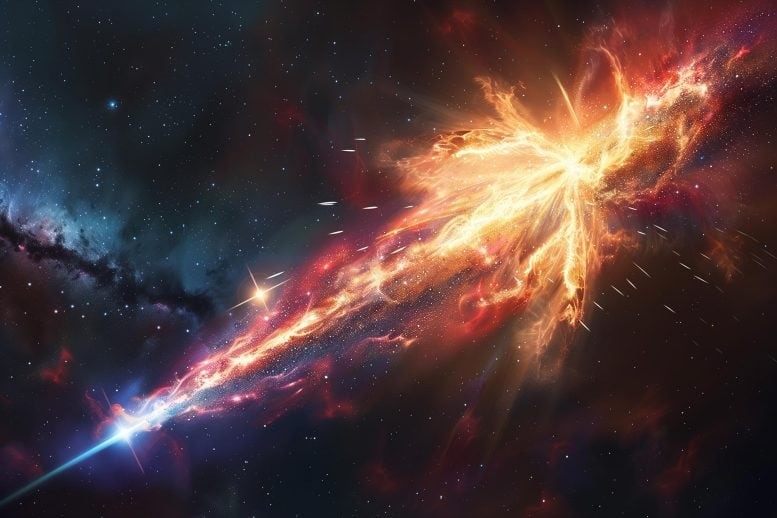
Figure 1. Two Fading Stars Just 150 Light Years Away Will One Day Explode 10x Brighter Than the Moon.
How the Team Tracked It Down
James Munday, a PhD researcher at the University of Warwick and lead investigator of the study, shared his excitement: Figure 1 shows Two Fading Stars Just 150 Light Years Away Will One Day Explode 10x Brighter Than the Moon.
“For years, astronomers have predicted the existence of a nearby, massive double white dwarf system.
So, when I first identified a system with such a high combined mass so close to home, I was immediately thrilled.”
He continued, “Working with an international team—including four researchers from Warwick—we quickly secured time on some of the world’s largest optical telescopes to precisely measure how tightly packed the system was.”
“When we discovered the two white dwarfs were orbiting just 1/60th the distance between Earth and the Sun, it became clear we had found the first known binary of this kind that is guaranteed to produce a type Ia supernova within a timescale comparable to the age of the universe.”
“Finally, we as a scientific community can confidently attribute a few percent of the Milky Way’s type Ia supernova rate to systems like this one.”
Guaranteed to Explode
Remarkably, the system identified by James is the most massive of its kind ever confirmed, with a combined weight of 1.56 times the mass of our Sun. At this threshold, an explosion is inevitable—the two stars are destined to go supernova, no matter what.
The good news? The detonation won’t happen for another 23 billion years. And even though the system lies relatively close to our solar system, the eventual supernova poses no threat to Earth.
Countdown to Cataclysm
Currently, the white dwarfs are slowly orbiting each other in a dance that takes over 14 hours to complete. But over the course of billions of years, gravitational wave emission will gradually shrink their orbit. When they finally reach the critical moment before explosion, they’ll be hurtling around one another so rapidly that a full orbit will take just 30 to 40 seconds.
Dr. Ingrid Pelisoli, Assistant Professor at the University of Warwick and third author on the paper, emphasized the importance of the find: “This is a truly significant discovery. Uncovering such a system so close to us suggests these kinds of binaries may be fairly common. If they weren’t, we would’ve had to search much farther afield—across a much larger region of our galaxy—to find one.”
A Rare Quadruple Detonation
In this extraordinary system, the eventual supernova will unfold in a rare and complex chain reaction known as a quadruple detonation. As one white dwarf pulls in material from its companion, the buildup on its surface will ignite first. This surface explosion will then trigger a second, deeper blast in the star's core. The resulting shockwave will hurl matter outward, striking the second white dwarf and initiating the same two-step detonation sequence—bringing the total to four explosive events.
The sheer power of this cosmic finale will be staggering—obliterating both stars entirely in an eruption a thousand trillion trillion times more energetic than the largest nuclear explosion ever produced.
A Brilliant Finale
Billions of years from now, when this spectacular supernova finally erupts, it will light up the night sky as an incredibly bright point of light. It will outshine nearly everything else visible from Earth—up to ten times brighter than the full moon and a staggering 200,000 times more luminous than Jupiter.
Source: SciTECHDaily
Cite this article:
Priyadharshini S (2025), Two Dying Stars Discovered Only 150 Light Years Away Set to Explode 10 Times Brighter Than the Moon, AnaTechMaz, pp.332
Recent Post
-
Asteroid 2024 YR4 Triggers Global Alert – Now on Course to Possibly Strike the Moon Instead
Astronomers utilized the 2.5-meter Nordic Optical Telescope (NOT) in La Palma, Canary Islands...
-
Two Dying Stars Discovered Only 150 Light Years Away Set to Explode 10 Times Brighter Than the Moon
That's a huge discovery! Type Ia supernovae are critical for measuring cosmic...
-

Magnetic Origins: New Study Unravels Black Hole Mystery
The research team originally set out to model a star’s life cycle—from its formation to its...
-

No Signs, Big Revelations: How Null Results Shape Our Search for Life
According to researchers, surveying between 40 and 80 Earth-like exoplanets and finding no...
-
Celestial Spectacle: Hubble Captures Breathtaking Image of a Dying Star
Planetary nebulae like this one emerge during the closing chapters of a giant star’s life...
-

Starless Galaxies? Scientists Investigate the Universe’s Darkest Halos
Galaxies are believed to form at the centers of dark matter halos—vast regions of...
-

Alien Fermentation on Titan? Tiny Microbes Could Exist in Saturn’s Icy Moon Ocean
Titan, Saturn’s largest moon, is a bizarre and alien world. Its surface is lined with rivers ...
-
Juno’s Near Miss: Jupiter’s Harsh Radiation Forces Spacecraft into Safe Mode
On April 4, NASA’s Juno spacecraft entered safe mode twice during a close flyby of Jupiter...
-

New AI Algorithm Analyzes Neutron Star Collisions 3,600 Times Faster Than Conventional Techniques
Real-time computation is essential because it allows astronomers to respond immediately...
-

New Seismic Study Suggests Possibility of Life Beneath Mars' Surface
SEIS detects seismic waves caused by natural events such as Marsquakes and meteorite impacts...
-

A Star Was Ejected at A Million MPH – Unveiling A Hidden Black Hole
Stellar-mass black holes, such as the famous Cygnus X-1, form when massive stars collapse at...
-

Astrophysicists Reveal Millions of Interstellar Objects May Be Hidden Within Our Solar System
We know from our own solar system that giant planets stir up a bit of chaos in space...
-

Tiny Solar Jet Causes 200,000x Surge in Rare Helium-3, Astonishing Scientists
The NASA/ESA Solar Orbiter has recently detected the highest concentration of the rare helium...
-
Scientists May Have Finally Unlocked A 60-Year-Old Cosmic Mystery
After sixty years of searching, we may have finally uncovered the source of the universe’s most...
-
Supernova Explosions May Have Erased Life on Earth Twice
Researchers describe this as “a great illustration of how massive stars can serve as both...