

Scientists May Have Finally Unlocked A 60-Year-Old Cosmic Mystery
A Breakthrough Theory
“After sixty years of searching, we may have finally uncovered the source of the universe’s most energetic particles,” says Farrar, Collegiate Professor of Physics and Julius Silver, Rosalind S. Silver, and Enid Silver Winslow Professor at NYU. “This discovery offers a powerful new way to study the universe’s most extreme events—like the collision of neutron stars that form black holes and create rare elements such as gold, platinum, uranium, iodine, and xenon.”
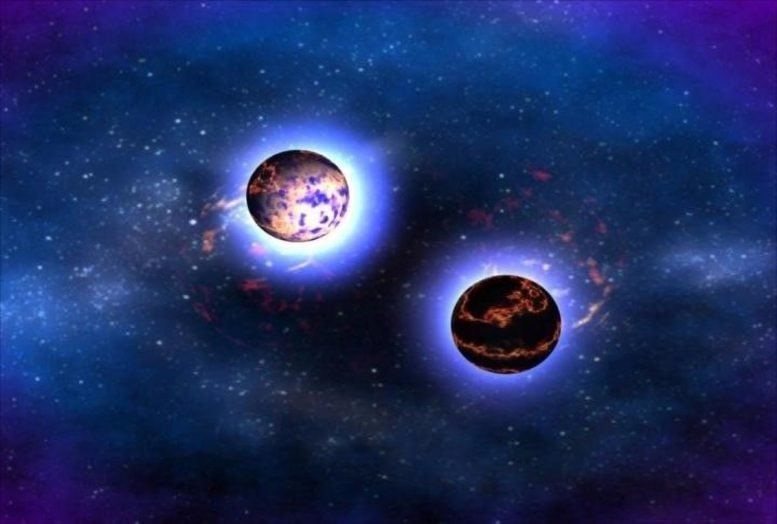
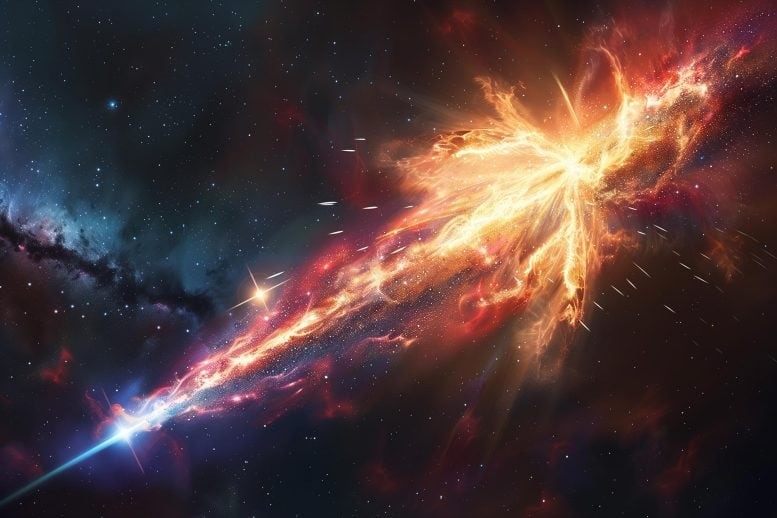
Figure 1. Cosmic Breakthrough: Solving a 60-Year-Old Space Mystery.
A Breakthrough Theory
“After six decades of investigation, scientists may have finally pinpointed the origin of the universe’s most energetic particles,” says Farrar, Collegiate Professor of Physics and Julius Silver, Rosalind S. Silver, and Enid Silver Winslow Professor at NYU. “This revelation opens a new window into understanding the universe’s most violent phenomena—such as neutron star collisions that give birth to black holes and forge precious elements like gold, platinum, uranium, iodine, and xenon.” Figure 1 shows Cosmic Breakthrough: Solving a 60-Year-Old Space Mystery
The headline "Scientists May Have Finally Unlocked a 60-Year-Old Cosmic Mystery" refers to a major scientific breakthrough in understanding the origin of ultra-high-energy cosmic rays—the most energetic particles in the universe. For over six decades, scientists have detected these particles crashing into Earth's atmosphere at nearly the speed of light, but no one could say for sure where they came from or how they were created.
Now, researchers, including physicist Angela Olinto and her team, have found strong evidence suggesting that these mysterious particles originate from cataclysmic cosmic events, particularly the merging of neutron stars—extremely dense remnants of supernova explosions. When two neutron stars collide and form a black hole, they release massive amounts of energy and create rare elements like gold, platinum, and uranium.
This discovery not only helps explain the source of these particles but also provides new insight into how the universe produces some of its most precious and exotic elements, offering a deeper understanding of both high-energy astrophysics and the evolution of matter in the cosmos.
The Mystery of Ultra-High-Energy Cosmic Rays
For over 60 years, scientists have been puzzled by cosmic rays—high-energy particles from space that strike Earth's atmosphere with incredible force. Some of these rays carry so much energy that they defy explanation under known physics. Where do they come from? How are they accelerated to such extreme speeds? These questions have remained unsolved… until now.
Chasing Clues Across the Cosmos
Researchers around the world have built giant detectors, like the Pierre Auger Observatory in Argentina, to capture cosmic rays and trace their origins. Despite years of data, the source remained elusive. Scientists theorized they might come from exploding stars (supernovae), black holes, or even unknown sources outside our galaxy—but no single explanation fit all the evidence.
A Breakthrough in Astrophysics
Enter the new theory: scientists now believe the collision of two neutron stars—ultra-dense remnants of massive stars—could be the engine behind these powerful cosmic rays. When they merge, the resulting explosion releases immense energy and forms a black hole. This violent process seems capable of accelerating particles to the ultra-high energies we've observed.
Forging the Universe’s Rarest Elements
These same neutron star mergers are not just particle accelerators—they’re also cosmic forges. The intense pressure and energy created during the collision produce rare elements like gold, platinum, uranium, iodine, and xenon. In other words, some of the most precious materials on Earth may have been born in these distant, explosive events.
A New Era of Cosmic Understanding
This discovery is more than just solving a mystery—it’s a new tool for understanding the universe. By studying these extreme events, scientists can learn more about how galaxies evolve, how matter is formed, and what lies beyond the visible universe. After 60 years of questions, we’re finally getting some answers—and they’re reshaping our view of the cosmos.
Source: SciTECHDaily
Cite this article:
Priyadharshini S (2025), Scientists May Have Finally Unlocked A 60-Year-Old Cosmic Mystery, AnaTechMaz, pp.344
Recent Post
-
Asteroid 2024 YR4 Triggers Global Alert – Now on Course to Possibly Strike the Moon Instead
Astronomers utilized the 2.5-meter Nordic Optical Telescope (NOT) in La Palma, Canary Islands...
-

Two Dying Stars Discovered Only 150 Light Years Away Set to Explode 10 Times Brighter Than the Moon
That's a huge discovery! Type Ia supernovae are critical for measuring cosmic...
-

Magnetic Origins: New Study Unravels Black Hole Mystery
The research team originally set out to model a star’s life cycle—from its formation to its...
-

No Signs, Big Revelations: How Null Results Shape Our Search for Life
According to researchers, surveying between 40 and 80 Earth-like exoplanets and finding no...
-
Celestial Spectacle: Hubble Captures Breathtaking Image of a Dying Star
Planetary nebulae like this one emerge during the closing chapters of a giant star’s life...
-

Starless Galaxies? Scientists Investigate the Universe’s Darkest Halos
Galaxies are believed to form at the centers of dark matter halos—vast regions of...
-

Alien Fermentation on Titan? Tiny Microbes Could Exist in Saturn’s Icy Moon Ocean
Titan, Saturn’s largest moon, is a bizarre and alien world. Its surface is lined with rivers ...
-
Juno’s Near Miss: Jupiter’s Harsh Radiation Forces Spacecraft into Safe Mode
On April 4, NASA’s Juno spacecraft entered safe mode twice during a close flyby of Jupiter...
-

New AI Algorithm Analyzes Neutron Star Collisions 3,600 Times Faster Than Conventional Techniques
Real-time computation is essential because it allows astronomers to respond immediately...
-

New Seismic Study Suggests Possibility of Life Beneath Mars' Surface
SEIS detects seismic waves caused by natural events such as Marsquakes and meteorite impacts...
-

A Star Was Ejected at A Million MPH – Unveiling A Hidden Black Hole
Stellar-mass black holes, such as the famous Cygnus X-1, form when massive stars collapse at...
-

Astrophysicists Reveal Millions of Interstellar Objects May Be Hidden Within Our Solar System
We know from our own solar system that giant planets stir up a bit of chaos in space...
-

Tiny Solar Jet Causes 200,000x Surge in Rare Helium-3, Astonishing Scientists
The NASA/ESA Solar Orbiter has recently detected the highest concentration of the rare helium...
-
Scientists May Have Finally Unlocked A 60-Year-Old Cosmic Mystery
After sixty years of searching, we may have finally uncovered the source of the universe’s most...
-
Supernova Explosions May Have Erased Life on Earth Twice
Researchers describe this as “a great illustration of how massive stars can serve as both...