

Starless Galaxies? Scientists Investigate the Universe’s Darkest Halos
Galaxies and the Mystery of Dark Matter Halos
Galaxies are believed to form at the centers of dark matter halos—vast regions of gravitationally bound matter that stretch well beyond a galaxy’s visible edge. Within these halos, gravity pulls in gas, leading to the birth of stars. However, astrophysicists are still uncertain whether dark matter halos can exist without forming any stars at all.

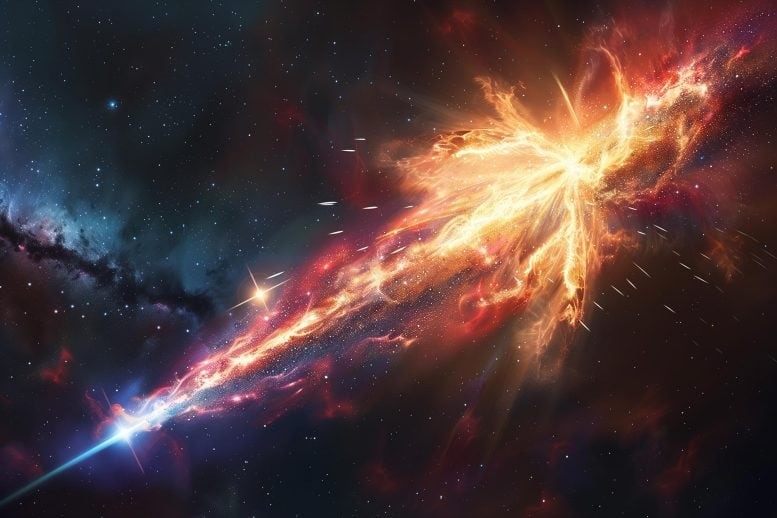
Figure 1. Inside the Universe’s Darkest Galaxies.
Ethan Nadler, a computational astrophysicist at UC San Diego, has taken a major step toward answering this question. By combining analytic predictions from galaxy formation theory with large-scale cosmological simulations, he has calculated the minimum mass a halo must have to successfully form stars. Figure 1 shows Inside the Universe’s Darkest Galaxies.
Why Finding Dark Halos Could Change Everything
“Historically, our understanding of dark matter has been tied to how it behaves in galaxies. Detecting completely dark halos would open a new window into studying the universe,” explained Nadler.
For years, scientists believed that the threshold for star formation in dark matter halos was between 100 million and 1 billion solar masses, limited by the cooling of atomic hydrogen gas. However, Nadler’s research reveals that star formation may begin in halos as small as 10 million solar masses, thanks to the cooling effects of molecular hydrogen. This breakthrough significantly lowers the mass scale at which galaxies might begin to form—and raises the possibility that many more dark, starless halos are out there, waiting to be discovered.
Upcoming Observations May Confirm Dark Halos
With the Vera C. Rubin Observatory set to begin operations later this year and the James Webb Space Telescope (JWST) already delivering groundbreaking observations, a wave of new data is on the horizon. These cutting-edge tools will allow scientists to test predictions about dark matter halos and potentially confirm the existence of completely dark, star-free halos. Such a discovery could have profound implications for our understanding of cosmology and the fundamental nature of dark matter.
What Are Dark Matter Halos?
Introduce the concept of dark matter halos—what they are, how they surround galaxies, and why they're crucial to galaxy formation.
Explain that although we can't see dark matter directly, its gravitational effects are essential in shaping the cosmos.Set up the mystery: can some of these halos exist without forming stars?
How Stars Form Inside Halos
Explore the process of star formation within dark matter halos. Discuss how gravity pulls gas into the halo’s center, cooling mechanisms (like atomic and molecular hydrogen), and the mass thresholds traditionally believed necessary to trigger star formation.
Highlight past assumptions that halos need to be quite massive—100 million to 1 billion solar masses—for stars to ignite.
The Breakthrough – Smaller Halos May Still Spark Stars
Explain how combining galaxy formation theory with cosmological simulations revealed that even halos with just 10 million solar masses might form stars—thanks to the cooling power of molecular hydrogen.
The Hunt for Dark Halos
Delve into the observational challenge: how do you find something that emits no light?
Introduce the upcoming Vera C. Rubin Observatory and current observations from JWST.
Explain how gravitational lensing, satellite galaxies, or missing-light signals might help detect these dark halos.
Why Dark Halos Matter for the Universe
Wrap up with the big picture: how confirming dark, starless halos could change our understanding of the early universe, galaxy formation, and the true nature of dark matter.Speculate on the implications for cosmological models and the structure of the cosmos itself.
Source: SciTECHDaily
Cite this article:
Priyadharshini S (2025), Starless Galaxies? Scientists Investigate the Universe’s Darkest Halos, AnaTechMaz, pp.336
Recent Post
-
Asteroid 2024 YR4 Triggers Global Alert – Now on Course to Possibly Strike the Moon Instead
Astronomers utilized the 2.5-meter Nordic Optical Telescope (NOT) in La Palma, Canary Islands...
-

Two Dying Stars Discovered Only 150 Light Years Away Set to Explode 10 Times Brighter Than the Moon
That's a huge discovery! Type Ia supernovae are critical for measuring cosmic...
-

Magnetic Origins: New Study Unravels Black Hole Mystery
The research team originally set out to model a star’s life cycle—from its formation to its...
-

No Signs, Big Revelations: How Null Results Shape Our Search for Life
According to researchers, surveying between 40 and 80 Earth-like exoplanets and finding no...
-
Celestial Spectacle: Hubble Captures Breathtaking Image of a Dying Star
Planetary nebulae like this one emerge during the closing chapters of a giant star’s life...
-
Starless Galaxies? Scientists Investigate the Universe’s Darkest Halos
Galaxies are believed to form at the centers of dark matter halos—vast regions of...
-

Alien Fermentation on Titan? Tiny Microbes Could Exist in Saturn’s Icy Moon Ocean
Titan, Saturn’s largest moon, is a bizarre and alien world. Its surface is lined with rivers ...
-
Juno’s Near Miss: Jupiter’s Harsh Radiation Forces Spacecraft into Safe Mode
On April 4, NASA’s Juno spacecraft entered safe mode twice during a close flyby of Jupiter...
-

New AI Algorithm Analyzes Neutron Star Collisions 3,600 Times Faster Than Conventional Techniques
Real-time computation is essential because it allows astronomers to respond immediately...
-

New Seismic Study Suggests Possibility of Life Beneath Mars' Surface
SEIS detects seismic waves caused by natural events such as Marsquakes and meteorite impacts...
-

A Star Was Ejected at A Million MPH – Unveiling A Hidden Black Hole
Stellar-mass black holes, such as the famous Cygnus X-1, form when massive stars collapse at...
-

Astrophysicists Reveal Millions of Interstellar Objects May Be Hidden Within Our Solar System
We know from our own solar system that giant planets stir up a bit of chaos in space...
-

Tiny Solar Jet Causes 200,000x Surge in Rare Helium-3, Astonishing Scientists
The NASA/ESA Solar Orbiter has recently detected the highest concentration of the rare helium...
-
Scientists May Have Finally Unlocked A 60-Year-Old Cosmic Mystery
After sixty years of searching, we may have finally uncovered the source of the universe’s most...
-
Supernova Explosions May Have Erased Life on Earth Twice
Researchers describe this as “a great illustration of how massive stars can serve as both...