

Tiny Solar Jet Causes 200,000x Surge in Rare Helium-3, Astonishing Scientists
Solar Orbiter Records Unprecedented Helium-3 Levels
The NASA/ESA Solar Orbiter has recently detected the highest concentration of the rare helium isotope, helium-3 (3He), ever recorded from the Sun. To understand the origin of this remarkable discovery, a team of scientists from the Southwest Research Institute (SwRI) investigated how these particles are accelerated and released into space.

Figure 1. Tiny Solar Jet Triggers 200,000x Surge in Rare Helium-3, Astonishing Scientists.
Solar energetic particles (SEPs), including high-energy protons, electrons, and heavier ions, are typically produced during solar flares and coronal mass ejections, traveling throughout the solar system.
Dr. Radoslav Bucik, lead author of a study on this event at SwRI, explained, “This rare isotope, which differs from the more common 4He by just one neutron, is extremely scarce in the solar system — occurring at a ratio of about one 3He ion per 2,500 4He ions. However, solar jets seem to favorably accelerate 3He to high energies, likely due to its unique charge-to-mass ratio.” Figure 1 shows Tiny Solar Jet Triggers 200,000x Surge in Rare Helium-3, Astonishing Scientists.
Unmatched Enrichment and Acceleration
Dr. Bucik noted that while the exact mechanism behind this acceleration is still unclear, it can typically increase the abundance of 3He by up to 10,000 times its usual concentration in the Sun’s atmosphere — a phenomenon unseen in any other known astrophysical context. Remarkably, Solar Orbiter observed a 200,000-fold enhancement of 3He in this instance. Along with this extraordinary abundance, the 3He was also accelerated to much higher speeds than heavier elements.
Tracing the Origin to a Small Solar Jet
The SwRI team was able to trace the source of the 3He emissions. NASA’s Solar Dynamics Observatory (SDO) provided high-resolution images of a tiny solar jet located at the edge of a coronal hole — a region where magnetic field lines extend into interplanetary space. Despite its small size, the jet was definitively linked to the solar energetic particle (SEP) event, according to Dr. Bucik.
“Interestingly, the magnetic field strength in this region was weak, more typical of quiet solar areas than active regions,” he explained. “This discovery supports previous theories suggesting that 3He enrichment is more likely to occur in weakly magnetized plasma, where turbulence is minimal.”
An Unusual Pattern of Ion Abundance
This event also stands out as one of the rare instances where ion enhancements deviate from the usual pattern. Typically, such events show a greater abundance of heavy ions like iron. However, in this case, iron levels remained unchanged. Instead, carbon, nitrogen, silicon, and sulfur were found to be significantly more abundant than anticipated. Over the past 25 years, scientists have observed only 19 similar events, underscoring the rarity and perplexing nature of this phenomenon.
The Importance of Close-Orbit Missions
Although the Parker Solar Probe was positioned favorably, it was too far from the Sun to detect the event, according to Dr. Bucik. This underscores the significance of spacecraft operating closer to the Sun. These missions are crucial for detecting more of these small, fascinating events, providing valuable insights into the acceleration mechanisms of the least understood energetic particle population in our solar system.
Source: SciTECHDaily
Cite this article:
Priyadharshini S (2025), Tiny Solar Jet Causes 200,000x Surge in Rare Helium-3, Astonishing Scientists, AnaTechMaz, pp.343
Recent Post
-
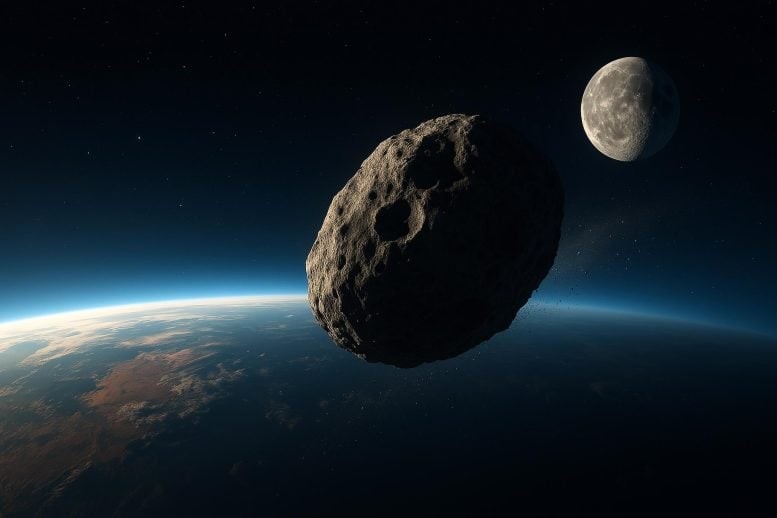
Asteroid 2024 YR4 Triggers Global Alert – Now on Course to Possibly Strike the Moon Instead
Astronomers utilized the 2.5-meter Nordic Optical Telescope (NOT) in La Palma, Canary Islands...
-

Two Dying Stars Discovered Only 150 Light Years Away Set to Explode 10 Times Brighter Than the Moon
That's a huge discovery! Type Ia supernovae are critical for measuring cosmic...
-

Magnetic Origins: New Study Unravels Black Hole Mystery
The research team originally set out to model a star’s life cycle—from its formation to its...
-

No Signs, Big Revelations: How Null Results Shape Our Search for Life
According to researchers, surveying between 40 and 80 Earth-like exoplanets and finding no...
-
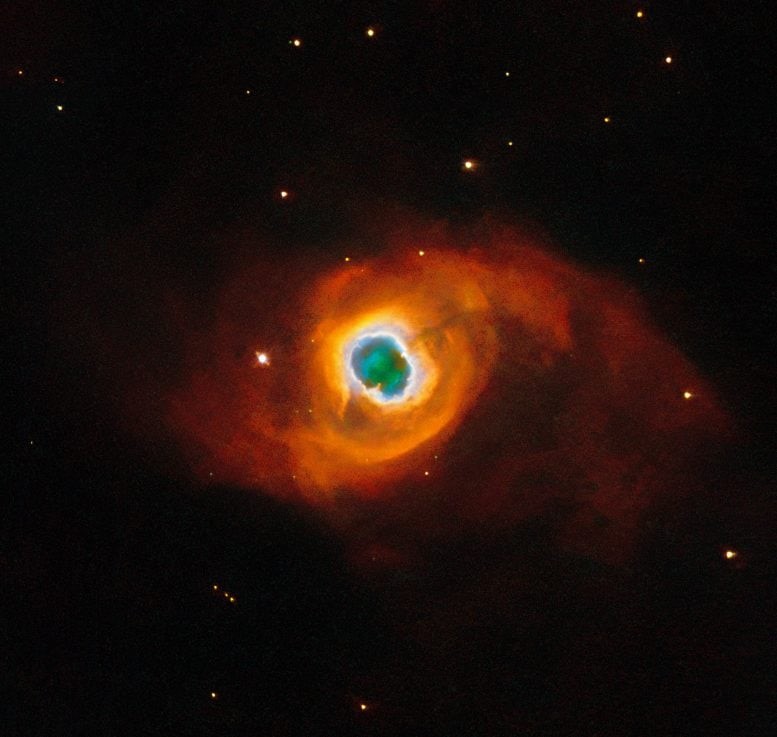
Celestial Spectacle: Hubble Captures Breathtaking Image of a Dying Star
Planetary nebulae like this one emerge during the closing chapters of a giant star’s life...
-

Starless Galaxies? Scientists Investigate the Universe’s Darkest Halos
Galaxies are believed to form at the centers of dark matter halos—vast regions of...
-

Alien Fermentation on Titan? Tiny Microbes Could Exist in Saturn’s Icy Moon Ocean
Titan, Saturn’s largest moon, is a bizarre and alien world. Its surface is lined with rivers ...
-
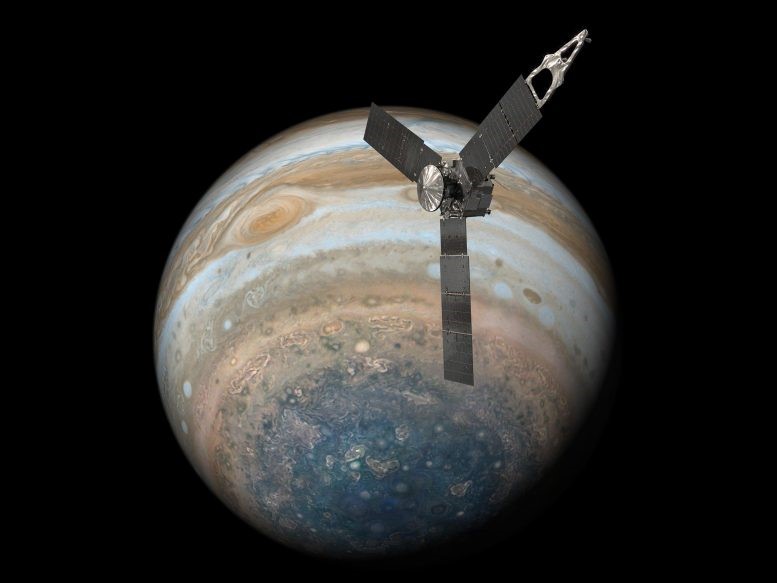
Juno’s Near Miss: Jupiter’s Harsh Radiation Forces Spacecraft into Safe Mode
On April 4, NASA’s Juno spacecraft entered safe mode twice during a close flyby of Jupiter...
-

New AI Algorithm Analyzes Neutron Star Collisions 3,600 Times Faster Than Conventional Techniques
Real-time computation is essential because it allows astronomers to respond immediately...
-
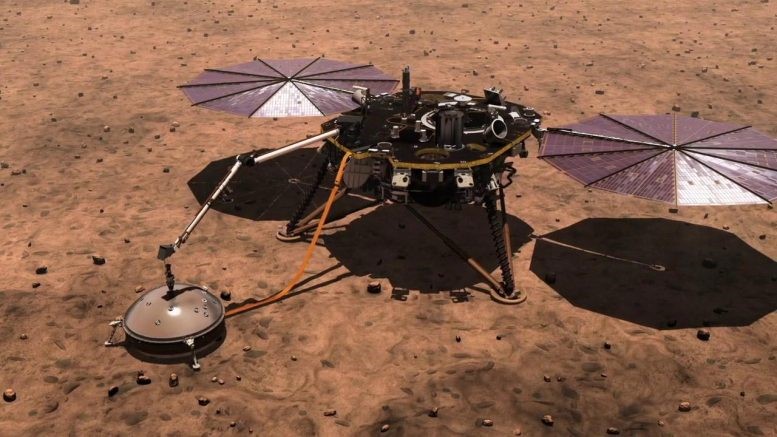
New Seismic Study Suggests Possibility of Life Beneath Mars' Surface
SEIS detects seismic waves caused by natural events such as Marsquakes and meteorite impacts...
-

A Star Was Ejected at A Million MPH – Unveiling A Hidden Black Hole
Stellar-mass black holes, such as the famous Cygnus X-1, form when massive stars collapse at...
-

Astrophysicists Reveal Millions of Interstellar Objects May Be Hidden Within Our Solar System
We know from our own solar system that giant planets stir up a bit of chaos in space...
-
Tiny Solar Jet Causes 200,000x Surge in Rare Helium-3, Astonishing Scientists
The NASA/ESA Solar Orbiter has recently detected the highest concentration of the rare helium...
-
Scientists May Have Finally Unlocked A 60-Year-Old Cosmic Mystery
After sixty years of searching, we may have finally uncovered the source of the universe’s most...
-

Supernova Explosions May Have Erased Life on Earth Twice
Researchers describe this as “a great illustration of how massive stars can serve as both...