

A Mysterious Signal Illuminates a Dead Galaxy, Leaving Astronomers Puzzled
Researchers propose that it might originate from an ancient star cluster, demonstrating that FRBs can happen in surprising locations. (Illustration showing a Fast Radio Burst (FRB) reaching Earth.)
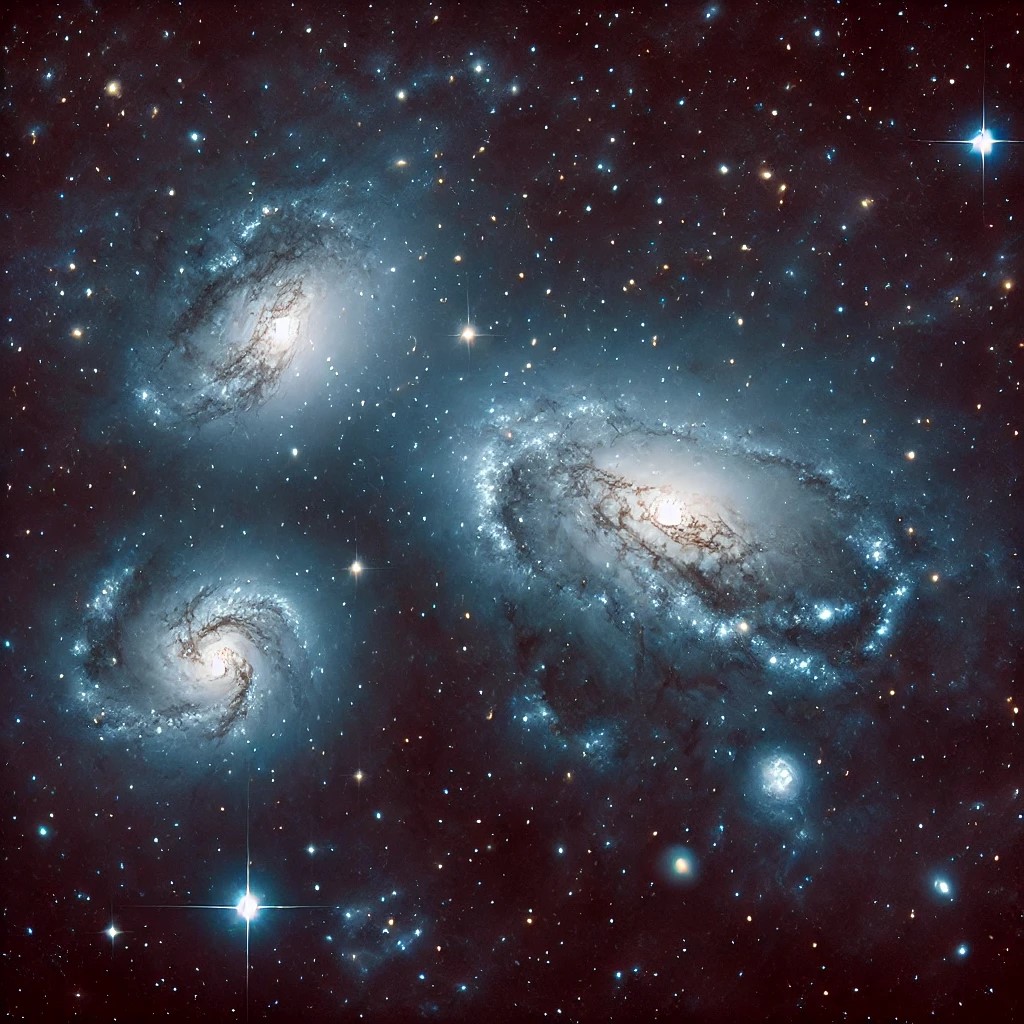
For the first time, astronomers have located an FRB outside a dead galaxy, challenging current theories that associate FRBs with star-forming regions.
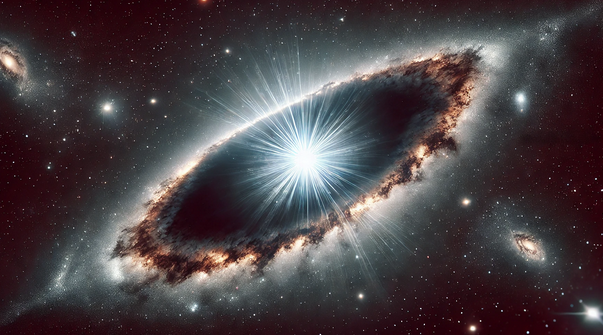
Figure 1.A Newly Discovered FRB Outside a Dead Galaxy Upends Theories on Their Origins.
By utilizing the CHIME/FRB Outriggers, researchers believe the burst originated from a globular cluster of ancient stars. This finding prompts a reevaluation of FRB origins and paves the way for further discoveries as technology advances. Figure 1 shows A Newly Discovered FRB Outside a Dead Galaxy Upends Theories on Their Origins.
Decoding the Enigma of Fast Radio Bursts
Astronomers investigating the origins of mysterious fast radio bursts (FRBs) have made a groundbreaking discovery that could transform our understanding of these powerful cosmic phenomena. [1]Researchers from the Canadian Hydrogen Intensity Mapping Experiment Fast Radio Burst (CHIME/FRB) collaboration have identified the source of a repeating FRB, named FRB 20240209A, located outside a “dead” galaxy—one that no longer produces new stars. This marks the first instance of an FRB being detected so far from its host galaxy, presenting a rare and perplexing case.
“This is not only the first FRB found outside a dead galaxy but also the most distant from its associated galaxy compared to all other known FRBs. Its unexpected location challenges our understanding of how such powerful events can occur in regions devoid of new star formation,” explained Vishwangi Shah, a PhD student in the Department of Physics and the Trottier Space Institute, and the lead author of a recent study published in Astrophysical Journal Letters.
Tracing the Cosmic Sources of FRBs
AFast Radio Bursts (FRBs) are powerful, millisecond-long bursts of radio waves originating from galaxies millions of light-years away. While most occur as isolated events, some repeat unpredictably, making them prime candidates for efforts to determine their precise locations in the sky. Utilizing one of the newly active CHIME/FRB Outrigger telescopes, which enhance the functionality of the main CHIME telescope in Penticton, B.C., astronomers have traced FRB 20240209A to a region of space linked to a “dead” galaxy—one that has ceased forming new stars.
Questioning Current Theories on FRB Formation
“These finding challenges existing theories that connect FRB origins to events in star-forming galaxies,” explained Shah. “The source might be located in a globular cluster, a densely packed region of old, inactive stars outside the galaxy. If verified, this would make FRB 20240209A only the second FRB associated with a globular cluster[2].” She noted that the other known FRB linked to a globular cluster was found in a galaxy that is still actively forming stars.
The discovery highlights that FRBs can occur in a variety of environments, prompting scientists to rethink established models.
“This research offers crucial insights for theorists. Any explanation for FRBs must account for their occurrence in such extreme and unexpected environments,” she added.
A New Frontier in FRB Research
This breakthrough marks the first pinpointing of an FRB on the sky using a CHIME/FRB Outrigger, in this case, the one located in Princeton, B.C. With the location of many more FRBs expected to be pinpointed soon, astronomers are poised to uncover even more information about these enigmatic cosmic bursts.
“This is proof that the Outriggers are set to revolutionize our understanding of FRBs,” said Shah. “We’re at the forefront of solving one of astronomy’s biggest mysteries.”
Reference:
- https://scitechdaily.com/mystery-signal-lights-up-a-dead-galaxy-baffling-astronomers/
- https://www.sciencetimes.com/articles/60251/20250123/mysterious-fast-radio-burst-detected-long-dead-galaxy-puzzles-scientists.htm
Cite this article:
Keerthana S (2025),A Mysterious Signal Illuminates a Dead Galaxy, Leaving Astronomers Puzzled, AnaTechMaz, pp. 209
Recent Post
-
James Webb Confirms Hubble's Calculation of the Universe's Expansion
In recent years, significant advancements in our...
-
NASA's Synthetic Universe: Bringing Roman's Vision to Life
Astronomers have unveiled over a million simulated images showcasing how NASA’s Nancy ...
-
The Era of The International Space Station Is Coming to A Close – Here's What NASA Has in Store Next
NASA has set its final goals and objectives for low Earth orbit (LEO), focusing on...
-
Could This Asteroid Be a Fragment of The Moon
“We suspected that this asteroid could have originated from...
-
Hubble's Remarkable New Portrait of Andromeda: A 200 million-Star Tapestry
Since the launch of NASA’s Hubble Space Telescope...
-
From Fusion Propulsion to Lunar Glass Houses: NASA's Bold Vision For 2025
“Our next steps and giant leaps rely on innovation,...
-
Cosmic 'Ghost Towns': Three Small Galaxies Reveal Secrets of The Ancient Universe
Ultra-faint dwarf galaxies are some of the most elusive...
-
NASA Reveals a Secret Universe of Supermassive Black Holes
Despite their reputation for being completely dark—so...
-
Scientists are puzzled as Earth's core may be shifting its shape
Unusual seismic wave changes deep within the planet ...
-
A spacecraft exploring cosmic evolution captures an 'Einstein ring'
The object appears as a massively distorted image of a distant...
-
Australia's Cutting-Edge Technology Detects Mysterious Signals from Deep Space
Australia's innovative telescope technology, CRACO, is enabling...
-
Hydrogel Absorbs Cosmic Rays to Shield Space Travelers
Space is a hazardous environment. During spaceflight,...
-
Firefly's Blue Ghost Captures a Stunning Selfie of Earth During Its Journey to the Moon
Firefly Aerospace's Blue Ghost lunar lander is en route to the Moon and recently captured...
-
A Mysterious Signal Illuminates a Dead Galaxy, Leaving Astronomers Puzzled
Researchers propose that it might originate from an ...
-
Around 4,000 Supernovae Could Potentially Alter Our Entire Understanding of Dark Energy
The Palomar 48-inch telescope at the Palomar Observatory in California, with the Milky ...