

The Era of The International Space Station Is Coming to A Close – Here's What NASA Has in Store Next
NASA's Vision for Low Earth Orbit: Goals and Objectives for the Future
NASA has set its final goals and objectives for low Earth orbit (LEO), focusing on enhancing space utilization and advancing microgravity research, technology, and exploration for widespread benefit. The agency’s Low Earth Orbit Microgravity Strategy, shaped through extensive stakeholder input, will direct efforts to maintain a constant human presence in orbit, increase economic opportunities, and strengthen global partnerships.
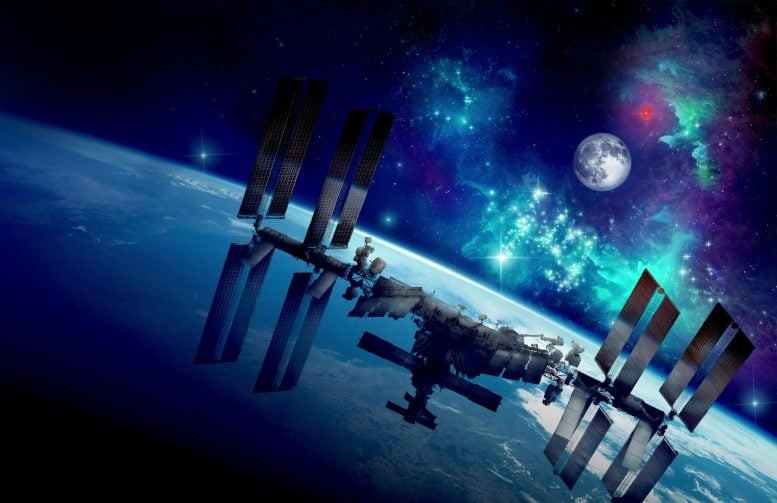
Figure 1. The International Space Station Era is Ending – Here's What's Next for NASA
A Vision for Continuous Human Presence
"As we approach the International Space Station's retirement in 2030, these goals are essential to securing U.S. leadership in space," said NASA Deputy Administrator Pam Melroy. "Collaboration with industry, academia, and international partners has shaped a visionary roadmap for our future in low Earth orbit, enabled by a continuous human presence. Together, we’re ensuring that space exploration continues to yield scientific, technological, and economic benefits for all, while laying the groundwork for humanity’s next giant leap—exploring the Moon, Mars, and beyond."
Stakeholder Collaboration and Refinement
In early 2024, NASA began a planning process that involved drafting initial goals for LEO microgravity environments and soliciting feedback from its workforce, government partners, industry, academia, international space agencies, and the public. After reviewing over 1,800 comments and hosting two workshops, NASA refined the goals and objectives to better align with its partners. The final framework consists of 13 goals and 44 objectives across seven key areas: commercial infrastructure, operations, science, research for exploration, international cooperation, workforce development, and public engagement.
Microgravity: A Crucial Testing Ground for Deep Space
NASA’s LEO efforts are crucial to its broader goals of deep space exploration. The microgravity environment in LEO serves as an accessible, cost-effective proving ground for technologies and research essential for human missions to the Moon, Mars, and beyond. Given that much of the journey to these destinations will occur in microgravity, these objectives provide opportunities for ongoing human research, testing exploration systems, and maintaining the skills required to operate in such environments.
Transitioning to Commercial Space Stations
"These finalized objectives represent a clear path forward as NASA shifts from the International Space Station to an era of commercial space stations," said Robyn Gatens, director of the International Space Station and acting director of commercial spaceflight. "LEO will remain a hub for scientific discovery, technological progress, and international cooperation, while we make strategic investments in a commercial space ecosystem that benefits not only NASA but the entire space community."
Ensuring Long-Term Sustainability
The goals for low Earth orbit microgravity, backed by stakeholder collaboration, underscore NASA’s need to ensure a continuous human presence in commercial space stations. Long-duration flights are crucial to reduce risks for future missions to Mars. To ensure reliable access to LEO, NASA requires diverse providers operating on a regular basis. These objectives will also guide the development of future commercial space stations that support NASA’s missions, reduce risk for human Mars missions, preserve operational skills, and advance vital scientific research.
Collaboration: Key to Future Success
"Collaboration and consultation remain the foundation of our LEO strategy," said John Keefe, director of cross-agency strategy integration at NASA. "The objectives we’ve set will help NASA develop a work plan that meets current and future needs while prioritizing the development of essential capabilities for low Earth orbit."
Source: SciTECHDaily
Cite this article:
Priyadharshini S (2025), "The Era of The International Space Station Is Coming to A Close – Here's What NASA Has in Store Next", AnaTechMaz, pp. 198
Recent Post
-
James Webb Confirms Hubble's Calculation of the Universe's Expansion
In recent years, significant advancements in our...
-
NASA's Synthetic Universe: Bringing Roman's Vision to Life
Astronomers have unveiled over a million simulated images showcasing how NASA’s Nancy ...
-
The Era of The International Space Station Is Coming to A Close – Here's What NASA Has in Store Next
NASA has set its final goals and objectives for low Earth orbit (LEO), focusing on...
-
Could This Asteroid Be a Fragment of The Moon
“We suspected that this asteroid could have originated from...
-
Hubble's Remarkable New Portrait of Andromeda: A 200 million-Star Tapestry
Since the launch of NASA’s Hubble Space Telescope...
-
From Fusion Propulsion to Lunar Glass Houses: NASA's Bold Vision For 2025
“Our next steps and giant leaps rely on innovation,...
-
Cosmic 'Ghost Towns': Three Small Galaxies Reveal Secrets of The Ancient Universe
Ultra-faint dwarf galaxies are some of the most elusive...
-
NASA Reveals a Secret Universe of Supermassive Black Holes
Despite their reputation for being completely dark—so...
-
Scientists are puzzled as Earth's core may be shifting its shape
Unusual seismic wave changes deep within the planet ...
-
A spacecraft exploring cosmic evolution captures an 'Einstein ring'
The object appears as a massively distorted image of a distant...
-
Australia's Cutting-Edge Technology Detects Mysterious Signals from Deep Space
Australia's innovative telescope technology, CRACO, is enabling...
-
Hydrogel Absorbs Cosmic Rays to Shield Space Travelers
Space is a hazardous environment. During spaceflight,...
-
Firefly's Blue Ghost Captures a Stunning Selfie of Earth During Its Journey to the Moon
Firefly Aerospace's Blue Ghost lunar lander is en route to the Moon and recently captured...
-
A Mysterious Signal Illuminates a Dead Galaxy, Leaving Astronomers Puzzled
Researchers propose that it might originate from an ...
-
Around 4,000 Supernovae Could Potentially Alter Our Entire Understanding of Dark Energy
The Palomar 48-inch telescope at the Palomar Observatory in California, with the Milky ...