

Cosmic 'Ghost Towns': Three Small Galaxies Reveal Secrets of The Ancient Universe
Discovery of Isolated Ultra-Faint Dwarf Galaxies
Ultra-faint dwarf galaxies are some of the most elusive objects in the Universe, known for their faintness and small size. These galaxies typically contain only a few hundred to a thousand stars, a stark contrast to larger galaxies like the Milky Way, which boasts hundreds of billions of stars. Due to their dimness and compact nature, ultra-faint dwarf galaxies often go unnoticed, blending into the vast backdrop of brighter celestial bodies. Most of their discoveries have been near the Milky Way, where they are easier to detect.
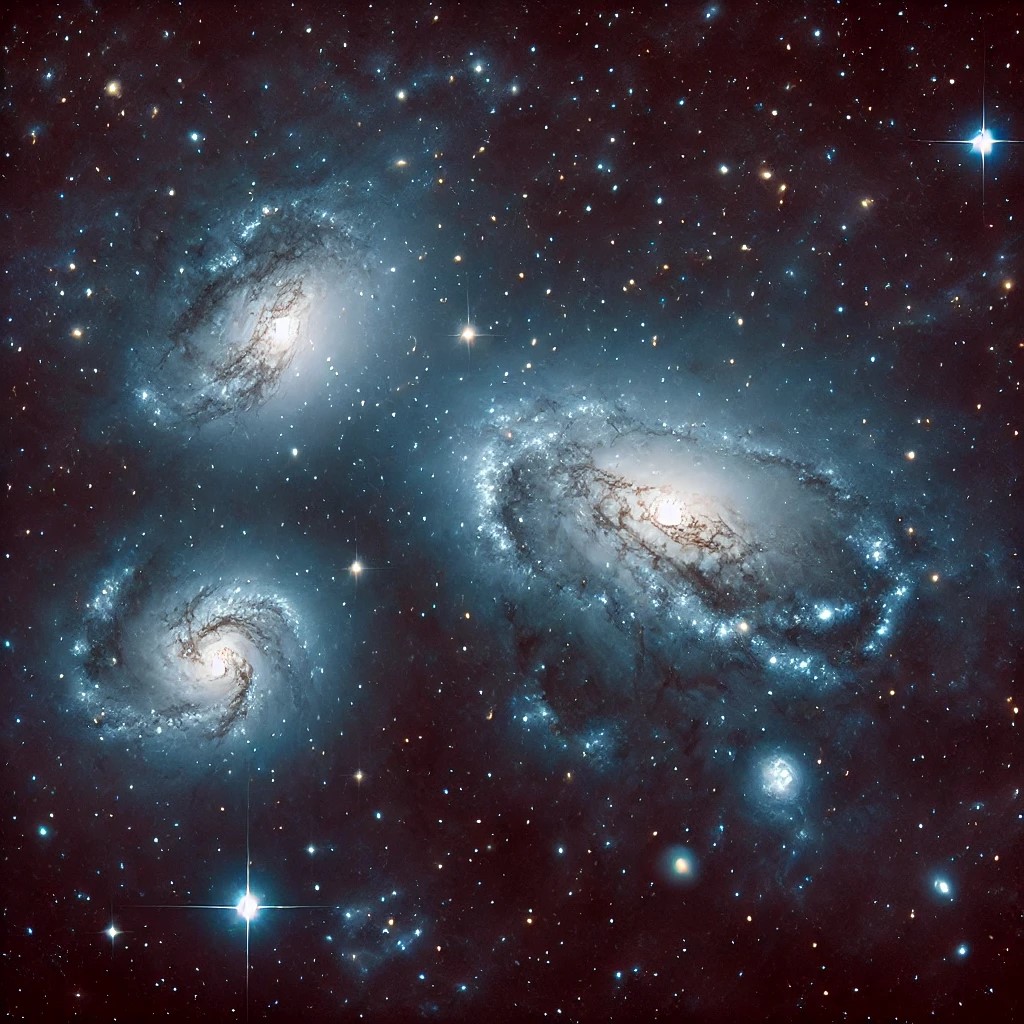
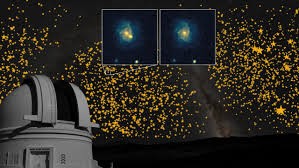
Figure 1. Cosmic 'Ghost Towns': Three Distant Galaxies Unveil Secrets of the Ancient Universe.
Such a discovery came from a manual search by University of Arizona astronomer David Sand, who identified three ultra-faint dwarf galaxies located in the direction of the spiral galaxy NGC 300 and the Sculptor constellation. Sand recalls, "It was during the pandemic… I was watching TV and scrolling through the DESI Legacy Survey viewer, focusing on areas of sky that hadn't been searched before. It took a few hours, and then boom! They just popped out." Figure 1 shows Cosmic 'Ghost Towns': Three Distant Galaxies Unveil Secrets of the Ancient Universe.
Advances in Observations and New Insights
The images that led to this discovery were part of the DECam Legacy Survey (DECaLS), which is one of three public surveys included in the DESI Legacy Imaging Surveys. This initiative covered 14,000 square degrees of sky to provide targets for the ongoing Dark Energy Spectroscopic Instrument (DESI) Survey. The DECam Legacy Survey was conducted using the 570-megapixel Dark Energy Camera (DECam), mounted on the NSF Víctor M. Blanco 4-meter Telescope at Cerro Tololo Inter-American Observatory in Chile, a project funded by the NSF NOIRLab.
The newly discovered galaxies, dubbed the Sculptor galaxies, are among the first ultra-faint dwarf galaxies found in a pristine, isolated environment free from the gravitational influence of the Milky Way or other large structures. To further study these galaxies, Sand and his team used the Gemini South telescope, part of the International Gemini Observatory, which is funded by the NSF and operated by NSF NOIRLab.
Stellar Ghost Towns: Exploring Ultra-Faint Dwarf Galaxies
The Gemini South telescope's Gemini Multi-Object Spectrograph (GMOS) captured detailed images of three newly discovered ultra-faint dwarf galaxies. Analyzing the data revealed that these galaxies are almost devoid of gas and contain only very old stars. This suggests that star formation in these galaxies ceased long ago, supporting the theory that ultra-faint dwarf galaxies are stellar "ghost towns," where star formation was halted early in the Universe’s history.
This finding aligns with expectations for such small galaxies. Gas is the essential building block for creating new stars through nuclear fusion, but ultra-faint dwarf galaxies lack the gravitational strength to retain this vital material. As a result, the gas is easily lost as these galaxies are subjected to the forces and dynamics of the larger Universe surrounding them.
Although the Sculptor galaxies are isolated from larger galaxies, meaning they were not likely stripped of their gas by massive neighbors, other explanations for their gas depletion exist. One possibility is the Epoch of Reionization, a period shortly after the Big Bang when high-energy ultraviolet photons flooded the Universe. These photons could have been powerful enough to strip the gas from the smallest galaxies, including the ultra-faint dwarf galaxies.
Another potential explanation involves the earliest stars within these dwarf galaxies. Energetic supernova explosions, which are believed to have occurred in these galaxies, could have ejected gas at speeds of up to 35 million kilometers per hour (about 20 million miles per hour), potentially expelling the gas from the galaxy itself.
This illustrates how both external and internal cosmic events could have shaped the evolution of these distant stellar "ghost towns."
“The Epoch of Reionization potentially connects the current-day structure of all galaxies with the earliest formation of structure on a cosmological scale,” says Martin Still, NSF program director for the International Gemini Observatory. “The DESI Legacy Surveys and detailed follow-up observations by Gemini enable scientists to conduct forensic archaeology to unravel the nature of the Universe and how it evolved to its present form.”
To expedite the search for additional ultra-faint dwarf galaxies, Sand and his team are leveraging the Sculptor galaxies to train an artificial intelligence system known as a neural network. This tool is designed to automate and speed up the discovery process, offering astronomers access to a much larger dataset from which they can draw more reliable conclusions.
Source: SciTECHDaily
Cite this article:
Priyadharshini S (2025), "Cosmic 'Ghost Towns': Three Small Galaxies Reveal Secrets of The Ancient Universe", AnaTechMaz, pp. 202
Recent Post
-
James Webb Confirms Hubble's Calculation of the Universe's Expansion
In recent years, significant advancements in our...
-
NASA's Synthetic Universe: Bringing Roman's Vision to Life
Astronomers have unveiled over a million simulated images showcasing how NASA’s Nancy ...
-

The Era of The International Space Station Is Coming to A Close – Here's What NASA Has in Store Next
NASA has set its final goals and objectives for low Earth orbit (LEO), focusing on...
-
Could This Asteroid Be a Fragment of The Moon
“We suspected that this asteroid could have originated from...
-
Hubble's Remarkable New Portrait of Andromeda: A 200 million-Star Tapestry
Since the launch of NASA’s Hubble Space Telescope...
-

From Fusion Propulsion to Lunar Glass Houses: NASA's Bold Vision For 2025
“Our next steps and giant leaps rely on innovation,...
-
Cosmic 'Ghost Towns': Three Small Galaxies Reveal Secrets of The Ancient Universe
Ultra-faint dwarf galaxies are some of the most elusive...
-
NASA Reveals a Secret Universe of Supermassive Black Holes
Despite their reputation for being completely dark—so...
-
Scientists are puzzled as Earth's core may be shifting its shape
Unusual seismic wave changes deep within the planet ...
-
A spacecraft exploring cosmic evolution captures an 'Einstein ring'
The object appears as a massively distorted image of a distant...
-
Australia's Cutting-Edge Technology Detects Mysterious Signals from Deep Space
Australia's innovative telescope technology, CRACO, is enabling...
-
Hydrogel Absorbs Cosmic Rays to Shield Space Travelers
Space is a hazardous environment. During spaceflight,...
-
Firefly's Blue Ghost Captures a Stunning Selfie of Earth During Its Journey to the Moon
Firefly Aerospace's Blue Ghost lunar lander is en route to the Moon and recently captured...
-
A Mysterious Signal Illuminates a Dead Galaxy, Leaving Astronomers Puzzled
Researchers propose that it might originate from an ...
-
Around 4,000 Supernovae Could Potentially Alter Our Entire Understanding of Dark Energy
The Palomar 48-inch telescope at the Palomar Observatory in California, with the Milky ...