

NASA Reveals a Secret Universe of Supermassive Black Holes
Uncovering Hidden Light in the Cosmic Darkness
Despite their reputation for being completely dark—so powerful that even light cannot escape—black holes can also be some of the brightest objects in the universe. When gas spirals into a supermassive black hole, much like water swirling down a drain, the immense gravitational pull generates extreme friction and heat. This causes the gas to reach temperatures of hundreds of thousands of degrees, radiating so intensely that it can outshine an entire galaxy.
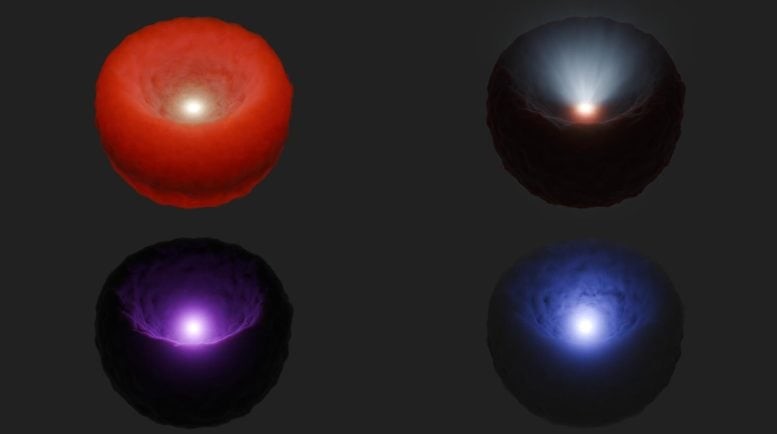
Figure 1. Unveiling a Hidden Universe of Supermassive Black Holes.
Surrounding this luminous core, clouds of gas and dust form a structure resembling a torus, or a doughnut. If Earth has a direct view through the "doughnut hole," the bright central disk is visible. However, when observed from the side, the torus obscures the disk, making it harder to detect. Figure 1 shows Unveiling a Hidden Universe of Supermassive Black Holes
Revealing the Invisible with Modern Telescopes
Traditional telescopes can easily identify supermassive black holes when viewed face-on, but edge-on ones are more challenging to spot. Fortunately, scientists have found a way around this limitation. The surrounding torus absorbs light from the core and reemits it as lower-energy infrared radiation—effectively making these cosmic doughnuts glow in infrared.
NASA’s Infrared Astronomical Satellite (IRAS), which operated in 1983 under the management of NASA’s Jet Propulsion Laboratory, was instrumental in detecting this infrared glow. By surveying the entire sky, IRAS was able to reveal both face-on and edge-on black holes, shedding new light on these hidden cosmic giants.
Combining Observations for a Clearer Picture
The initial survey by NASA’s Infrared Astronomical Satellite (IRAS) identified hundreds of potential black holes. However, some of these turned out to be galaxies with intense star formation, which also emit strong infrared signals. To distinguish true hidden black holes from these galaxies, researchers turned to ground-based visible-light telescopes.
To confirm the presence of heavily obscured, edge-on black holes, the team relied on NASA’s NuSTAR (Nuclear Spectroscopic Telescope Array), an advanced X-ray observatory. Since black holes emit X-rays from their hottest surrounding material, lower-energy X-rays are absorbed by surrounding gas and dust, while NuSTAR’s high-energy X-rays can penetrate and scatter through these clouds. Because detecting these signals requires long hours of observation, scientists use IRAS data to pinpoint promising targets before turning to NuSTAR for confirmation.
“It amazes me how useful IRAS and NuSTAR were for this project, especially considering IRAS was operational over 40 years ago,” said Peter Boorman, an astrophysicist at Caltech and lead author of the study. “This highlights the lasting value of telescope archives and the power of combining different instruments and wavelengths of light.”
Understanding Black Hole Growth and Galactic Influence
By determining the number of obscured versus visible black holes, scientists can gain insight into how these cosmic giants grow. If black holes primarily expand by consuming surrounding material, a significant portion should be hidden within thick clouds of gas and dust. Boorman and his team’s findings support this theory.
Beyond their own growth, black holes also shape the evolution of their host galaxies. When surrounded by massive gas clouds, black holes can consume vast amounts of material—but they have limits. If too much matter falls in at once, the black hole expels the excess in powerful outflows. These ejections can disperse gas clouds where stars are forming, slowing the galaxy’s overall star formation rate.
“If black holes didn’t exist, galaxies would be much larger,” said Poshak Gandhi, a professor of astrophysics at the University of Southampton and co-author of the study. “For example, if there were no supermassive black hole at the center of our Milky Way, we might see many more stars in the sky. That’s just one-way black holes shape galactic evolution.”
Source: SciTECHDaily
Cite this article:
Priyadharshini S (2025), "NASA Reveals a Secret Universe of Supermassive Black Holes", AnaTechMaz, pp. 203
Recent Post
-
James Webb Confirms Hubble's Calculation of the Universe's Expansion
In recent years, significant advancements in our...
-
NASA's Synthetic Universe: Bringing Roman's Vision to Life
Astronomers have unveiled over a million simulated images showcasing how NASA’s Nancy ...
-
The Era of The International Space Station Is Coming to A Close – Here's What NASA Has in Store Next
NASA has set its final goals and objectives for low Earth orbit (LEO), focusing on...
-
Could This Asteroid Be a Fragment of The Moon
“We suspected that this asteroid could have originated from...
-
Hubble's Remarkable New Portrait of Andromeda: A 200 million-Star Tapestry
Since the launch of NASA’s Hubble Space Telescope...
-
From Fusion Propulsion to Lunar Glass Houses: NASA's Bold Vision For 2025
“Our next steps and giant leaps rely on innovation,...
-
Cosmic 'Ghost Towns': Three Small Galaxies Reveal Secrets of The Ancient Universe
Ultra-faint dwarf galaxies are some of the most elusive...
-
NASA Reveals a Secret Universe of Supermassive Black Holes
Despite their reputation for being completely dark—so...
-
Scientists are puzzled as Earth's core may be shifting its shape
Unusual seismic wave changes deep within the planet ...
-
A spacecraft exploring cosmic evolution captures an 'Einstein ring'
The object appears as a massively distorted image of a distant...
-
Australia's Cutting-Edge Technology Detects Mysterious Signals from Deep Space
Australia's innovative telescope technology, CRACO, is enabling...
-
Hydrogel Absorbs Cosmic Rays to Shield Space Travelers
Space is a hazardous environment. During spaceflight,...
-
Firefly's Blue Ghost Captures a Stunning Selfie of Earth During Its Journey to the Moon
Firefly Aerospace's Blue Ghost lunar lander is en route to the Moon and recently captured...
-
A Mysterious Signal Illuminates a Dead Galaxy, Leaving Astronomers Puzzled
Researchers propose that it might originate from an ...
-
Around 4,000 Supernovae Could Potentially Alter Our Entire Understanding of Dark Energy
The Palomar 48-inch telescope at the Palomar Observatory in California, with the Milky ...