

Hydrogel Absorbs Cosmic Rays to Shield Space Travelers
Space is a hazardous environment. During spaceflight, both equipment and astronauts are exposed to high levels of radiation. Without adequate shielding, devices could fail, and astronauts could suffer severe health consequences. To address this, researchers at Ghent University in Belgium are exploring the use of 3D-printed hydrogels—materials capable of absorbing large amounts of water—as powerful radiation shields.
That's a fascinating application! Hydrogels are incredibly versatile because of their high water content and ability to absorb radiation, which makes them great candidates for shielding astronauts from cosmic rays. Their lightweight and flexible nature is also ideal for space travel. Scientists are exploring advanced hydrogels infused with nanoparticles or other materials to enhance their radiation-absorbing properties. This could be a game-changer for long-duration space missions, like trips to Mars. Figure 1 shows Illustration of cosmic rays striking Earth's magnetic field.
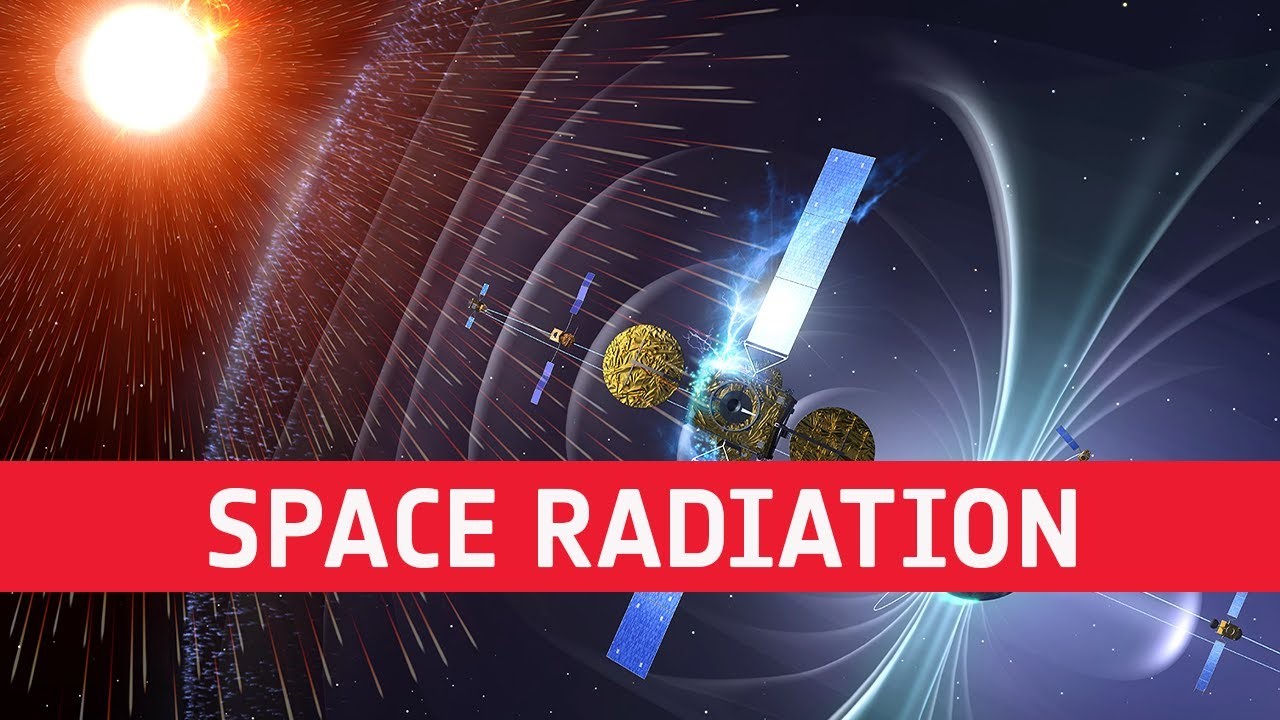
Figure 1. Illustration Of Cosmic Rays Striking Earth's Magnetic Field.
Absolutely! Cosmic radiation is a serious concern for space travelers. Unlike on Earth, where our atmosphere and magnetic field shield us from most cosmic rays, astronauts in space are exposed to a much higher dose. The 72 mSv over six months on the ISS is significant—it’s roughly 200 times the dose from a chest X-ray.
For longer missions, like a trip to Mars, the exposure would be even greater, potentially exceeding NASA's career limits for astronauts, increasing risks of cancer, neurological issues, and other health problems. That’s why effective shielding is crucial.
Hydrogels are being considered because they contain a lot of hydrogen, which is great at blocking cosmic rays, especially the high-energy protons found in solar particle events[2]. Researchers are exploring ways to enhance hydrogels with nanoparticles to improve their shielding capacity without adding too much weight—an essential factor in space travel.
The risk is even greater on planned missions to Mars, as the spacecraft would leave behind Earth's protective magnetic field. Over the course of a three-year journey, astronauts could be exposed to more than 1,000 mSv of cosmic radiation—nearly 200 times the level experienced on Earth.
One way to reduce this radiation exposure is by increasing travel speed, but the primary defense is effective shielding that can absorb harmful radiation. Water is particularly suitable for this purpose due to its density and high hydrogen content. Lining a spacecraft with water tanks would provide excellent protection.
However, water presents challenges. In a liquid state, it can shift around, especially in the weightlessness of space, leaving gaps in the shielding[2].Even worse, leaks could lead to serious issues, such as short circuits in electrical systems or the unexpected risk of astronauts drowning in space.
CSIRO astronomer and engineer Dr. Keith Bannister, who led the team behind the development of CRACO, highlighted the vast scale of observation made possible by the new technology.
“CRACO utilizes ASKAP’s ‘live’ view of the sky to search for fast radio bursts.
“It does this by scanning massive amounts of data—processing 100 billion pixels per second—to detect and pinpoint the location of these bursts.
“It’s like sifting through an entire beach of sand to find a single five-cent coin every minute,” explained Dr. Bannister.
How Craco Works
CRACO consists of a network of computers and accelerators linked to the ASKAP radio telescope at Inyarrimanha Ilgari Bundara, the CSIRO Murchison Radio-astronomy Observatory located on Wajarri Yamaji Country[2]. The development of this advanced technology bolsters Australia’s global standing as a leader in radio astronomy engineering and research.
“Once fully operational, CRACO will revolutionize international astronomy,” said Dr. Wang.
Designed to analyze the trillions of pixels captured by the telescope, CRACO identifies anomalies and immediately alerts researchers when it detects anything unusual. This real-time capability enables rapid follow-up observations, allowing scientists to gather more data and conduct detailed analyses efficiently.
Reference:
- https://www.csiro.au/en/news/all/news/2025/january/australian-innovation-sifts-space-for-mysteries
- https://scitechdaily.com/discovery-on-overdrive-australias-new-tech-uncovers-mysterious-signals-from-deep-space/
Cite this article:
Keerthana S (2025),Australia's Cutting-Edge Technology Detects Mysterious Signals from Deep Space, AnaTechMaz, pp. 207
Recent Post
-
James Webb Confirms Hubble's Calculation of the Universe's Expansion
In recent years, significant advancements in our...
-
NASA's Synthetic Universe: Bringing Roman's Vision to Life
Astronomers have unveiled over a million simulated images showcasing how NASA’s Nancy ...
-
The Era of The International Space Station Is Coming to A Close – Here's What NASA Has in Store Next
NASA has set its final goals and objectives for low Earth orbit (LEO), focusing on...
-
Could This Asteroid Be a Fragment of The Moon
“We suspected that this asteroid could have originated from...
-
Hubble's Remarkable New Portrait of Andromeda: A 200 million-Star Tapestry
Since the launch of NASA’s Hubble Space Telescope...
-
From Fusion Propulsion to Lunar Glass Houses: NASA's Bold Vision For 2025
“Our next steps and giant leaps rely on innovation,...
-
Cosmic 'Ghost Towns': Three Small Galaxies Reveal Secrets of The Ancient Universe
Ultra-faint dwarf galaxies are some of the most elusive...
-
NASA Reveals a Secret Universe of Supermassive Black Holes
Despite their reputation for being completely dark—so...
-
Scientists are puzzled as Earth's core may be shifting its shape
Unusual seismic wave changes deep within the planet ...
-
A spacecraft exploring cosmic evolution captures an 'Einstein ring'
The object appears as a massively distorted image of a distant...
-
Australia's Cutting-Edge Technology Detects Mysterious Signals from Deep Space
Australia's innovative telescope technology, CRACO, is enabling...
-
Hydrogel Absorbs Cosmic Rays to Shield Space Travelers
Space is a hazardous environment. During spaceflight,...
-
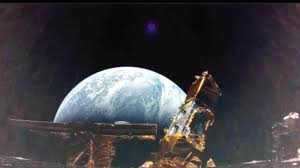
Firefly's Blue Ghost Captures a Stunning Selfie of Earth During Its Journey to the Moon
Firefly Aerospace's Blue Ghost lunar lander is en route to the Moon and recently captured...
-
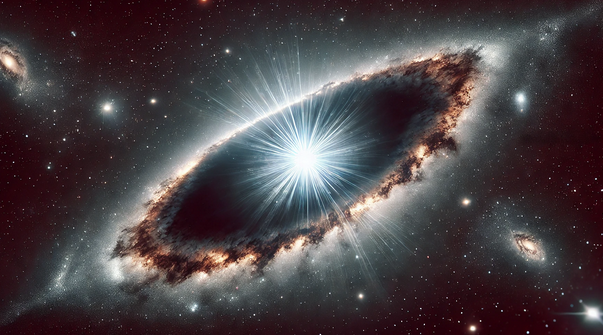
A Mysterious Signal Illuminates a Dead Galaxy, Leaving Astronomers Puzzled
Researchers propose that it might originate from an ...
-
Around 4,000 Supernovae Could Potentially Alter Our Entire Understanding of Dark Energy
The Palomar 48-inch telescope at the Palomar Observatory in California, with the Milky ...