

NASA's Synthetic Universe: Bringing Roman's Vision to Life
A Glimpse into Roman’s Cosmic Vision
Astronomers have unveiled over a million simulated images showcasing how NASA’s Nancy Grace Roman Space Telescope will observe the cosmos. These groundbreaking simulations offer a vital preview, enabling scientists to prepare for Roman’s ambitious scientific mission.
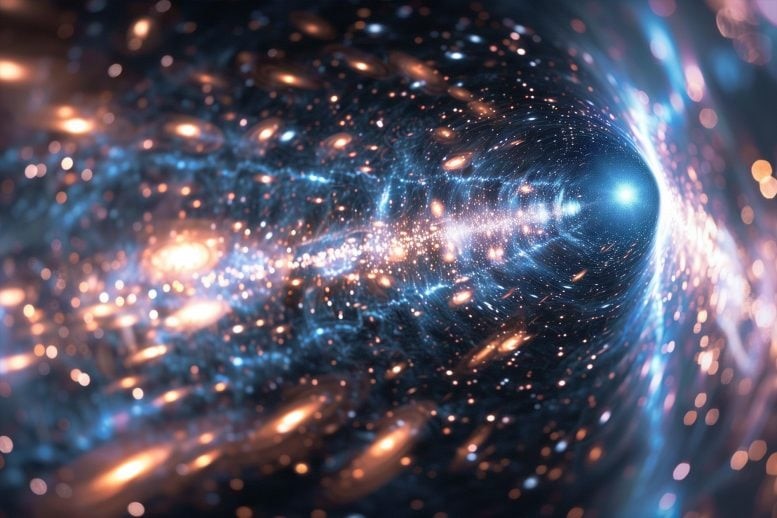
Figure 1. NASA's Synthetic Universe: Realizing Roman's Vision.
“We used a supercomputer to create a synthetic universe and simulated billions of years of evolution, tracing every photon’s path all the way from each cosmic object to Roman’s detectors,” said Michael Troxel, an associate professor of physics at Duke University and leader of the simulation campaign. “This is the largest, deepest, most realistic synthetic survey of a mock universe available today.” Figure 1 shows NASA's Synthetic Universe: Realizing Roman's Vision.
A stunning video highlights a small, one-square-degree segment of the vast OpenUniverse simulation area (covering about 70 square degrees, equivalent to more than 300 full moons in the sky). The video zooms into a galaxy-rich region, magnified by a factor of 75. This preview illustrates the level of detail Roman’s future surveys will deliver, enabling deep explorations of the universe through highly resolved imaging.
Open Universe: A Collaborative Achievement
The Open Universe project was powered by the Theta supercomputer, previously stationed at the U.S. Department of Energy’s Argonne National Laboratory in Illinois. Astonishingly, the supercomputer completed its calculations in just nine days—a task that would take a standard computer over 6,000 years to accomplish.
In addition to Roman, the 400-terabyte dataset previews observations from the Vera C. Rubin Observatory, jointly funded by the National Science Foundation and the U.S. Department of Energy. It also approximates simulations from ESA’s (European Space Agency’s) Euclid mission, which involves NASA contributions. While Roman’s simulated data is available now, Rubin and Euclid datasets will soon follow, broadening the horizons for cosmic discovery.
Bridging Time and Space with Data
By leveraging advanced modeling of the universe’s physics and input from existing galaxy catalogs, researchers have created simulated images that span an impressive 70 square degrees of sky—an area equivalent to more than 300 full moons. These simulations not only cover a vast spatial area but also delve into the universe’s history, stretching back over 12 billion years.
This immense space-time coverage offers scientists a glimpse into how the Nancy Grace Roman Space Telescope will help tackle profound cosmic mysteries. Researchers will study the influence of dark energy—the enigmatic force driving the universe’s accelerated expansion—and dark matter, which is only detectable through its gravitational effects on visible matter. By analyzing the simulation’s 100 million synthetic galaxies, scientists can explore how galaxies and galaxy clusters have evolved over billions of years.
Mapping the Universe with Synthetic Explosions
Using repeated mock observations of specific regions of the universe, the team created dynamic visualizations that depict exploding stars lighting up the synthetic cosmos like fireworks. These simulated starbursts allow researchers to trace the universe’s expansion and better understand its behavior over time.
The OpenUniverse data is already being used to test an alert system designed to notify astronomers whenever Roman detects phenomena such as these stellar explosions. The system will flag these events and track their emitted light, enabling detailed studies of these cosmic occurrences.
Data Overload and Machine Learning Solutions
Given the immense volume of data Roman will generate, scientists are developing machine-learning algorithms to sift through it efficiently. These algorithms will help identify and classify cosmic events, such as different types of exploding stars, distinguishing between those useful for mapping the universe’s expansion and those that are not.
“Most of the difficulty lies in determining whether a detected event is a rare supernova type we can use to map the universe or something that looks similar but doesn’t serve that purpose,” explained Alina Kiessling, research scientist at NASA’s Jet Propulsion Laboratory and principal investigator for OpenUniverse.
The Race to Prepare for Roman’s Launch
With ESA’s Euclid mission already scanning the cosmos and the Vera C. Rubin Observatory set to begin operations later this year, scientists are racing to prepare for the launch of the Nancy Grace Roman Space Telescope, scheduled for May 2027. Synthetic images from OpenUniverse are proving invaluable in planning observations and developing tools to manage the deluge of data these telescopes will produce.
In terms of data volume, Roman is poised to surpass all previous space-based infrared and optical surveys. “Roman will accomplish in less than a year what would take Hubble or James Webb about a thousand years to complete,” said Michael Troxel. “The sheer number of objects Roman will sharply image will revolutionize our understanding of the universe.”
Unlocking Nobel-Worthy Discoveries
"We can expect an incredible array of exciting, potentially Nobel Prize-winning science from Roman’s observations," said Alina Kiessling. "The mission will unveil how the universe expanded over time, create 3D maps of galaxies and galaxy clusters, and uncover new details about star formation and evolution—many of which we've already simulated. Now, we get to practice using the synthetic data so that when real observations start, we can dive straight into the science."
Even after Roman launches, astronomers will continue to use these simulations as a "cosmic game of spot the differences." By comparing real data to synthetic simulations, scientists can assess how accurately their models predict the universe's behavior. Any discrepancies between the two could signal the presence of previously unknown physics that challenges current cosmological models.
"If we observe something that doesn’t quite align with the standard model of cosmology, it will be crucial to confirm whether we are witnessing new physics or just misinterpreting the data," said Katrin Heitmann, cosmologist and deputy director of Argonne’s High Energy Physics division, who managed the project’s supercomputer resources. "Simulations are indispensable in figuring that out."
Collaborations Driving the Future of Space Exploration
OpenUniverse is a groundbreaking simulation initiative created to prepare astronomers for the massive datasets expected from NASA’s Nancy Grace Roman Space Telescope. Developed in collaboration with Roman’s Science Operations and Science Support centers, OpenUniverse equips researchers with tools to analyze and interpret the telescope’s wide-field observations of the cosmos.
This project unites a diverse team of experts from NASA’s Jet Propulsion Laboratory, the U.S. Department of Energy’s Argonne National Laboratory, IPAC, and several prominent U.S. universities. Key coordination efforts involve contributions from the Roman Project Infrastructure Teams, SLAC National Accelerator Laboratory, and the Rubin LSST Dark Energy Science Collaboration.
Powered by the now-retired Theta supercomputer, operated by the DOE’s Argonne Leadership Computing Facility, OpenUniverse represents a collaborative effort to simulate and understand the universe’s evolution. The project aids in unlocking insights into phenomena such as dark energy, dark matter, and galaxy formation. By ensuring astronomers are prepared for the vast data influx from Roman’s transformative mission, it sets the stage for groundbreaking discoveries.
NASA’s Nancy Grace Roman Space Telescope: Pioneering Space Exploration
The Nancy Grace Roman Space Telescope is poised to become NASA’s next-generation observatory, designed to address some of the most profound questions about the universe, including dark energy, dark matter, exoplanets, and galaxy evolution. Managed by NASA’s Goddard Space Flight Center in Greenbelt, Maryland, the telescope benefits from expertise across NASA’s Jet Propulsion Laboratory, Caltech/IPAC in Southern California, and the Space Telescope Science Institute in Baltimore.
A broad scientific team composed of researchers from leading institutions supports the mission. Key industrial partners such as BAE Systems, Inc. in Boulder, Colorado; L3Harris Technologies in Rochester, New York; and Teledyne Scientific & Imaging in Thousand Oaks, California, contribute advanced technology essential for developing this cutting-edge telescope.
Set to launch by May 2027, the Roman Space Telescope will feature a wide-field instrument capable of capturing images hundreds of times larger than those from the Hubble Space Telescope. This leap in capability promises transformative discoveries, advancing our understanding of the cosmos in unprecedented ways.
Source: SciTECHDaily
Cite this article:
Priyadharshini S (2025), "NASA's Synthetic Universe: Bringing Roman's Vision to Life.",AnaTechMaz, pp. 197
Recent Post
-
James Webb Confirms Hubble's Calculation of the Universe's Expansion
In recent years, significant advancements in our...
-
NASA's Synthetic Universe: Bringing Roman's Vision to Life
Astronomers have unveiled over a million simulated images showcasing how NASA’s Nancy ...
-
The Era of The International Space Station Is Coming to A Close – Here's What NASA Has in Store Next
NASA has set its final goals and objectives for low Earth orbit (LEO), focusing on...
-
Could This Asteroid Be a Fragment of The Moon
“We suspected that this asteroid could have originated from...
-
Hubble's Remarkable New Portrait of Andromeda: A 200 million-Star Tapestry
Since the launch of NASA’s Hubble Space Telescope...
-
From Fusion Propulsion to Lunar Glass Houses: NASA's Bold Vision For 2025
“Our next steps and giant leaps rely on innovation,...
-
Cosmic 'Ghost Towns': Three Small Galaxies Reveal Secrets of The Ancient Universe
Ultra-faint dwarf galaxies are some of the most elusive...
-
NASA Reveals a Secret Universe of Supermassive Black Holes
Despite their reputation for being completely dark—so...
-
Scientists are puzzled as Earth's core may be shifting its shape
Unusual seismic wave changes deep within the planet ...
-
A spacecraft exploring cosmic evolution captures an 'Einstein ring'
The object appears as a massively distorted image of a distant...
-
Australia's Cutting-Edge Technology Detects Mysterious Signals from Deep Space
Australia's innovative telescope technology, CRACO, is enabling...
-
Hydrogel Absorbs Cosmic Rays to Shield Space Travelers
Space is a hazardous environment. During spaceflight,...
-
Firefly's Blue Ghost Captures a Stunning Selfie of Earth During Its Journey to the Moon
Firefly Aerospace's Blue Ghost lunar lander is en route to the Moon and recently captured...
-
A Mysterious Signal Illuminates a Dead Galaxy, Leaving Astronomers Puzzled
Researchers propose that it might originate from an ...
-
Around 4,000 Supernovae Could Potentially Alter Our Entire Understanding of Dark Energy
The Palomar 48-inch telescope at the Palomar Observatory in California, with the Milky ...