

Could This Asteroid Be a Fragment of The Moon
Analyzing the Asteroid’s Composition
“We suspected that this asteroid could have originated from the Moon, but the key evidence came when we discovered it was rich in silicate minerals — not the kind typically found in asteroids, but those present in lunar rock samples,” explained Teddy Kareta, an astronomer at Lowell Observatory in Arizona and lead researcher. “It seems like the asteroid hasn’t been in space for too long, possibly just a few thousand years, as there’s no significant space weathering that would have altered its spectrum.”
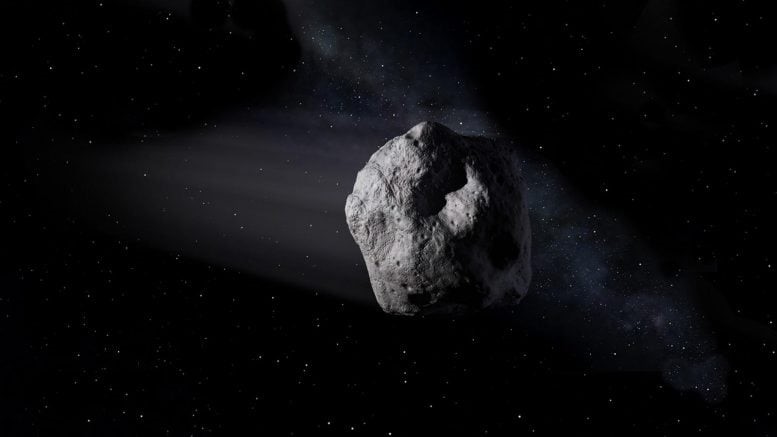
Figure 1. Is This Asteroid a Fragment of the Moon.
The asteroid was first detected on August 7, 2024, by the University of Hawai’i’s Asteroid Terrestrial-impact Last Alert System (ATLAS) using the NASA-funded Sutherland, South Africa telescope. Kareta’s team then analyzed data from the Lowell Discovery Telescope and the NASA Infrared Telescope Facility (IRTF) at Mauna Kea Observatory in Hawai’i, revealing that the asteroid's reflected sunlight spectrum did not match any known asteroid type, instead closely resembling the light reflected off lunar rock. Figure 1 shows Is This Asteroid a Fragment of the Moon.
Not (Old) Rocket Science: Ruling Out Space Junk
A second clue came from observing the object’s movement. Like asteroids, Space Age debris such as old rockets from historic launches can also be found in Earth-like orbits.
The distinction between their orbits lies in how each type responds to solar radiation pressure — the tiny force exerted by photons, the quantum particles of light from the Sun, as they strike a solid object in space. This momentum exchange over time can slightly push an object, causing it to speed up or slow down. While a human-made object, like an empty rocket booster, will behave like a tin can in the wind, a natural object, like an asteroid, will be far less affected.
To rule out 2024 PT5 as space junk, scientists at NASA’s Center for Near-Earth Object Studies (CNEOS), managed by the Jet Propulsion Laboratory in Southern California, analyzed the object’s motion. Their precise calculations of its motion under gravitational influence allowed them to search for additional motion caused by solar radiation pressure. In this case, the effects were too small for the object to be artificial, confirming that 2024 PT5 is likely of natural origin.
“Space debris and space rocks move slightly differently in space,” said Oscar Fuentes-Muñoz, a study coauthor and NASA postdoctoral fellow at JPL working with the CNEOS team. “Human-made debris is usually relatively light and gets pushed around by sunlight pressure. The fact that 2024 PT5 doesn’t move this way suggests it’s much denser than space debris.”
Comparisons to Other Lunar Asteroids
The discovery of 2024 PT5 doubles the number of known asteroids believed to originate from the Moon. In 2016, asteroid 469219 Kamo’oalewa was found with an Earth-like orbit around the Sun, suggesting it could also have been ejected from the lunar surface following a large impact. As telescopes become more sensitive to smaller asteroids, more potential lunar fragments are likely to be discovered, providing an exciting opportunity for scientists studying both rare asteroids and the Moon.
If a lunar asteroid can be directly linked to a specific impact crater on the Moon, studying it could provide valuable insights into the Moon's cratering processes. Additionally, material from deep beneath the lunar surface may become accessible for future studies through asteroids passing close to Earth.
“This is a story about the Moon as told by asteroid scientists,” said Kareta. “It’s a rare situation where we’ve set out to study an asteroid, but we’ve also opened up new questions about 2024 PT5 and its connection to the Moon.”
Source: SciTECHDaily
Cite this article:
Priyadharshini S (2025), "Could This Asteroid Be a Fragment of The Moon", AnaTechMaz, pp. 199
Recent Post
-
James Webb Confirms Hubble's Calculation of the Universe's Expansion
In recent years, significant advancements in our...
-
NASA's Synthetic Universe: Bringing Roman's Vision to Life
Astronomers have unveiled over a million simulated images showcasing how NASA’s Nancy ...
-
The Era of The International Space Station Is Coming to A Close – Here's What NASA Has in Store Next
NASA has set its final goals and objectives for low Earth orbit (LEO), focusing on...
-
Could This Asteroid Be a Fragment of The Moon
“We suspected that this asteroid could have originated from...
-
Hubble's Remarkable New Portrait of Andromeda: A 200 million-Star Tapestry
Since the launch of NASA’s Hubble Space Telescope...
-
From Fusion Propulsion to Lunar Glass Houses: NASA's Bold Vision For 2025
“Our next steps and giant leaps rely on innovation,...
-
Cosmic 'Ghost Towns': Three Small Galaxies Reveal Secrets of The Ancient Universe
Ultra-faint dwarf galaxies are some of the most elusive...
-
NASA Reveals a Secret Universe of Supermassive Black Holes
Despite their reputation for being completely dark—so...
-
Scientists are puzzled as Earth's core may be shifting its shape
Unusual seismic wave changes deep within the planet ...
-
A spacecraft exploring cosmic evolution captures an 'Einstein ring'
The object appears as a massively distorted image of a distant...
-
Australia's Cutting-Edge Technology Detects Mysterious Signals from Deep Space
Australia's innovative telescope technology, CRACO, is enabling...
-
Hydrogel Absorbs Cosmic Rays to Shield Space Travelers
Space is a hazardous environment. During spaceflight,...
-
Firefly's Blue Ghost Captures a Stunning Selfie of Earth During Its Journey to the Moon
Firefly Aerospace's Blue Ghost lunar lander is en route to the Moon and recently captured...
-
A Mysterious Signal Illuminates a Dead Galaxy, Leaving Astronomers Puzzled
Researchers propose that it might originate from an ...
-
Around 4,000 Supernovae Could Potentially Alter Our Entire Understanding of Dark Energy
The Palomar 48-inch telescope at the Palomar Observatory in California, with the Milky ...