

Physicists Discover a Method to Unravel Quantum Mysteries Without Using Supercomputers
Physicists Develop a Way to Tackle Quantum Mysteries Without Supercomputers
Researchers at the University at Buffalo have made a major leap in quantum modeling by enhancing a powerful yet affordable method known as the truncated Wigner approximation (TWA).
Their improved version can now handle complex, real-world quantum problems on ordinary laptops—potentially transforming how scientists study quantum systems by making advanced simulations faster, cheaper, and widely accessible.
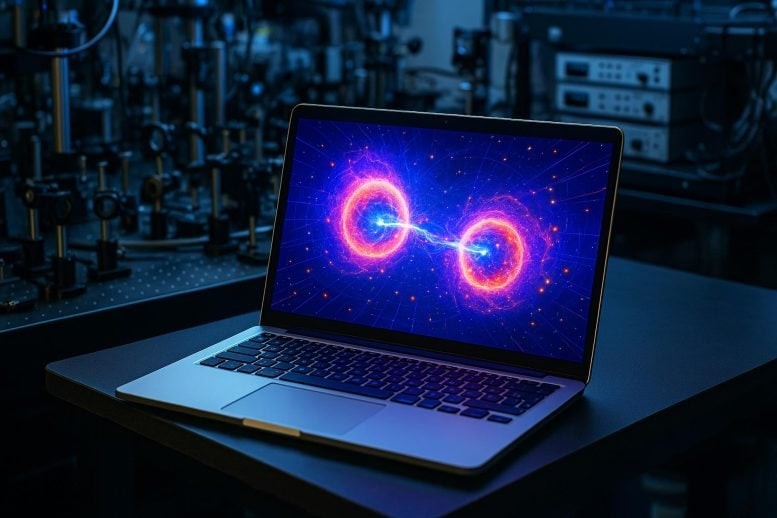
Figure 1. Decode Quantum Mysteries Without Supercomputers.
Bringing Quantum Complexity Within Reach
At the quantum scale, particles interact in trillions of ways simultaneously, creating staggering levels of complexity. Traditionally, modeling these interactions has required supercomputers or advanced AI systems to simulate quantum behavior. Figure 1 shows Decode Quantum Mysteries Without Supercomputers.
But a new study shows that many of these problems can now be solved using everyday computers, turning what was once a theoretical dream into a practical reality.
Simplifying Quantum Chaos
The University at Buffalo team expanded the truncated Wigner approximation, a semiclassical shortcut that simplifies quantum equations, allowing researchers to simulate systems once thought to require enormous computational power.
Their new, streamlined framework—published in PRX Quantum—makes it possible for researchers to input data and generate reliable results within hours instead of days.
“Our approach significantly lowers computational costs while simplifying the dynamical equations,” said Jamir Marino, PhD, assistant professor of physics at UB. “We believe this could soon become a go-to tool for studying quantum dynamics on consumer-grade computers.”
Marino collaborated on the work with his former students Hossein Hossein Abadi and Oksana Chelpanova at Johannes Gutenberg University Mainz in Germany, with support from the National Science Foundation, the German Research Foundation, and the European Union.
Expanding the Quantum Frontier
Exact solutions for quantum systems are rarely possible, as computational demands grow exponentially with system complexity. Physicists instead use semiclassical methods, which preserve essential quantum features while simplifying the rest.
The TWA—developed in the 1970s—has traditionally been limited to simple, isolated systems that don’t interact with their surroundings. Marino’s team extended it to real-world cases, such as dissipative spin dynamics, where particles exchange energy with their environment.
“Many groups have tried this before,” Marino noted. “The challenge wasn’t just solving the math—it was making the method easy to use.”
Turning Complexity into Clarity
Previously, applying TWA meant re-deriving dense mathematical equations for every new problem. The UB researchers replaced that tedious process with a conversion table that translates complex quantum systems into solvable equations—making the method approachable to non-specialists.
“Physicists can learn this method in a single day,” said Chelpanova, “and within a few days, they’re solving problems that once required massive computing resources.”
Saving Supercomputers for the Hardest Problems
The improved TWA could free up supercomputers and AI models for only the most complex quantum challenges—systems too intricate for semiclassical methods.
“A lot of what seems overwhelmingly complicated isn’t really so,” Marino explained. “With this approach, physicists can reserve heavy computing power for the problems that truly need it—and handle the rest quickly and efficiently on a laptop.”
Reference:
- https://scitechdaily.com/physicists-found-a-way-to-solve-quantum-mysteries-without-supercomputers/
Cite this article:
Keerthana S (2025), Physicists Discover a Method to Unravel Quantum Mysteries Without Using Supercomputers, AnaTechMaz, pp.371
Recent Post
-

Existing Internet Cables Successfully Support Quantum Networks
Quantum networking may be closer to practical use thanks to engineers...
-

Quantum Computer Assembled Like LEGO Bricks by Scientists
Building on this idea, researchers at The Grainger College of Engineering, University of Illinois ....
-

Scientists Unveil a Brand-New State of Quantum Matter
The phase was first observed in a material created at UC Irvine by postdoctoral researcher and...
-

El Salvador Moves $678M in Bitcoin to Counter Quantum Computing Risk
El Salvador’s Bitcoin Office moved its 6,274 Bitcoin, worth $678 million,....
-

Quantinuum Teams with Sanger Institute to Encode Genome on Quantum Computer
The Wellcome Sanger Institute has teamed up with Quantinuum,...
-

IBM and AMD Team Up to Build Next-Gen Quantum Supercomputing Infrastructure
IBM and AMD have joined forces to create next-generation...
-
AQT-Led QCDC Project Provides Europe Cloud Access to Quantum Computers
Led by Juris Ulmanis, QCDC Project Leader and Director...
-

Quantum Breakthrough: Physicists Solve 15-Year-Old, 5-Atom Mystery
At the quantum scale, matter behaves in unusual ways, with the Efimov effect being one of the most...
-
Quantum Computers Simulate Black Holes to Explore Cosmic Mysteries
A team of four researchers at RIKEN has successfully used two....
-
World’s First Programmable Photonic Waveguide Offers New Flexibility for Quantum Light
In a major breakthrough for photonics, researchers have developed the ...
-
Physicists Discover a Method to Unravel Quantum Mysteries Without Using Supercomputers
Researchers at the University at Buffalo have made a major leap in...
-
New Laser-Based Quantum Radio Can Receive Signals Without Electricity or Antennas
Physicists at the University of Warsaw have created the world’s first...
-

New Spin on a Classic Material May Boost Quantum Computing and Slash Data Center Energy Use
Researchers in the United States have demonstrated that an innovative ...
-

Quantum Dots May Revolutionize Night Vision Technology
Infrared camera makers are increasingly challenged by environmental regulations that ...
IBM Says Major Quantum Error-Correction Algorithm Now Runs on Standard AMD Processors
IBM announced on Friday that it has successfully run a crucial....