

IBM and AMD Team Up to Build Next-Gen Quantum Supercomputing Infrastructure
IBM and AMD have joined forces to create next-generation quantum supercomputing infrastructure, integrating quantum technology, AI, and high-performance computing to address complex global problems.
IBM and AMD have unveiled a collaboration to develop computing architectures that merge quantum computing with high-performance computing (HPC) and AI. The initiative focuses on “quantum-centric supercomputing,” a hybrid approach aimed at tackling some of the world’s most complex problems.

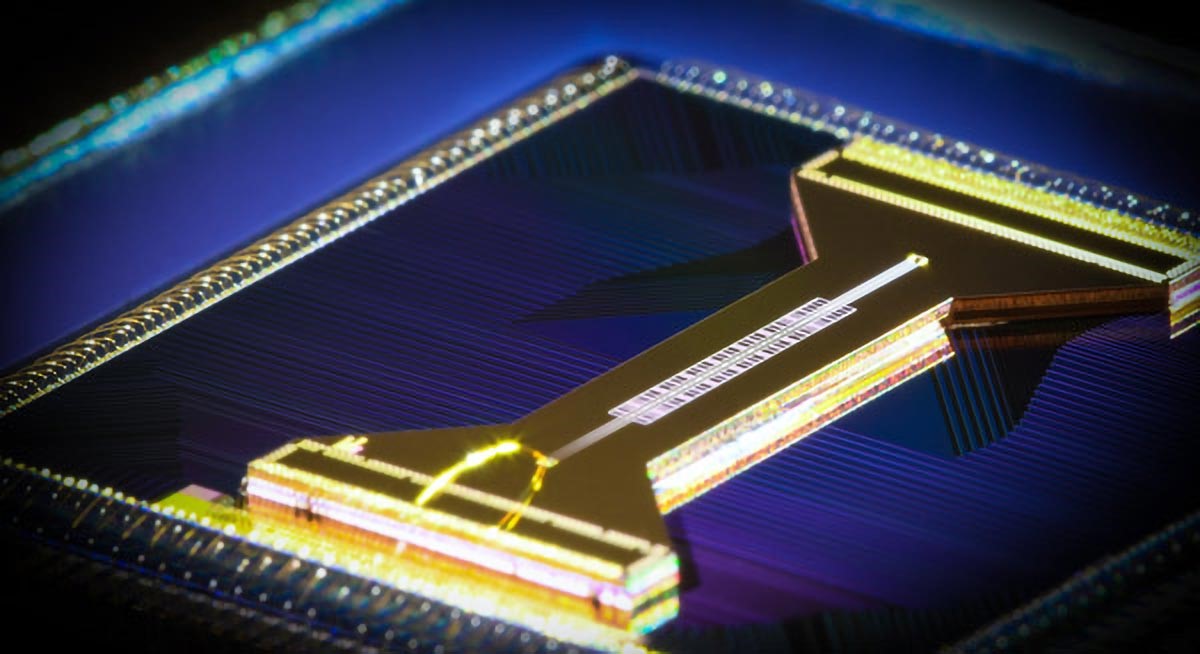
Figure 1. IBM & AMD Partner on Next-Gen Quantum Supercomputing
The collaboration combines IBM’s quantum systems and software expertise with AMD’s capabilities in CPUs, GPUs, and AI accelerators. Together, they aim to build scalable, open-source platforms designed to tackle problems beyond the reach of conventional computing. Figure 1 shows IBM & AMD Partner on Next-Gen Quantum Supercomputing.
Unlike classical computers that use binary bits, quantum computers rely on qubits, which follow quantum mechanics principles. This enables them to represent information in ways that can simulate natural systems or optimize processes in fields like drug discovery, materials science, and logistics.
“Quantum computing will model the natural world and represent information in completely new ways,” said Arvind Krishna, IBM’s Chairman and CEO. He added that combining IBM’s quantum systems with AMD’s advanced high-performance computing technologies will create a powerful hybrid model that surpasses the limits of traditional computing.
Dr. Lisa Su, AMD’s Chair and CEO, stated that high-performance computing underpins solutions to the world’s most critical challenges. She noted that partnering with IBM to merge HPC and quantum technologies presents significant opportunities to speed up discovery and drive innovation.
In a hybrid computing model, different parts of a problem are assigned to the most appropriate computing system. For instance, quantum computers could simulate atomic interactions, while HPC and AI systems manage large-scale data analysis.
IBM and AMD aim to showcase later this year how their technologies can collaborate to enable hybrid quantum-classical workflows [1]. They are also investigating how open-source platforms, including IBM’s Qiskit, can speed up the creation of algorithms for quantum-centric computing.
The partnership may support IBM’s long-term objective of developing fault-tolerant quantum computers by the decade’s end. AMD’s technologies could play a key role in real-time error correction, an essential element for these systems.
In April, quantum research firm Project Eleven warned that over 6 million Bitcoin, worth about $650 billion, could be vulnerable if quantum computers ever break the elliptic curve cryptography (ECC) securing transactions. However, they stressed that current quantum technology is far from this capability, noting that no quantum computer running Shor’s algorithm has cracked even a 3-bit key, while Bitcoin private keys are 256 bits. In June, MicroStrategy’s Michael Saylor also dismissed the threat as exaggerated, noting that protocol and hardware upgrades would likely address any serious vulnerabilities and protect Bitcoin against future quantum risks.
References:
- https://www.businesstoday.in/technology/news/story/ibm-and-amd-announce-partnership-to-develop-next-gen-quantum-supercomputing-infrastructure-491230-2025-08-26
Cite this article:
Janani R (2025), IBM and AMD Team Up to Build Next-Gen Quantum Supercomputing Infrastructure, AnaTechMaz, pp.366
Recent Post
-

Existing Internet Cables Successfully Support Quantum Networks
Quantum networking may be closer to practical use thanks to engineers...
-

Quantum Computer Assembled Like LEGO Bricks by Scientists
Building on this idea, researchers at The Grainger College of Engineering, University of Illinois ....
-

Scientists Unveil a Brand-New State of Quantum Matter
The phase was first observed in a material created at UC Irvine by postdoctoral researcher and...
-

El Salvador Moves $678M in Bitcoin to Counter Quantum Computing Risk
El Salvador’s Bitcoin Office moved its 6,274 Bitcoin, worth $678 million,....
-

Quantinuum Teams with Sanger Institute to Encode Genome on Quantum Computer
The Wellcome Sanger Institute has teamed up with Quantinuum,...
-
IBM and AMD Team Up to Build Next-Gen Quantum Supercomputing Infrastructure
IBM and AMD have joined forces to create next-generation...
-

AQT-Led QCDC Project Provides Europe Cloud Access to Quantum Computers
Led by Juris Ulmanis, QCDC Project Leader and Director...
-

Quantum Breakthrough: Physicists Solve 15-Year-Old, 5-Atom Mystery
At the quantum scale, matter behaves in unusual ways, with the Efimov effect being one of the most...
-
Quantum Computers Simulate Black Holes to Explore Cosmic Mysteries
A team of four researchers at RIKEN has successfully used two....
-
World’s First Programmable Photonic Waveguide Offers New Flexibility for Quantum Light
In a major breakthrough for photonics, researchers have developed the ...
-

Physicists Discover a Method to Unravel Quantum Mysteries Without Using Supercomputers
Researchers at the University at Buffalo have made a major leap in...
-

New Laser-Based Quantum Radio Can Receive Signals Without Electricity or Antennas
Physicists at the University of Warsaw have created the world’s first...
-

New Spin on a Classic Material May Boost Quantum Computing and Slash Data Center Energy Use
Researchers in the United States have demonstrated that an innovative ...
-

Quantum Dots May Revolutionize Night Vision Technology
Infrared camera makers are increasingly challenged by environmental regulations that ...
IBM Says Major Quantum Error-Correction Algorithm Now Runs on Standard AMD Processors
IBM announced on Friday that it has successfully run a crucial....