

AQT-Led QCDC Project Provides Europe Cloud Access to Quantum Computers
Led by Juris Ulmanis, QCDC Project Leader and Director of Quantum Technologies at Alpine Quantum Technologies (AQT) in Innsbruck, the EU-funded QCDC initiative has launched a cloud-based quantum computing service giving European researchers access to trapped-ion quantum computers. In collaboration with QC Ware (USA), Covestro (Germany), and Boehringer Ingelheim (Germany), the team used the Variational Quantum Eigensolver (VQE) algorithm to calculate molecular interaction energies—key to understanding complex chemical reactions like those in the Nitrogen Cycle—even on noisy intermediate-scale quantum (NISQ) devices, with results closely matching classical calculations. The QCDC project aims to bolster Europe’s technological sovereignty, provide local quantum computing access, reduce reliance on non-EU providers, and foster independent innovation in fields such as drug discovery and materials science.
The QCDC (Quantum Computers for Datacentres) project has successfully established a cloud-based trapped-ion quantum computing service in Europe, funded by the European Innovation Council. This platform provides researchers with access to advanced quantum devices on European soil, marking a major step in enhancing Europe’s quantum capabilities, strengthening technological sovereignty, and reducing dependence on non-EU providers.

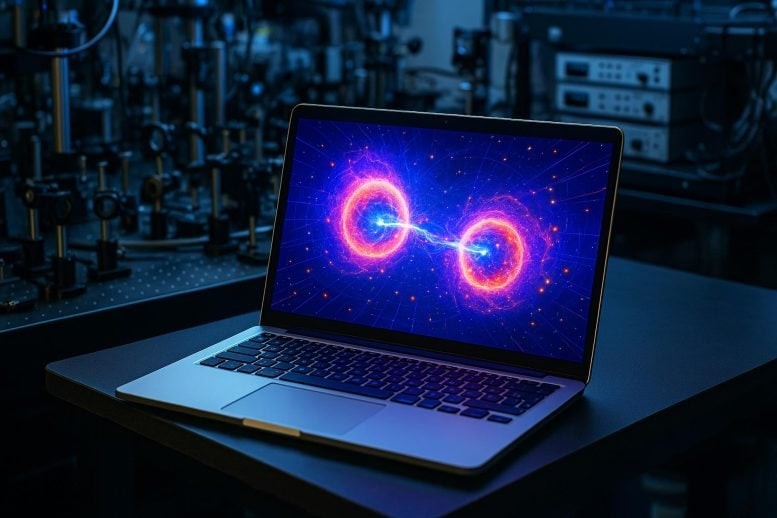
Figure 1. Europe Gains Cloud Access to Quantum Computers via AQT-Led QCDC
The initiative brought together Alpine Quantum Technologies (AQT) of Innsbruck, specializing in general-purpose ion-trap quantum computing, with QC Ware (USA), Covestro (Germany), and Boehringer Ingelheim (Germany). The team used the Variational Quantum Eigensolver (VQE) algorithm to simulate molecular interaction energies, optimizing trial states to find the lowest-energy configurations. Even on noisy intermediate-scale quantum (NISQ) devices, the results closely matched classical computations, demonstrating the accuracy and potential of early-stage quantum computers. Figure 1. Europe Gains Cloud Access to Quantum Computers via AQT-Led QCDC.
Juris Ulmanis, QCDC Project Leader and Director of Quantum Technologies at AQT, highlighted that the project has allowed researchers to tackle problems previously beyond the reach of quantum computers. He emphasized the vast potential of quantum computing in areas such as drug discovery, materials design, and sustainability, noting that the initiative equips researchers with advanced tools to address complex global challenges and accelerate innovation across multiple industries.
Essential Highlights
Quantum computers use the principles of quantum mechanics to process information in ways that traditional computers cannot, enabling calculations that may be impossible on classical systems. Unlike conventional computers, which process data sequentially, quantum machines exploit quantum entanglement to evaluate many possible solutions simultaneously, making them exceptionally suited for simulating complex systems such as molecules and materials with high speed and accuracy.
To put this into perspective, the computing power of an entire large-scale data centre may not match that of a single fully operational quantum computer. These advanced computations, difficult even for supercomputers, are expected to be achievable with quantum systems developed by Alpine Quantum Technologies (AQT), an Innsbruck-based company specializing in general-purpose ion-trap quantum computing.
Quantum computers harness quantum mechanics to process information in ways that traditional computers cannot, enabling calculations that may be infeasible for classical systems. Unlike conventional computers, which operate sequentially, quantum machines use quantum entanglement to evaluate multiple solutions simultaneously, making them ideal for simulating complex systems such as molecules and materials with high speed and precision.
The computational power of a single quantum computer can surpass that of an entire large-scale data centre. These advanced capabilities, once challenging even for supercomputers, are being realized by Alpine Quantum Technologies (AQT), an Innsbruck-based company specializing in general-purpose ion-trap quantum computing.
Through the QCDC project, researchers have gained access to these powerful systems, accelerating progress in drug development and opening new opportunities in materials science, including energy storage, sustainability, and manufacturing [1]. The project represents a major step toward establishing Europe as a leader in quantum computing, enhancing technological sovereignty by providing local access to world-class quantum infrastructure, reducing dependence on non-EU providers, and enabling European researchers and industries to innovate independently while safeguarding critical data and research.
Juris Ulmanis, QCDC Project Leader and Director of Quantum Technologies at Alpine Quantum Technologies (AQT), highlighted that the project marks a major step in making quantum computing a practical tool for European researchers. By granting access to AQT’s advanced quantum technology, scientists were able to tackle problems previously beyond the reach of quantum computers, with potential applications across drug discovery, materials design, and sustainability.
The completion of the QCDC project represents a significant advancement for Europe in positioning itself as a leader in quantum computing. The initiative strengthened Europe’s technological sovereignty by providing local access to cutting-edge quantum capabilities, reducing reliance on non-EU providers, fostering independent innovation among researchers and industries, and safeguarding critical data and research from external influence.
References:
- https://quantumzeitgeist.com/aqt-led-qcdc-project-grants-europe-cloud-access-to-quantum-computers/
Cite this article:
Janani R (2025), AQT-Led QCDC Project Provides Europe Cloud Access to Quantum Computers, AnaTechMaz, pp.367
Recent Post
-

Existing Internet Cables Successfully Support Quantum Networks
Quantum networking may be closer to practical use thanks to engineers...
-

Quantum Computer Assembled Like LEGO Bricks by Scientists
Building on this idea, researchers at The Grainger College of Engineering, University of Illinois ....
-

Scientists Unveil a Brand-New State of Quantum Matter
The phase was first observed in a material created at UC Irvine by postdoctoral researcher and...
-

El Salvador Moves $678M in Bitcoin to Counter Quantum Computing Risk
El Salvador’s Bitcoin Office moved its 6,274 Bitcoin, worth $678 million,....
-

Quantinuum Teams with Sanger Institute to Encode Genome on Quantum Computer
The Wellcome Sanger Institute has teamed up with Quantinuum,...
-

IBM and AMD Team Up to Build Next-Gen Quantum Supercomputing Infrastructure
IBM and AMD have joined forces to create next-generation...
-
AQT-Led QCDC Project Provides Europe Cloud Access to Quantum Computers
Led by Juris Ulmanis, QCDC Project Leader and Director...
-

Quantum Breakthrough: Physicists Solve 15-Year-Old, 5-Atom Mystery
At the quantum scale, matter behaves in unusual ways, with the Efimov effect being one of the most...
-

Quantum Computers Simulate Black Holes to Explore Cosmic Mysteries
A team of four researchers at RIKEN has successfully used two....
-
World’s First Programmable Photonic Waveguide Offers New Flexibility for Quantum Light
In a major breakthrough for photonics, researchers have developed the ...
-
Physicists Discover a Method to Unravel Quantum Mysteries Without Using Supercomputers
Researchers at the University at Buffalo have made a major leap in...
-
New Laser-Based Quantum Radio Can Receive Signals Without Electricity or Antennas
Physicists at the University of Warsaw have created the world’s first...
-

New Spin on a Classic Material May Boost Quantum Computing and Slash Data Center Energy Use
Researchers in the United States have demonstrated that an innovative ...
-

Quantum Dots May Revolutionize Night Vision Technology
Infrared camera makers are increasingly challenged by environmental regulations that ...

IBM Says Major Quantum Error-Correction Algorithm Now Runs on Standard AMD Processors
IBM announced on Friday that it has successfully run a crucial....