

Scientists Unveil a Brand-New State of Quantum Matter
Materials and Experimental Conditions
The phase was first observed in a material created at UC Irvine by postdoctoral researcher and lead author Jinyu Liu. Jauregui and his team then confirmed its existence under powerful magnetic fields at Los Alamos National Laboratory (LANL) in New Mexico.
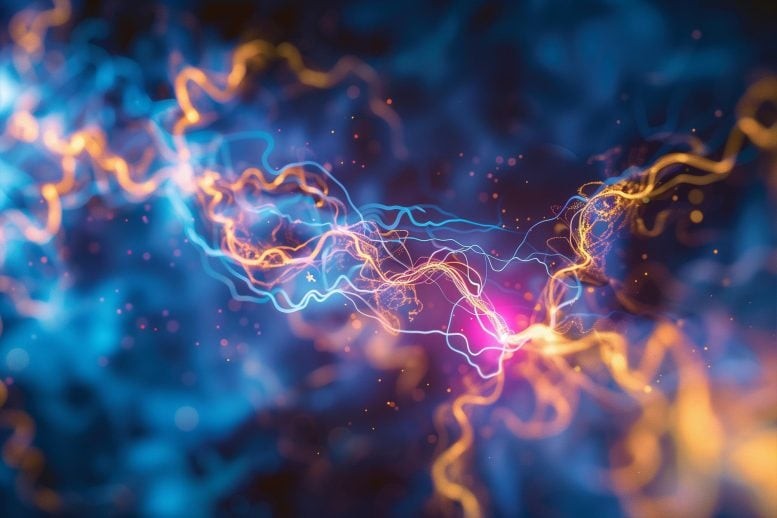
Figure 1. Breakthrough Discovery: A New Quantum State of Matter.
Generating the Quantum State
To create this unusual phase of matter, the researchers subjected hafnium pentatelluride to an intense magnetic field of up to 70 Teslas. (For perspective, a typical refrigerator magnet produces only about 0.1 Teslas.) Under these extreme conditions, the material transitioned into the newly identified quantum state. Figure 1 shows Breakthrough Discovery: A New Quantum State of Matter.
Implications for Future Technology
“As we increased the magnetic field, the material’s ability to conduct electricity suddenly dropped—evidence that it had entered this exotic phase,” explained Jauregui. “This is significant because it suggests signals could be transmitted by spin rather than electrical charge, opening a path toward highly energy-efficient technologies such as spin-based electronics or quantum devices.”
Unlike conventional electronic materials, this quantum matter is immune to radiation, making it a strong candidate for space applications.
“It could be valuable for space missions,” Jauregui said. “If you want computers in space that can last, this is one way to achieve that.”
With companies like SpaceX aiming for crewed missions to Mars, the need for radiation-resilient computing is critical.
Quantum matter refers to materials that behave in ways classical physics can’t explain. Instead, their properties are governed by quantum mechanics—rules that describe the strange world of particles at atomic and subatomic scales. Familiar examples include superconductors and quantum magnets.
Quantum matter refers to materials that behave in ways classical physics can’t explain. Instead, their properties are governed by quantum mechanics—rules that describe the strange world of particles at atomic and subatomic scales. Familiar examples include superconductors and quantum magnets.
Researchers at UC Irvine engineered a special material, hafnium pentatelluride, and exposed it to extremely strong magnetic fields—up to 70 Teslas (hundreds of times stronger than MRI machines). Under these conditions, the material shifted into a completely new quantum phase that had never been seen before.
In this exotic state, the material’s ability to conduct electricity suddenly dropped. Instead of carrying charge in the usual way, it suggests the possibility of transporting information through the spin of electrons—a quantum property—rather than their electrical charge.
This breakthrough could pave the way for spin-based electronics and quantum devices that use far less energy than current technologies. Even more striking, this new quantum matter is resistant to radiation, which means it could function in harsh environments where ordinary electronics fail.
Radiation-hardened quantum matter could be a game-changer for space exploration. Long-duration missions to Mars or beyond will require computers that can withstand cosmic radiation for years without failing. While it’s still early days, the discovery opens up an entirely new frontier in both physics and technology.
Source: SciTECHDaily
Cite this article:
Priyadharshini S (2025), Scientists Unveil a Brand-New State of Quantum Matter, AnaTechMaz, pp.363
Recent Post
-

Existing Internet Cables Successfully Support Quantum Networks
Quantum networking may be closer to practical use thanks to engineers...
-

Quantum Computer Assembled Like LEGO Bricks by Scientists
Building on this idea, researchers at The Grainger College of Engineering, University of Illinois ....
-
Scientists Unveil a Brand-New State of Quantum Matter
The phase was first observed in a material created at UC Irvine by postdoctoral researcher and...
-

El Salvador Moves $678M in Bitcoin to Counter Quantum Computing Risk
El Salvador’s Bitcoin Office moved its 6,274 Bitcoin, worth $678 million,....
-

Quantinuum Teams with Sanger Institute to Encode Genome on Quantum Computer
The Wellcome Sanger Institute has teamed up with Quantinuum,...
-

IBM and AMD Team Up to Build Next-Gen Quantum Supercomputing Infrastructure
IBM and AMD have joined forces to create next-generation...
-

AQT-Led QCDC Project Provides Europe Cloud Access to Quantum Computers
Led by Juris Ulmanis, QCDC Project Leader and Director...
-

Quantum Breakthrough: Physicists Solve 15-Year-Old, 5-Atom Mystery
At the quantum scale, matter behaves in unusual ways, with the Efimov effect being one of the most...
-
Quantum Computers Simulate Black Holes to Explore Cosmic Mysteries
A team of four researchers at RIKEN has successfully used two....
-
World’s First Programmable Photonic Waveguide Offers New Flexibility for Quantum Light
In a major breakthrough for photonics, researchers have developed the ...
-
Physicists Discover a Method to Unravel Quantum Mysteries Without Using Supercomputers
Researchers at the University at Buffalo have made a major leap in...
-
New Laser-Based Quantum Radio Can Receive Signals Without Electricity or Antennas
Physicists at the University of Warsaw have created the world’s first...
-

New Spin on a Classic Material May Boost Quantum Computing and Slash Data Center Energy Use
Researchers in the United States have demonstrated that an innovative ...
-

Quantum Dots May Revolutionize Night Vision Technology
Infrared camera makers are increasingly challenged by environmental regulations that ...
IBM Says Major Quantum Error-Correction Algorithm Now Runs on Standard AMD Processors
IBM announced on Friday that it has successfully run a crucial....