

Quantum Computer Assembled Like LEGO Bricks by Scientists
Building on this idea, researchers at The Grainger College of Engineering, University of Illinois Urbana-Champaign, have developed a refined approach to scalable quantum computing. They unveiled a high-performance modular design for superconducting quantum processors, demonstrating how this architecture can combine efficiency with flexibility. Reported in Nature Electronics, their work advances earlier methods and brings the field closer to scalable, fault-tolerant, and reconfigurable quantum computing systems.

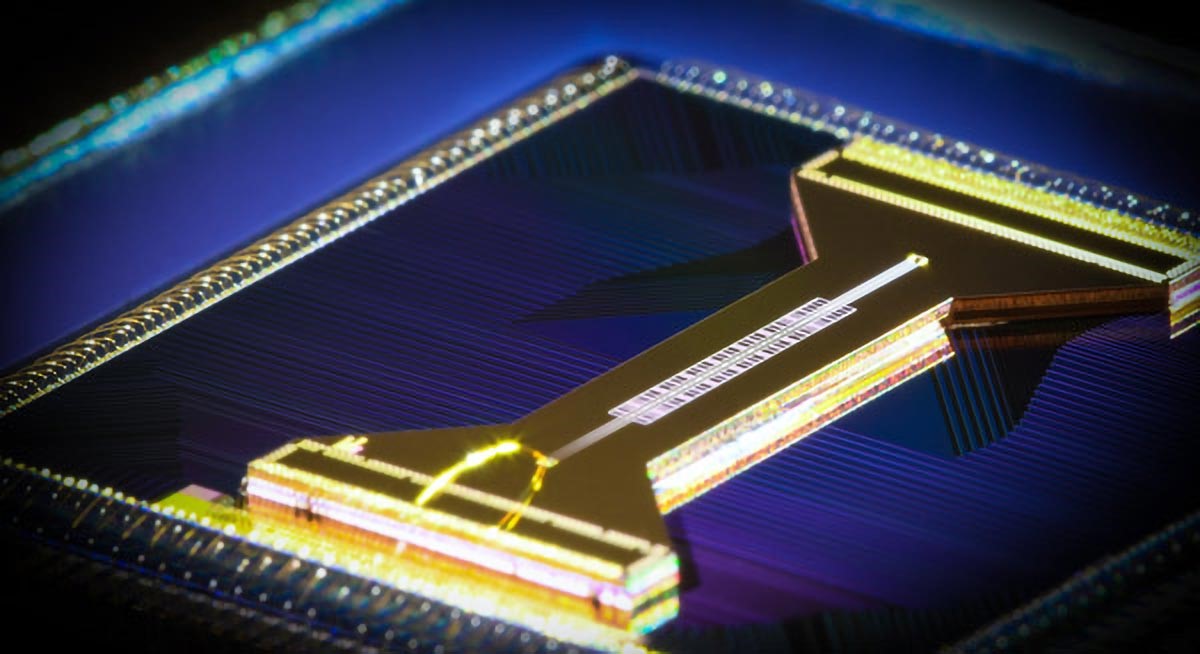
Figure 1. Scientists Build Modular Quantum Computer That Snaps Together.
Why modular beats monolithic
Traditional superconducting quantum computers, built as single large systems, face limitations in both size and fidelity—the measure of how accurately logical operations are performed. With a fidelity value of one representing perfect precision, researchers aim to get as close to that ideal as possible. Modular architectures, in contrast, provide superior scalability, easier hardware upgrades, and greater robustness against errors, making them a stronger candidate for building practical quantum networks. Figure 1 shows Scientists Build Modular Quantum Computer That Snaps Together.
“We’ve developed an engineering-friendly method for achieving modularity with superconducting qubits,” explained Wolfgang Pfaff, assistant professor of physics and senior author of the study. “The key questions are: Can we build a system that brings qubits together to enable entanglement and gate operations at high quality? Can it be taken apart and reassembled? Usually, problems are discovered only after assembly, so having the flexibility to reconfigure later is critical.”
High-fidelity connections
Pfaff’s team demonstrated a system in which two devices were linked with superconducting coaxial cables, enabling qubits to interact across modules. They achieved ~99% SWAP gate fidelity—less than 1% loss—showing that modular devices can be connected and reconfigured while maintaining performance. This offers fresh insights for designing future quantum communication protocols.
“Finding the right approach has taken time,” Pfaff added. “Researchers have long sought a way to connect larger systems through cables while still achieving the high performance needed for scaling. The challenge was identifying the right combination of tools.”
Looking ahead, the Grainger engineers aim to expand their work by connecting more than two devices while retaining error-checking capabilities.
The Breakthrough Idea
Scientists have introduced a modular design for quantum computers that works like LEGO bricks snapping together. Instead of building massive, monolithic machines, they’re creating smaller, self-contained modules that can be connected and reconfigured with ease. This makes quantum systems far more flexible, scalable, and easier to upgrade.
The team from the University of Illinois Urbana-Champaign designed superconducting quantum processors that can be linked using specialized cables. These connections allow qubits in different modules to interact, perform entanglement, and carry out quantum gate operations with extremely high fidelity (~99%). Importantly, the modules can be separated and reassembled without losing performance, giving engineers the freedom to troubleshoot and reconfigure systems as needed.
This modular approach overcomes the limitations of traditional “one-piece” quantum computers, which are hard to scale and prone to errors. By treating modules like LEGO blocks, scientists pave the way toward building larger, fault-tolerant quantum networks. The next step will be expanding beyond two connected modules while maintaining accuracy, bringing the field closer to practical, reconfigurable quantum computers.
Source: SciTECHDaily
Cite this article:
Priyadharshini S (2025), Quantum Computer Assembled Like LEGO Bricks by Scientists, AnaTechMaz, pp.362
Recent Post
-

Existing Internet Cables Successfully Support Quantum Networks
Quantum networking may be closer to practical use thanks to engineers...
-
Quantum Computer Assembled Like LEGO Bricks by Scientists
Building on this idea, researchers at The Grainger College of Engineering, University of Illinois ....
-

Scientists Unveil a Brand-New State of Quantum Matter
The phase was first observed in a material created at UC Irvine by postdoctoral researcher and...
-

El Salvador Moves $678M in Bitcoin to Counter Quantum Computing Risk
El Salvador’s Bitcoin Office moved its 6,274 Bitcoin, worth $678 million,....
-

Quantinuum Teams with Sanger Institute to Encode Genome on Quantum Computer
The Wellcome Sanger Institute has teamed up with Quantinuum,...
-

IBM and AMD Team Up to Build Next-Gen Quantum Supercomputing Infrastructure
IBM and AMD have joined forces to create next-generation...
-

AQT-Led QCDC Project Provides Europe Cloud Access to Quantum Computers
Led by Juris Ulmanis, QCDC Project Leader and Director...
-

Quantum Breakthrough: Physicists Solve 15-Year-Old, 5-Atom Mystery
At the quantum scale, matter behaves in unusual ways, with the Efimov effect being one of the most...
-
Quantum Computers Simulate Black Holes to Explore Cosmic Mysteries
A team of four researchers at RIKEN has successfully used two....
-

World’s First Programmable Photonic Waveguide Offers New Flexibility for Quantum Light
In a major breakthrough for photonics, researchers have developed the ...
-

Physicists Discover a Method to Unravel Quantum Mysteries Without Using Supercomputers
Researchers at the University at Buffalo have made a major leap in...
-

New Laser-Based Quantum Radio Can Receive Signals Without Electricity or Antennas
Physicists at the University of Warsaw have created the world’s first...
-

New Spin on a Classic Material May Boost Quantum Computing and Slash Data Center Energy Use
Researchers in the United States have demonstrated that an innovative ...
-

Quantum Dots May Revolutionize Night Vision Technology
Infrared camera makers are increasingly challenged by environmental regulations that ...

IBM Says Major Quantum Error-Correction Algorithm Now Runs on Standard AMD Processors
IBM announced on Friday that it has successfully run a crucial....