

Quantum Breakthrough: Physicists Solve 15-Year-Old, 5-Atom Mystery
A recent calculation reveals the interactions of five atoms in the Efimov effect, representing a significant advance in quantum physics.
At the quantum scale, matter behaves in unusual ways, with the Efimov effect being one of the most striking examples. In this phenomenon, three or more atoms can bind together even when excited, while two atoms cannot. Researchers at Purdue University have now completed the complex calculations describing the Efimov effect for a system of five atoms, advancing our understanding of matter’s fundamental behavior.
This breakthrough has implications for diverse areas, from atoms in laser traps to dense gases in neutron stars. It reinforces core principles of quantum mechanics and may improve techniques for controlling and studying atoms in experiments. Building on his 2009 work modeling four-atom Efimov states, Purdue’s Christopher Greene and colleagues have now successfully extended the model to five atoms. Their results are published in the Proceedings of the National Academy of Sciences.

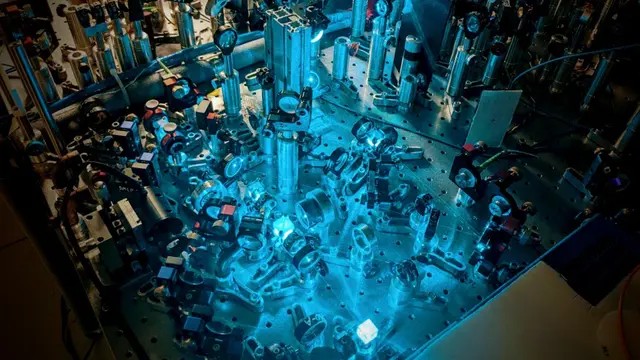
Figure 1. Five-Atom Quantum Efimov Effect
Cracking the Five-Atom Quantum Puzzle
“Understanding interactions among five particles is a key challenge for advancing quantum applications beyond the lab,” said Greene, who led the research with postdoctoral associate Michael Higgins. The team achieved this by leveraging faster computers, parallel processing, and deeper mathematical insights, extending beyond their 2009 work on four-body systems. Figure 1 shows Five-Atom Quantum Efimov Effect.
In simple terms, atoms in gases drift and collide like billiard balls, moving faster when heated and slower at lower temperatures. Despite this motion, atoms exert weak attractive forces on each other, raising the question of how strong these forces must be to bind the particles. The answer comes from solving the Schrödinger equation, a central tool in quantum mechanics that predicts the evolution of quantum systems over time.
Bridging Quantum Theory and Ultracold Experiments
In the 1970s, Russian physicist Vitaly Efimov predicted a counterintuitive quantum effect: it can take more force to bind two atoms than three. Remarkably, once three atoms form a bound state, they remain connected even as energy is added, which increases their motion and separation. Like other quantum phenomena such as superposition and entanglement, the Efimov state defies everyday intuition, yet these interactions underpin the physical world we experience.
In 1999, Greene’s team proposed that the Efimov effect would be observable in gases cooled near absolute zero, where quantum effects dominate. Five years later, a European group successfully created an Efimov state with three cesium atoms in an ultracold gas. According to Greene, inducing this phenomenon has now become a routine part of ultracold quantum experiments.
Advancing the Frontiers of Quantum Computation
Modeling the Efimov effect with Schrödinger’s equation is highly demanding, and adding each extra atom drastically increases computational complexity. Greene’s 2009 work showed that four identical bosons—subatomic particles—bind more readily than three [1]. The new study calculates how five identical bosons combine over time, made possible by advances in computing power and refined mathematical methods that overcome previous challenges.
“We understand the laws of quantum mechanics, but the equations are extremely difficult to solve,” Greene said, crediting Higgins for designing and running the supercomputer simulations that propelled this theoretical breakthrough.
References:
- https://scitechdaily.com/quantum-oddity-physicists-crack-15-year-old-5-atom-puzzle/
Cite this article:
Janani R (2025), Quantum Breakthrough: Physicists Solve 15-Year-Old, 5-Atom Mystery, AnaTechMaz, pp.368
Recent Post
-

Existing Internet Cables Successfully Support Quantum Networks
Quantum networking may be closer to practical use thanks to engineers...
-

Quantum Computer Assembled Like LEGO Bricks by Scientists
Building on this idea, researchers at The Grainger College of Engineering, University of Illinois ....
-

Scientists Unveil a Brand-New State of Quantum Matter
The phase was first observed in a material created at UC Irvine by postdoctoral researcher and...
-

El Salvador Moves $678M in Bitcoin to Counter Quantum Computing Risk
El Salvador’s Bitcoin Office moved its 6,274 Bitcoin, worth $678 million,....
-

Quantinuum Teams with Sanger Institute to Encode Genome on Quantum Computer
The Wellcome Sanger Institute has teamed up with Quantinuum,...
-

IBM and AMD Team Up to Build Next-Gen Quantum Supercomputing Infrastructure
IBM and AMD have joined forces to create next-generation...
-

AQT-Led QCDC Project Provides Europe Cloud Access to Quantum Computers
Led by Juris Ulmanis, QCDC Project Leader and Director...
-
Quantum Breakthrough: Physicists Solve 15-Year-Old, 5-Atom Mystery
At the quantum scale, matter behaves in unusual ways, with the Efimov effect being one of the most...
-

Quantum Computers Simulate Black Holes to Explore Cosmic Mysteries
A team of four researchers at RIKEN has successfully used two....
-

World’s First Programmable Photonic Waveguide Offers New Flexibility for Quantum Light
In a major breakthrough for photonics, researchers have developed the ...
-

Physicists Discover a Method to Unravel Quantum Mysteries Without Using Supercomputers
Researchers at the University at Buffalo have made a major leap in...
-
New Laser-Based Quantum Radio Can Receive Signals Without Electricity or Antennas
Physicists at the University of Warsaw have created the world’s first...
-

New Spin on a Classic Material May Boost Quantum Computing and Slash Data Center Energy Use
Researchers in the United States have demonstrated that an innovative ...
-

Quantum Dots May Revolutionize Night Vision Technology
Infrared camera makers are increasingly challenged by environmental regulations that ...

IBM Says Major Quantum Error-Correction Algorithm Now Runs on Standard AMD Processors
IBM announced on Friday that it has successfully run a crucial....