

Micro Ring Laser Breaks Quantum Barriers
Micro Ring Laser Breaks Quantum Barriers
Researchers in China have made a significant breakthrough in quantum photonics by creating a large 60-mode entangled cluster state directly on a chip using optical microresonators. Utilizing a deterministic, continuous-variable method combined with a multi-laser pump technique, they surpassed previous scalability limits. Advanced detection techniques verified the high-quality entanglement, opening new possibilities for quantum technologies such as chip-based quantum computers, secure communication systems, and advanced sensors.
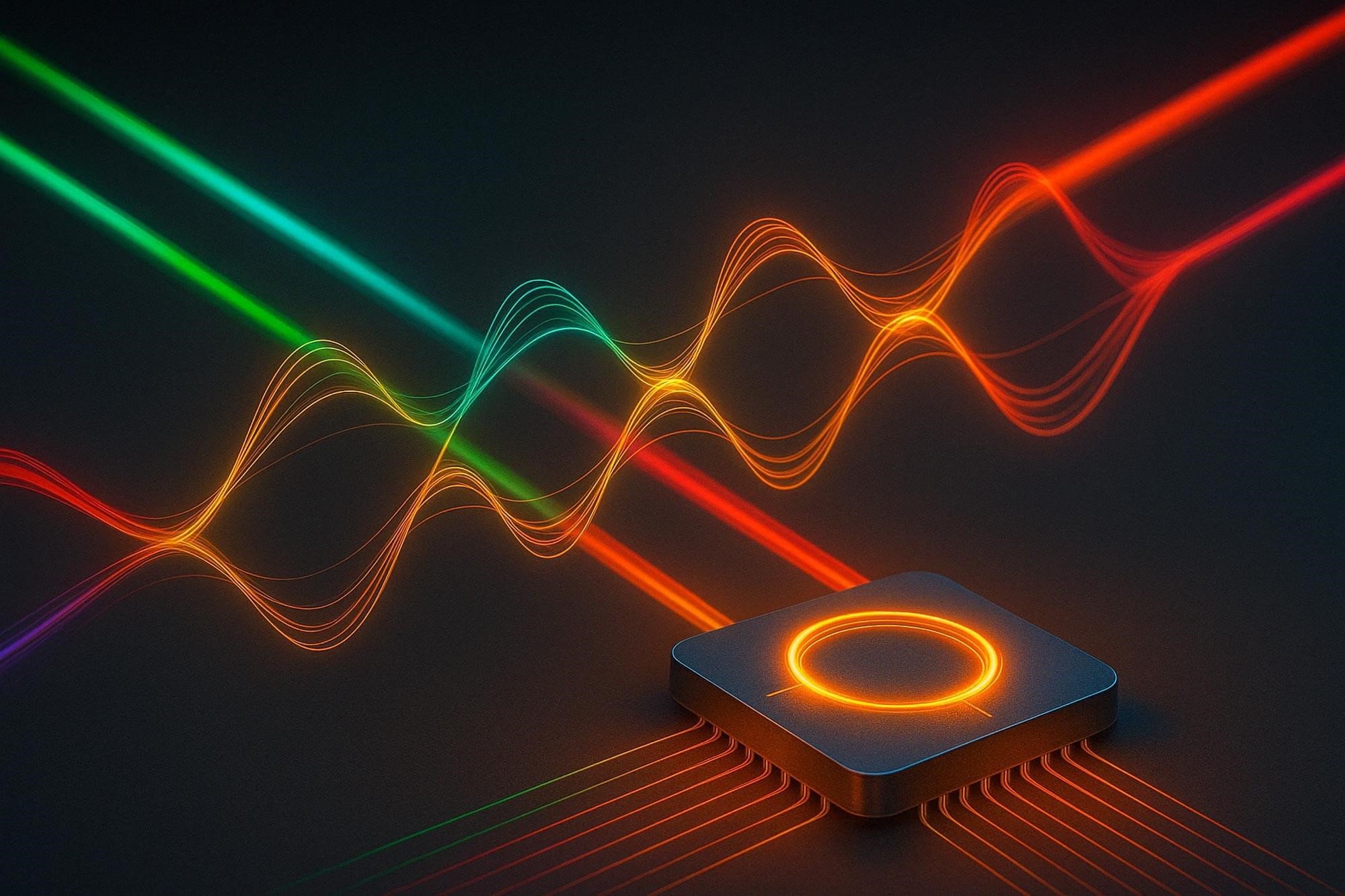
Figure 1. Record-Breaking 60-Mode On-Chip Entanglement
On-Chip Quantum Entanglement Breakthrough
Researchers from Peking University and the Chinese Academy of Sciences have made a significant breakthrough in quantum photonics by creating large-scale cluster states directly on a chip. Utilizing optical microresonators, they generated a 60-mode entangled cluster state—approximately ten times larger than earlier on-chip achievements [1]. Their results were published in Light: Science & Applications. Figure 1 shows Record-Breaking 60-Mode On-Chip Entanglement.
Cluster states play a vital role in quantum technologies by enabling coordinated entanglement among multiple quantum systems. This entanglement is essential for advanced quantum computing, highly secure communications, and precise sensing. Previously, producing large cluster states on a chip was difficult because most techniques depended on probabilistic processes that hindered scalability. The researchers addressed this challenge by employing a continuous-variable method that creates entanglement deterministically—providing reliable, on-demand generation.
Scaling Entanglement with Optical Microresonators
Central to this breakthrough is an optical microresonator, a tiny ring-shaped device that traps light in a circular path and supports many closely spaced frequency modes. The researchers employed up to three synchronized lasers in a multi-pump configuration. The primary laser induced degenerate four-wave mixing to generate pairs of entangled light modes, while the additional lasers created further connections through non-degenerate four-wave mixing. This combined approach formed a highly interconnected network of 60 entangled light modes arranged in linear and grid patterns.
Using advanced techniques like phase-locked balanced homodyne detection, the team directly measured the orthogonal quadratures of the light modes. They built a covariance matrix and applied the positive partial transpose (PPT) criterion to verify the entanglement’s stability. The measured squeezing reached up to 3 dB, setting a world record and demonstrating the high quality of the entanglement.
Advancing Toward Scalable and Practical Quantum Technologies
This breakthrough offers a strong experimental foundation for studying quantum entanglement and opens the door to scalable, chip-integrated quantum light sources [2]. These compact and efficient systems could power the next generation of quantum computers, highly secure communication networks, and advanced sensing technologies.
References:
- https://scitechdaily.com/lasers-in-a-loop-how-a-micro-ring-just-shattered-quantum-limits/
- https://lifeboat.com/blog/2025/04/lasers-in-a-loop-how-a-micro-ring-just-shattered-quantum-limits
Cite this article:
Janani R (2025), Micro Ring Laser Breaks Quantum Barriers AnaTechMaz, pp.255
Recent Post
-

Scientists Accomplish World’s First Real-Time Molecular Reaction Using Quantum Technology
In a major scientific milestone, researchers at the University of Sydney have, for the first time, used ...
-
Historic First: Quantum Simulation Captures Atoms in Motion During Light-Driven Reactions
Researchers at the University of Sydney have achieved a world-first by performing a quantum....
-

China Unveils the World’s First Quantum Cryptography System, Claiming It to Be ‘Unhackable’
As quantum computing technology rapidly evolves, traditional...
-

The World’s Most Advanced Quantum Research Supercomputer Operates Using High-Performance NVIDIA Chips
NVIDIA has launched a groundbreaking initiative in supercomputing with the establishment of the Global Research...
-

From Earth to Entanglement: Norwegian Scientists Transform Simple Clay into A Foundation for Quantum Computing
In a groundbreaking international collaboration, researchers from Brazil, the Czech Republic, and France—led by ...
-
Photons Empower Revolutionary Quantum Sensors with The Ability to Detect the Invisible
Imagine trying to measure something so small, faint, or delicate that even the most advanced scientific instruments ...
-
Breakthrough: Quantum Computers Become 90% More Energy-Efficient, Compact, and Faster
Canadian quantum tech company Nord Quantique has introduced a groundbreaking technique for quantum error....
-
Quantum Techniques Transform Noisy Lasers into Ultra-Stable Beams That Push the Boundaries of Physics
Scientists have discovered a novel technique to transform fluctuating laser beams into ultra-stable ones,..
-
Scientists Manipulate Crystal Symmetry to Create a Quantum "Supermetal" That Could Revolutionize Energy Efficiency
As the world seeks faster computing and greener energy solutions, the demand for high-performance, ...
-

Quantum Simulation Reveals How Reality Might Collapse Like a House of Cards
Physicists have conducted a groundbreaking cosmic simulation that explores one ....
-

Breaking the Quantum Code: Solving the 20-Year Mystery of Entanglement Purity
Scientists have made a significant advancement in quantum technology....
-

Quantum Speed Boost: Additional Qubits Cut Measurement Time While Maintaining Precision
Quantum scientists have solved a longstanding challenge by developing....
-
How 1,432 GPUs Broke Google’s 53-Qubit Quantum Computer
Researchers made a significant breakthrough in quantum computing by....
-
Tiny Diamonds, Major Breakthrough: Laser-Free Quantum Spin Detection
Researchers at HZB have created an innovative method to detect quantum....
Micro Ring Laser Breaks Quantum Barriers
Researchers in China have made a significant breakthrough in quantum photonic....