

From Earth to Entanglement: Norwegian Scientists Transform Simple Clay into A Foundation for Quantum Computing
In a groundbreaking international collaboration, researchers from Brazil, the Czech Republic, and France—led by scientists at the Norwegian University of Science and Technology (NTNU)—have discovered that simple clay could serve as a viable material for building the quantum computers of the future. Their findings also point toward more environmentally sustainable computing technologies.

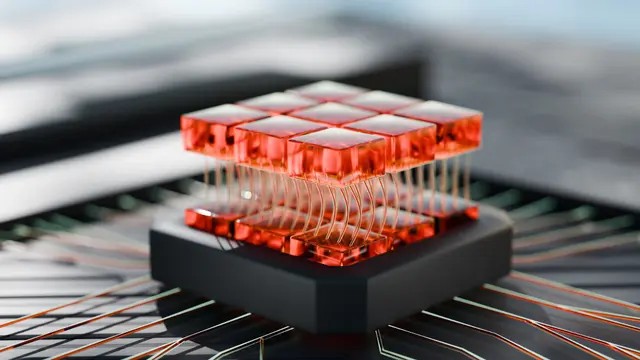
Figure 1.Clay into A Foundation for Quantum Computing.
Quantum computers, often described as the next revolution in supercomputing, have the potential to perform complex calculations in minutes—tasks that would take today’s fastest supercomputers decades to complete. This power comes from exploiting quantum states in the materials used to build these machines. Figure 1 shows Clay into A Foundation for Quantum Computing.
Until now, quantum computing has relied on rare and delicate materials such as superconductors or trapped atomic ions like ytterbium. These approaches demand highly controlled environments, often requiring ultra-low temperatures and complete isolation to maintain quantum coherence.
However, the research team has discovered that clay—a cheap, widely available material—possesses properties that could make it suitable for quantum computation.
Clay’s Quantum Potential
Despite its abundance, raw clay isn’t immediately ready for quantum computing. To qualify as a quantum material, it must exhibit specific conductive and magnetic behaviors.
Interestingly, clay has a near two-dimensional structure, which is critical at the quantum scale. Even more surprisingly, like silicon, clay displays semiconducting properties. Under certain conditions, it can conduct electricity, and under others, it cannot—allowing it to function similarly to a switch in a computing system.
Clay also exhibits antiferromagnetic behavior. While it isn’t magnetic in the conventional sense, its magnetic properties can still be harnessed in the right conditions—a key requirement in many quantum computing architectures. The combination of semiconductivity and antiferromagnetism makes clay a compelling candidate for quantum research.
Nature’s Own Quantum-Ready Material
Though clay is plentiful, adapting it for high-tech applications is not straightforward. The material still needs to be refined and engineered to function in quantum environments.
“What we’ve discovered is essentially a quantum-active component created by nature,” said Barbara Pacáková, a researcher in NTNU’s Department of Physics, in a press release [1]. “It’s stable, non-toxic, abundant, and naturally forms in a structure that’s nearly ready to use—which is especially promising for sustainable technologies.”
Using advanced instruments, the team has already identified some limitations. For example, the clay doesn’t exhibit ferromagnetism at room temperature, which means future quantum systems using it may still require specialized operational environments.
A Path Toward Greener Quantum Computing
Although there are challenges ahead, this discovery marks a significant step toward creating sustainable, more accessible quantum technologies. As researchers continue to develop methods for harnessing clay’s unique properties, the idea of building quantum computers from one of Earth’s most common materials becomes increasingly tangible.
Reference:
- https://interestingengineering.com/science/environment-friendly-option-quantum-computing-clay
Cite this article:
Keerthana S (2025), From Earth to Entanglement: Norwegian Scientists Transform Simple Clay into A Foundation for Quantum Computing, AnaTechMaz, pp,245
Recent Post
-

Scientists Accomplish World’s First Real-Time Molecular Reaction Using Quantum Technology
In a major scientific milestone, researchers at the University of Sydney have, for the first time, used ...
-
Historic First: Quantum Simulation Captures Atoms in Motion During Light-Driven Reactions
Researchers at the University of Sydney have achieved a world-first by performing a quantum....
-

China Unveils the World’s First Quantum Cryptography System, Claiming It to Be ‘Unhackable’
As quantum computing technology rapidly evolves, traditional...
-

The World’s Most Advanced Quantum Research Supercomputer Operates Using High-Performance NVIDIA Chips
NVIDIA has launched a groundbreaking initiative in supercomputing with the establishment of the Global Research...
-
From Earth to Entanglement: Norwegian Scientists Transform Simple Clay into A Foundation for Quantum Computing
In a groundbreaking international collaboration, researchers from Brazil, the Czech Republic, and France—led by ...
-
Photons Empower Revolutionary Quantum Sensors with The Ability to Detect the Invisible
Imagine trying to measure something so small, faint, or delicate that even the most advanced scientific instruments ...
-
Breakthrough: Quantum Computers Become 90% More Energy-Efficient, Compact, and Faster
Canadian quantum tech company Nord Quantique has introduced a groundbreaking technique for quantum error....
-
Quantum Techniques Transform Noisy Lasers into Ultra-Stable Beams That Push the Boundaries of Physics
Scientists have discovered a novel technique to transform fluctuating laser beams into ultra-stable ones,..
-
Scientists Manipulate Crystal Symmetry to Create a Quantum "Supermetal" That Could Revolutionize Energy Efficiency
As the world seeks faster computing and greener energy solutions, the demand for high-performance, ...
-

Quantum Simulation Reveals How Reality Might Collapse Like a House of Cards
Physicists have conducted a groundbreaking cosmic simulation that explores one ....
-

Breaking the Quantum Code: Solving the 20-Year Mystery of Entanglement Purity
Scientists have made a significant advancement in quantum technology....
-

Quantum Speed Boost: Additional Qubits Cut Measurement Time While Maintaining Precision
Quantum scientists have solved a longstanding challenge by developing....
-
How 1,432 GPUs Broke Google’s 53-Qubit Quantum Computer
Researchers made a significant breakthrough in quantum computing by....
-

Tiny Diamonds, Major Breakthrough: Laser-Free Quantum Spin Detection
Researchers at HZB have created an innovative method to detect quantum....

Micro Ring Laser Breaks Quantum Barriers
Researchers in China have made a significant breakthrough in quantum photonic....