

Scientists Accomplish World’s First Real-Time Molecular Reaction Using Quantum Technology
Scientists Use Quantum Tech to Simulate Real-Time Molecular Reactions for the First Time
In a major scientific milestone, researchers at the University of Sydney have, for the first time, used a quantum computer to simulate the real-time chemical behavior of actual molecules. This groundbreaking achievement brings scientists closer to harnessing quantum computing’s potential to reveal how atoms form new compounds or respond to light—crucial insights for fields like medicine, energy, and materials science.

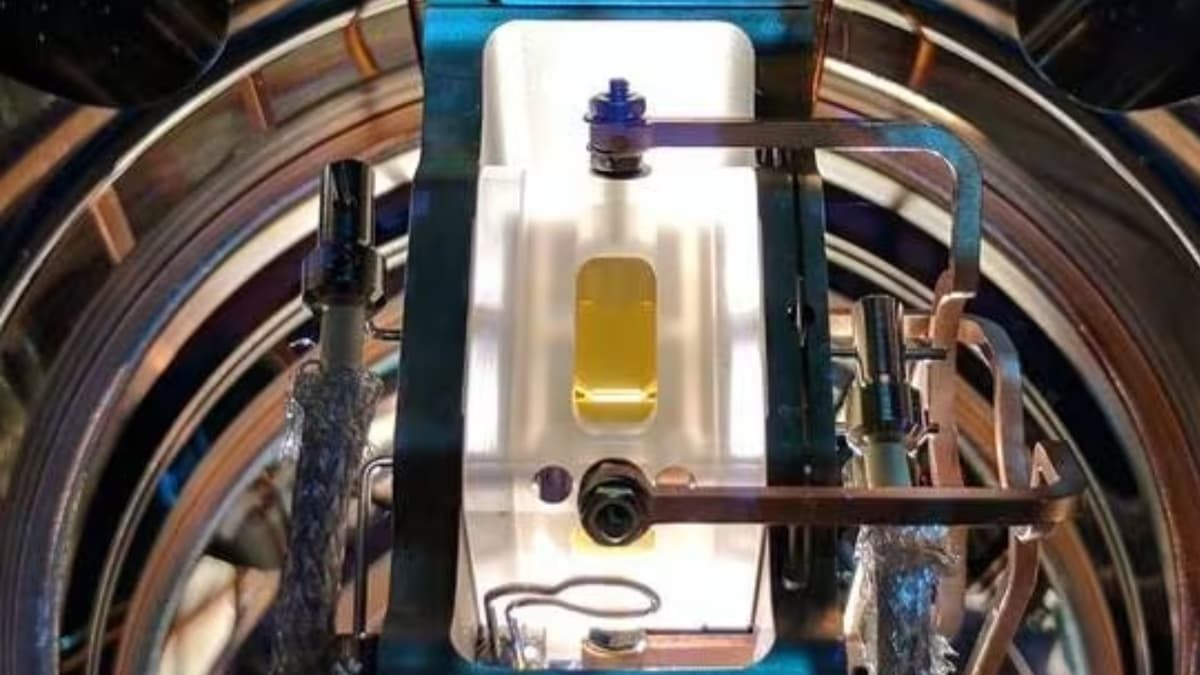
Figure 1. Inside the Trapped-Ion Quantum Computer
Led by quantum chemist Professor Ivan Kassal and Physics Horizon Fellow Dr. Tingrei Tan, the experiment took place using just a single trapped ion inside the University’s Nanoscience Hub. Until now, quantum computers have mainly been used to calculate static molecular properties, such as energy levels. Simulating dynamic, time-based changes in molecules remained out of reach due to their complexity—especially when light is involved. Figure 1 shows Inside the Trapped-Ion Quantum Computer.
This study breaks that barrier by successfully modeling how molecules behave when exposed to light, capturing rapid electronic and vibrational shifts that are nearly impossible for classical computers to simulate with precision or speed.
Kassal illustrated the challenge with a metaphor:
“Knowing your starting point, destination, and elevation change is not the same as knowing your exact path. Our method allows us to track the molecular 'hiker' in real time throughout the journey.”
A Breakthrough for Light-Based Chemistry
This new method enables detailed simulations of chemical reactions influenced by light. Potential applications include understanding how photosynthesis works, how UV light damages DNA, and improving technologies like photodynamic cancer therapies, sunscreens, and solar panels.
By better understanding ultrafast photo-induced reactions, scientists can accelerate drug discovery, improve solar energy devices, and design more advanced photoactive materials.
Efficiency on an Unprecedented Scale
Unlike previous studies that relied on abstract models, this research uses actual molecular systems, proving the method’s real-world applicability. Even more impressive is the resource efficiency: the team achieved their results using an analog quantum simulation with just one trapped ion.
“Replicating this using conventional digital quantum computers would require 11 perfect qubits and 300,000 error-free entangling gates,” Kassal explained. “Our method is about a million times more efficient, showing that complex chemical reactions can be modeled with far fewer quantum resources than previously believed.”
Reference:
- https://interestingengineering.com/science/quantum-simulates-real-molecules
Cite this article:
Keerthana S (2025), Scientists Accomplish World’s First Real-Time Molecular Reaction Using Quantum Technology, AnaTechMaz, pp.241
Recent Post
-
Scientists Accomplish World’s First Real-Time Molecular Reaction Using Quantum Technology
In a major scientific milestone, researchers at the University of Sydney have, for the first time, used ...
-
Historic First: Quantum Simulation Captures Atoms in Motion During Light-Driven Reactions
Researchers at the University of Sydney have achieved a world-first by performing a quantum....
-

China Unveils the World’s First Quantum Cryptography System, Claiming It to Be ‘Unhackable’
As quantum computing technology rapidly evolves, traditional...
-

The World’s Most Advanced Quantum Research Supercomputer Operates Using High-Performance NVIDIA Chips
NVIDIA has launched a groundbreaking initiative in supercomputing with the establishment of the Global Research...
-

From Earth to Entanglement: Norwegian Scientists Transform Simple Clay into A Foundation for Quantum Computing
In a groundbreaking international collaboration, researchers from Brazil, the Czech Republic, and France—led by ...
-
Photons Empower Revolutionary Quantum Sensors with The Ability to Detect the Invisible
Imagine trying to measure something so small, faint, or delicate that even the most advanced scientific instruments ...
-
Breakthrough: Quantum Computers Become 90% More Energy-Efficient, Compact, and Faster
Canadian quantum tech company Nord Quantique has introduced a groundbreaking technique for quantum error....
-
Quantum Techniques Transform Noisy Lasers into Ultra-Stable Beams That Push the Boundaries of Physics
Scientists have discovered a novel technique to transform fluctuating laser beams into ultra-stable ones,..
-
Scientists Manipulate Crystal Symmetry to Create a Quantum "Supermetal" That Could Revolutionize Energy Efficiency
As the world seeks faster computing and greener energy solutions, the demand for high-performance, ...
-

Quantum Simulation Reveals How Reality Might Collapse Like a House of Cards
Physicists have conducted a groundbreaking cosmic simulation that explores one ....
-

Breaking the Quantum Code: Solving the 20-Year Mystery of Entanglement Purity
Scientists have made a significant advancement in quantum technology....
-

Quantum Speed Boost: Additional Qubits Cut Measurement Time While Maintaining Precision
Quantum scientists have solved a longstanding challenge by developing....
-
How 1,432 GPUs Broke Google’s 53-Qubit Quantum Computer
Researchers made a significant breakthrough in quantum computing by....
-
Tiny Diamonds, Major Breakthrough: Laser-Free Quantum Spin Detection
Researchers at HZB have created an innovative method to detect quantum....

Micro Ring Laser Breaks Quantum Barriers
Researchers in China have made a significant breakthrough in quantum photonic....