

How 1,432 GPUs Broke Google’s 53-Qubit Quantum Computer
Researchers made a significant breakthrough in quantum computing by simulating Google’s 53-qubit Sycamore circuit using more than 1,400 GPUs combined with innovative algorithmic methods. Their use of efficient tensor network techniques and a novel “top-k” sampling method greatly minimized memory and computational demands for precise simulations. Validated on smaller test circuits, these approaches could influence future quantum research by expanding the limits of classical system simulations.
Emulating Google’s Quantum Circuit
A research team has achieved a significant breakthrough in quantum computing by simulating Google’s 53-qubit, 20-layer Sycamore quantum circuit. Utilizing 1,432 NVIDIA A100 GPUs and advanced parallel algorithms, they have paved the way for simulating complex quantum systems on classical hardware.
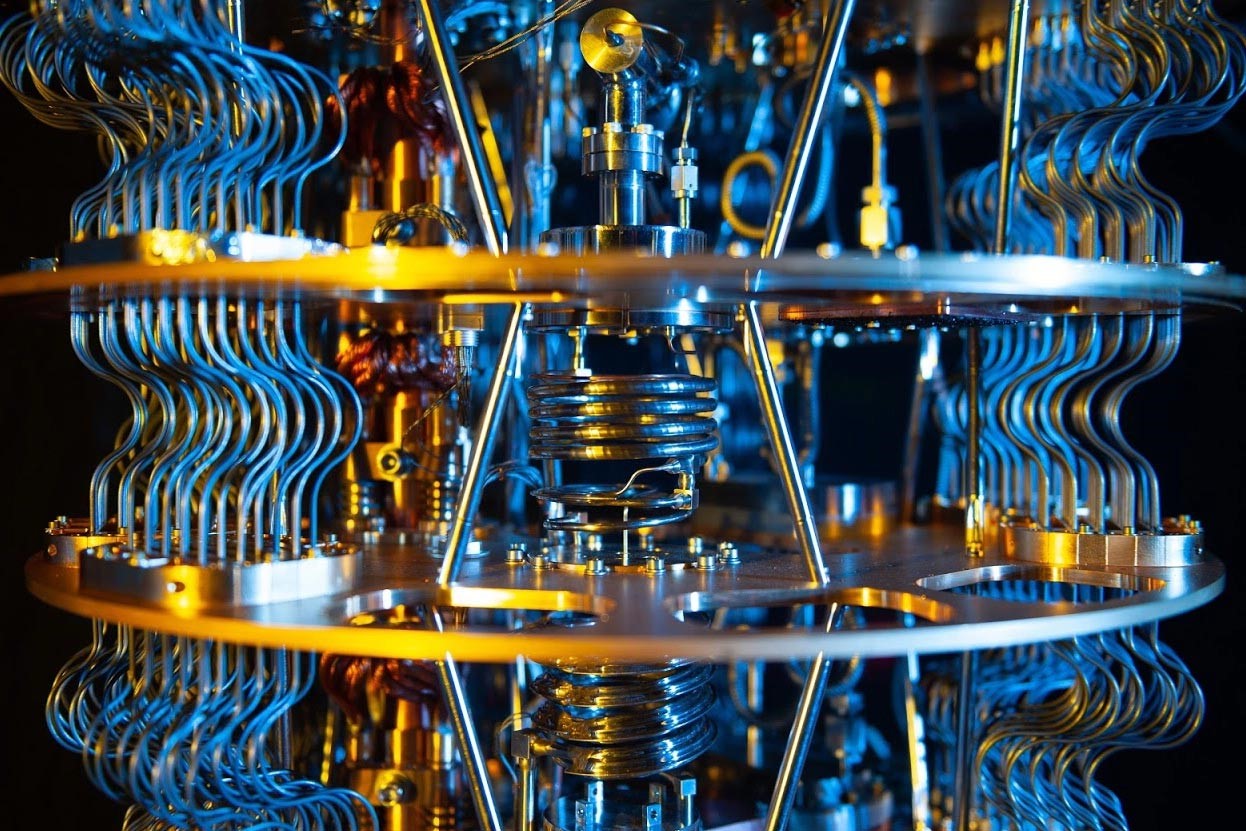
Figure 1. Google Sycamore Dilution Refrigerator
Advances in Tensor Network Algorithms
Central to this breakthrough are advanced tensor network contraction techniques that efficiently estimate quantum circuit output probabilities. To enable simulation, the researchers employed slicing strategies that divide the full tensor network into smaller, manageable sections, significantly lowering memory requirements without sacrificing computational speed [1]. Additionally, they implemented a “top-k” sampling approach that selects the most probable bitstrings from the results. This focus on high-probability outcomes enhanced the linear cross-entropy benchmark (XEB), improving simulation accuracy while reducing computational effort, thereby making the process faster and more scalable. Figure 1 shows Google Sycamore Dilution Refrigerator.
Testing on Reduced-Scale Circuits
The researchers validated their algorithm by running numerical tests on smaller random circuits, such as a 30-qubit, 14-layer gate circuit. The results closely matched the predicted XEB values across different tensor contraction sub-network sizes. The top-k sampling method significantly improved the XEB accuracy, confirming the algorithm’s precision and efficiency.
Optimizing Tensor Contraction Efficiency
The study outlined methods to optimize tensor contraction resource use by improving tensor index ordering and reducing communication between GPUs, resulting in significant gains in computational efficiency. It also showed that increasing memory capacity—ranging from 80GB to 5120GB—can greatly lower computation time complexity. Utilizing configurations with 8×80GB memory per node supported high-performance computing for the simulations.
Advancing the Future of Quantum Simulations
This breakthrough sets a new standard for classical simulations of multi-qubit quantum computers and introduces novel tools and methods for future quantum research [2]. With ongoing improvements in algorithms and resource optimization, the team expects to advance simulations of larger quantum circuits with increased qubit counts. This achievement marks a major step forward in quantum computing, providing important insights to support the continued evolution of quantum technologies.
References:
- https://scitechdaily.com/how-1432-gpus-cracked-googles-53-qubit-quantum-computer/
- https://c.realme.com/in/post-details/1914727676560576512
Cite this article:
Janani R (2025), How 1,432 GPUs Broke Google’s 53-Qubit Quantum Computer, AnaTechMaz, pp.253
Recent Post
-

Scientists Accomplish World’s First Real-Time Molecular Reaction Using Quantum Technology
In a major scientific milestone, researchers at the University of Sydney have, for the first time, used ...
-
Historic First: Quantum Simulation Captures Atoms in Motion During Light-Driven Reactions
Researchers at the University of Sydney have achieved a world-first by performing a quantum....
-

China Unveils the World’s First Quantum Cryptography System, Claiming It to Be ‘Unhackable’
As quantum computing technology rapidly evolves, traditional...
-

The World’s Most Advanced Quantum Research Supercomputer Operates Using High-Performance NVIDIA Chips
NVIDIA has launched a groundbreaking initiative in supercomputing with the establishment of the Global Research...
-

From Earth to Entanglement: Norwegian Scientists Transform Simple Clay into A Foundation for Quantum Computing
In a groundbreaking international collaboration, researchers from Brazil, the Czech Republic, and France—led by ...
-
Photons Empower Revolutionary Quantum Sensors with The Ability to Detect the Invisible
Imagine trying to measure something so small, faint, or delicate that even the most advanced scientific instruments ...
-
Breakthrough: Quantum Computers Become 90% More Energy-Efficient, Compact, and Faster
Canadian quantum tech company Nord Quantique has introduced a groundbreaking technique for quantum error....
-
Quantum Techniques Transform Noisy Lasers into Ultra-Stable Beams That Push the Boundaries of Physics
Scientists have discovered a novel technique to transform fluctuating laser beams into ultra-stable ones,..
-
Scientists Manipulate Crystal Symmetry to Create a Quantum "Supermetal" That Could Revolutionize Energy Efficiency
As the world seeks faster computing and greener energy solutions, the demand for high-performance, ...
-
Quantum Simulation Reveals How Reality Might Collapse Like a House of Cards
Physicists have conducted a groundbreaking cosmic simulation that explores one ....
-
Breaking the Quantum Code: Solving the 20-Year Mystery of Entanglement Purity
Scientists have made a significant advancement in quantum technology....
-

Quantum Speed Boost: Additional Qubits Cut Measurement Time While Maintaining Precision
Quantum scientists have solved a longstanding challenge by developing....
-
How 1,432 GPUs Broke Google’s 53-Qubit Quantum Computer
Researchers made a significant breakthrough in quantum computing by....
-
Tiny Diamonds, Major Breakthrough: Laser-Free Quantum Spin Detection
Researchers at HZB have created an innovative method to detect quantum....
Micro Ring Laser Breaks Quantum Barriers
Researchers in China have made a significant breakthrough in quantum photonic....