

Quantum Simulation Reveals How Reality Might Collapse Like a House of Cards
Physicists have conducted a groundbreaking cosmic simulation that explores one of the universe's most perplexing questions: Could our current reality be fragile, on the brink of collapsing into a more stable state? By using a powerful quantum machine, they observed bubbles representing universal transformations emerge, providing a unique glimpse into a process that could one day reshape the very fabric of reality. This research not only unveils cosmic mysteries but also suggests a revolution in quantum computing, potentially altering our understanding of time, space, and technology.
Revealing a Cosmic Time Bomb
Physicists have conducted a groundbreaking simulation that sheds new light on a mysterious process that could eventually determine the universe's fate.
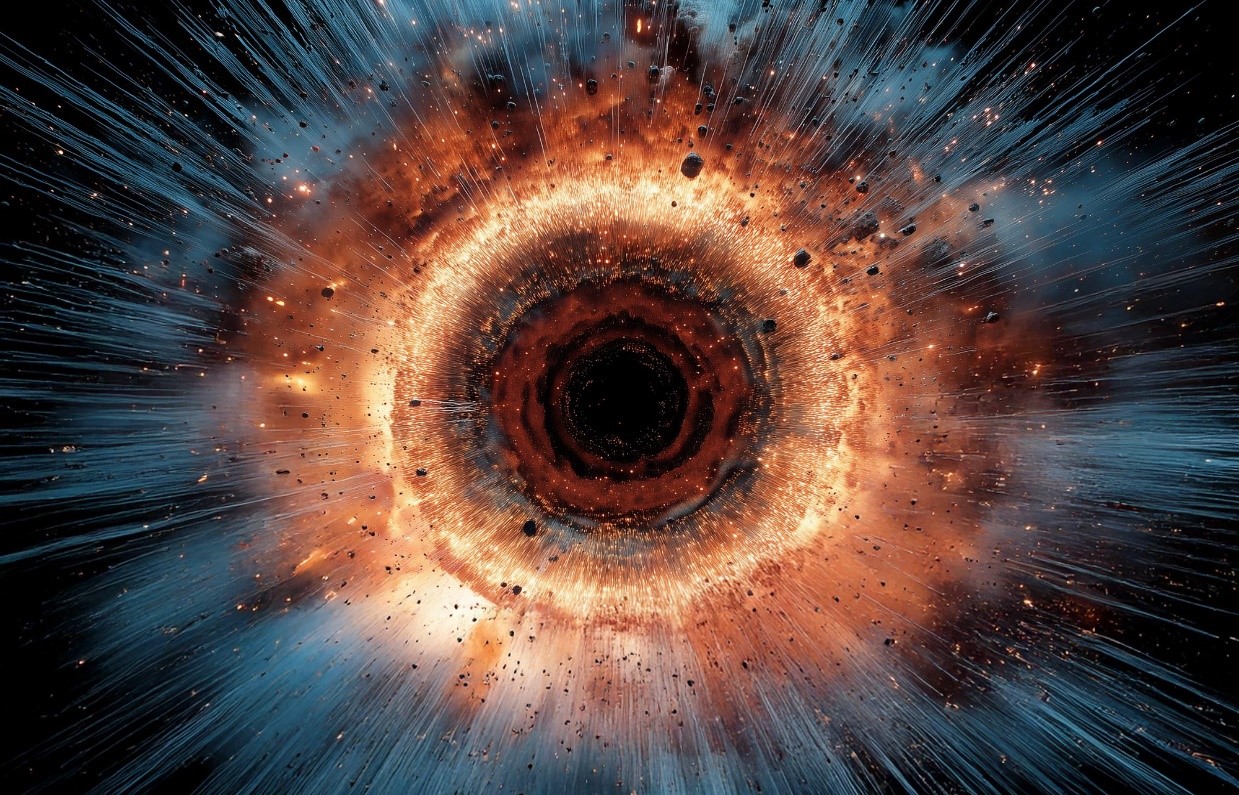
Figure 1. Simulating the Collapse of the Universe with Quantum Annealers
Around 50 years ago, theoretical physicists proposed that our universe might be in a "false vacuum"—a state that seems stable but could actually be temporary. According to this theory, the universe could transition to a more stable "true vacuum" state at any moment. If this happens, it could dramatically alter the very fabric of reality, including the fundamental forces and particles that make up everything. While scientists believe this transition is unlikely to happen anytime soon, it could occur on timescales spanning millions or even billions of years. Figure 1 shows Simulating the Collapse of the Universe with Quantum Annealers.
Now, an international team from three research institutions has used a powerful quantum simulation to explore how this false vacuum decay might unfold. Their work offers new insights into the quantum behaviors that shaped both the early universe and the smallest building blocks of matter. The project was led by Professor Zlatko Papic at the University of Leeds and Dr. Jaka Vodeb at Forschungszentrum Jülich in Germany.
The House of Cards: Grasping the Stakes
“We're talking about a process that could completely alter the universe's structure,” said Professor Papic, lead author of the study and Professor of Theoretical Physics at Leeds. “The fundamental constants could change instantaneously, causing reality to collapse like a house of cards. To truly understand this, we need controlled experiments to observe the process and determine its timescales.”
This research marks a significant advancement in exploring quantum dynamics—the way systems evolve according to the peculiar laws of quantum mechanics. The team’s simulation may also have practical applications for the future of quantum computing, which could help scientists solve some of the most complex questions about the nature of reality.
Simulating the Cosmic Enigma
The collaborative research conducted by the University of Leeds, Forschungszentrum Jülich, and the Institute of Science and Technology Austria (ISTA) aimed to investigate the underlying mechanism of false vacuum decay. Utilizing a 5564-qubit quantum annealer from D-Wave Quantum Inc., designed for complex optimization problems, the team simulated the behavior of bubbles within a false vacuum. These bubbles, which form and interact like liquid bubbles in water vapor, are believed to trigger false vacuum decay.
In their paper published in Nature Physics, the researchers explain how the bubbles' formation and spreading could lead to the universe transitioning to a more stable "true vacuum" state. Co-author Dr. Jean-Yves Desaules compares this process to a rollercoaster ride with multiple valleys, where quantum mechanics could ultimately allow the universe to tunnel to its lowest energy state, resulting in a catastrophic event.
Unveiling the Hidden Dance of Quantum Bubbles
Using a quantum annealer, scientists observed the dynamic "dance" of bubbles, tracking how they form, grow, and interact in real time. Their findings revealed that these interactions are complex, with smaller bubbles influencing larger ones. The team believes this research offers fresh insights into the transitions that may have occurred shortly after the Big Bang. Dr. Vodeb, the paper's lead author, highlighted that this study opens new possibilities for exploring non-equilibrium quantum systems and phase transitions that traditional computing struggles to address.
A New Age of Quantum Simulation
Physicists have long debated whether the false vacuum decay process could occur and, if so, how long it might take, but progress has been limited due to the complexity of quantum field theory. Instead of tackling these intricate problems directly, the team focused on simpler ones that could be studied with new quantum devices and hardware. This marks one of the first instances where scientists have been able to simulate and observe false vacuum decay dynamics on such a large scale.
The experiment used 5564 qubits, the fundamental units of quantum computing, arranged to represent the false vacuum. By controlling the system, researchers were able to trigger the transition from false to true vacuum, simulating the formation of bubbles as per the theory. While the study used a one-dimensional model, future simulations with three-dimensional models are expected. The D-Wave machine used in the experiment is part of the JUNIQ (Jülich UNified Infrastructure for Quantum Computing) at the Jülich Supercomputing Centre, which offers access to advanced quantum computing tools for both science and industry.
A Miniature Universe Created in the Lab
Professor Papic emphasized that their goal is to create systems for conducting simple experiments to study complex cosmic processes. While these events in the universe occur over immense time scales, the quantum annealer allows them to observe these transitions in real time, providing valuable insights. This groundbreaking work combines advanced quantum simulation with theoretical physics, bringing them closer to solving some of the universe's greatest mysteries. The research, funded by the UKRI Engineering and Physical Sciences Research Council (EPSRC) and the Leverhulme Trust, demonstrates that understanding the origins and fate of the universe doesn't always require expensive experiments in high-energy facilities like CERN. Professor Papic also noted the excitement of having new tools, akin to a "tabletop laboratory," to explore fundamental cosmic processes.
Practical Implications
Researchers highlight the broader potential of quantum annealers, with their findings offering significant advancements not only in cosmology but also in practical applications for quantum computing [1]. They suggest that understanding bubble interactions in the false vacuum could enhance quantum systems' error management and computational capabilities, making quantum computing more efficient. Dr. Vodeb emphasized that these breakthroughs push scientific boundaries and pave the way for transformative technologies in fields like cryptography, materials science, and energy-efficient computing. Dr. Kedar Pandya from EPSRC stressed the importance of curiosity-driven research in fostering technological progress and addressing profound questions about the universe.
References:
- https://scitechdaily.com/quantum-simulation-shows-how-reality-could-collapse-like-a-house-of-cards/
Cite this article:
Janani R (2025), Quantum Simulation Reveals How Reality Might Collapse Like a House of Cards, AnaTechMaz, pp.250
Recent Post
-

Scientists Accomplish World’s First Real-Time Molecular Reaction Using Quantum Technology
In a major scientific milestone, researchers at the University of Sydney have, for the first time, used ...
-
Historic First: Quantum Simulation Captures Atoms in Motion During Light-Driven Reactions
Researchers at the University of Sydney have achieved a world-first by performing a quantum....
-

China Unveils the World’s First Quantum Cryptography System, Claiming It to Be ‘Unhackable’
As quantum computing technology rapidly evolves, traditional...
-

The World’s Most Advanced Quantum Research Supercomputer Operates Using High-Performance NVIDIA Chips
NVIDIA has launched a groundbreaking initiative in supercomputing with the establishment of the Global Research...
-

From Earth to Entanglement: Norwegian Scientists Transform Simple Clay into A Foundation for Quantum Computing
In a groundbreaking international collaboration, researchers from Brazil, the Czech Republic, and France—led by ...
-
Photons Empower Revolutionary Quantum Sensors with The Ability to Detect the Invisible
Imagine trying to measure something so small, faint, or delicate that even the most advanced scientific instruments ...
-
Breakthrough: Quantum Computers Become 90% More Energy-Efficient, Compact, and Faster
Canadian quantum tech company Nord Quantique has introduced a groundbreaking technique for quantum error....
-
Quantum Techniques Transform Noisy Lasers into Ultra-Stable Beams That Push the Boundaries of Physics
Scientists have discovered a novel technique to transform fluctuating laser beams into ultra-stable ones,..
-
Scientists Manipulate Crystal Symmetry to Create a Quantum "Supermetal" That Could Revolutionize Energy Efficiency
As the world seeks faster computing and greener energy solutions, the demand for high-performance, ...
-
Quantum Simulation Reveals How Reality Might Collapse Like a House of Cards
Physicists have conducted a groundbreaking cosmic simulation that explores one ....
-
Breaking the Quantum Code: Solving the 20-Year Mystery of Entanglement Purity
Scientists have made a significant advancement in quantum technology....
-

Quantum Speed Boost: Additional Qubits Cut Measurement Time While Maintaining Precision
Quantum scientists have solved a longstanding challenge by developing....
-
How 1,432 GPUs Broke Google’s 53-Qubit Quantum Computer
Researchers made a significant breakthrough in quantum computing by....
-
Tiny Diamonds, Major Breakthrough: Laser-Free Quantum Spin Detection
Researchers at HZB have created an innovative method to detect quantum....
Micro Ring Laser Breaks Quantum Barriers
Researchers in China have made a significant breakthrough in quantum photonic....