

Historic First: Quantum Simulation Captures Atoms in Motion During Light-Driven Reactions
Quantum Simulation Breakthrough Captures Real-Time Atom Dynamics in Light-Driven Chemistry
Researchers at the University of Sydney have achieved a world-first by performing a quantum simulation of chemical dynamics using real molecules. This milestone opens doors to previously unreachable areas of chemical research that even the most advanced classical supercomputers couldn’t explore.
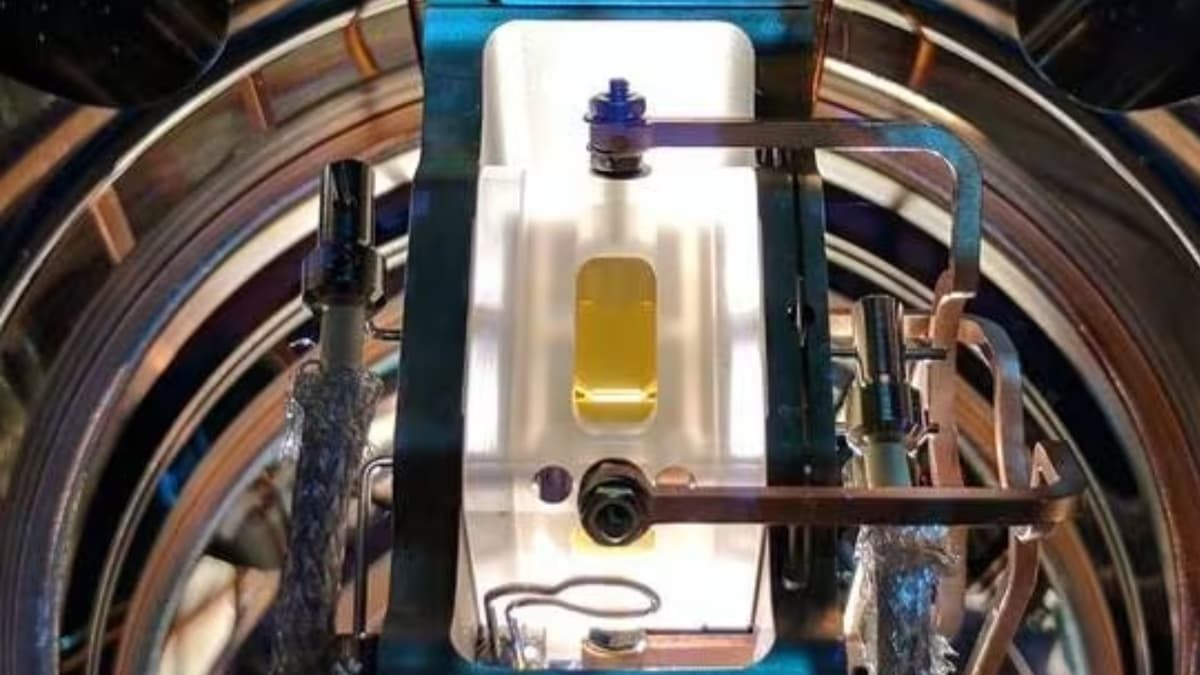
Figure 1. Quantum Computers Could Mainly Calculate Unchanging Aspects of Molecules.
Using a quantum computer, the team directly observed atoms interacting in real time as they formed new compounds or responded to light. The simulation method—developed by quantum chemist Professor Ivan Kassal and Physics Horizon Fellow Dr. Tingrei Tan—utilizes a highly efficient encoding scheme implemented on a trapped-ion quantum computer.
“Our new method lets us simulate the entire interaction between light and chemical bonds,” explained Professor Kassal. “It’s like tracking a mountain hiker’s position and energy throughout their journey—not just where they start and end.” Figure 1 shows Quantum Computers Could Mainly Calculate Unchanging Aspects of Molecules.
Resource-Efficient Simulation of Molecular Dynamics
Until now, quantum computers were mainly used to calculate static molecular properties, such as their energy levels. Simulating dynamic processes—especially those driven by light—remained largely out of reach due to their complexity.
This new research breaks that barrier by simulating how molecules behave after absorbing light, capturing ultrafast electronic and vibrational changes that classical computers struggle to model both accurately and efficiently.
The team used an analog quantum simulation technique with just one trapped ion—far fewer resources than typical digital quantum computing approaches require.
“A traditional digital simulation would demand 11 flawless qubits and 300,000 perfect entangling gates,” said Professor Kassal. “Our method is roughly a million times more resource-efficient, making it possible to study complex chemical reactions with minimal hardware.”
Simulating Real Molecules Under Light Exposure
The study focused on simulating the interactions of light with three specific molecules: allene (C₃H₄), butatriene (C₄H₄), and pyrazine (C₄N₂H₄).
The quantum simulation was able to compress ultrafast chemical processes that normally occur in femtoseconds (10⁻¹⁵ seconds) into a timescale accessible to researchers—thanks to a staggering time-dilation factor of 100 billion. The simulations ran over milliseconds, providing clear insights into the atomic motion.
Building on their previous work in 2023, where they simulated abstract quantum dynamics, the researchers now demonstrate how these techniques apply to real molecular systems.
“While these particular molecules can still be simulated using classical methods, more complex systems will exceed those capabilities,” said Dr. Tan. “Quantum technology is essential for simulating such high-level complexity.”
Transformational Potential for Energy Technologies
The broader implications are especially exciting for the energy sector. This newfound ability to simulate ultrafast light-induced chemical processes could lead to major advancements in solar technology.
By deepening our understanding of how light interacts with molecules, scientists could design more efficient photovoltaic cells and solar energy systems, enabling more effective ways to capture and convert sunlight into usable energy.
Reference:
- https://interestingengineering.com/science/real-time-atom-dance-revealed
Cite this article:
Keerthana S (2025), Historic First: Quantum Simulation Captures Atoms in Motion During Light-Driven Reactions, AnaTechMaz, pp.242
Recent Post
-

Scientists Accomplish World’s First Real-Time Molecular Reaction Using Quantum Technology
In a major scientific milestone, researchers at the University of Sydney have, for the first time, used ...
-
Historic First: Quantum Simulation Captures Atoms in Motion During Light-Driven Reactions
Researchers at the University of Sydney have achieved a world-first by performing a quantum....
-

China Unveils the World’s First Quantum Cryptography System, Claiming It to Be ‘Unhackable’
As quantum computing technology rapidly evolves, traditional...
-

The World’s Most Advanced Quantum Research Supercomputer Operates Using High-Performance NVIDIA Chips
NVIDIA has launched a groundbreaking initiative in supercomputing with the establishment of the Global Research...
-

From Earth to Entanglement: Norwegian Scientists Transform Simple Clay into A Foundation for Quantum Computing
In a groundbreaking international collaboration, researchers from Brazil, the Czech Republic, and France—led by ...
-
Photons Empower Revolutionary Quantum Sensors with The Ability to Detect the Invisible
Imagine trying to measure something so small, faint, or delicate that even the most advanced scientific instruments ...
-
Breakthrough: Quantum Computers Become 90% More Energy-Efficient, Compact, and Faster
Canadian quantum tech company Nord Quantique has introduced a groundbreaking technique for quantum error....
-
Quantum Techniques Transform Noisy Lasers into Ultra-Stable Beams That Push the Boundaries of Physics
Scientists have discovered a novel technique to transform fluctuating laser beams into ultra-stable ones,..
-

Scientists Manipulate Crystal Symmetry to Create a Quantum "Supermetal" That Could Revolutionize Energy Efficiency
As the world seeks faster computing and greener energy solutions, the demand for high-performance, ...
-

Quantum Simulation Reveals How Reality Might Collapse Like a House of Cards
Physicists have conducted a groundbreaking cosmic simulation that explores one ....
-

Breaking the Quantum Code: Solving the 20-Year Mystery of Entanglement Purity
Scientists have made a significant advancement in quantum technology....
-

Quantum Speed Boost: Additional Qubits Cut Measurement Time While Maintaining Precision
Quantum scientists have solved a longstanding challenge by developing....
-
How 1,432 GPUs Broke Google’s 53-Qubit Quantum Computer
Researchers made a significant breakthrough in quantum computing by....
-
Tiny Diamonds, Major Breakthrough: Laser-Free Quantum Spin Detection
Researchers at HZB have created an innovative method to detect quantum....

Micro Ring Laser Breaks Quantum Barriers
Researchers in China have made a significant breakthrough in quantum photonic....