

DNA Meets Electronics in Ultra-Low-Power Memory Breakthrough
Scientists are exploring ways to merge biology with electronics, opening new frontiers in data storage and computing. DNA, known for carrying genetic information, is also an incredibly dense storage medium—just one gram can hold about 215 million gigabytes of data.
Harnessing this capacity in electronic systems could revolutionize data centers, boost processing speeds, and enable far more complex computations. The main challenge has been integrating a biological molecule like DNA with conventional electronics, but researchers at Pennsylvania State University report they have developed a method to bridge that gap.
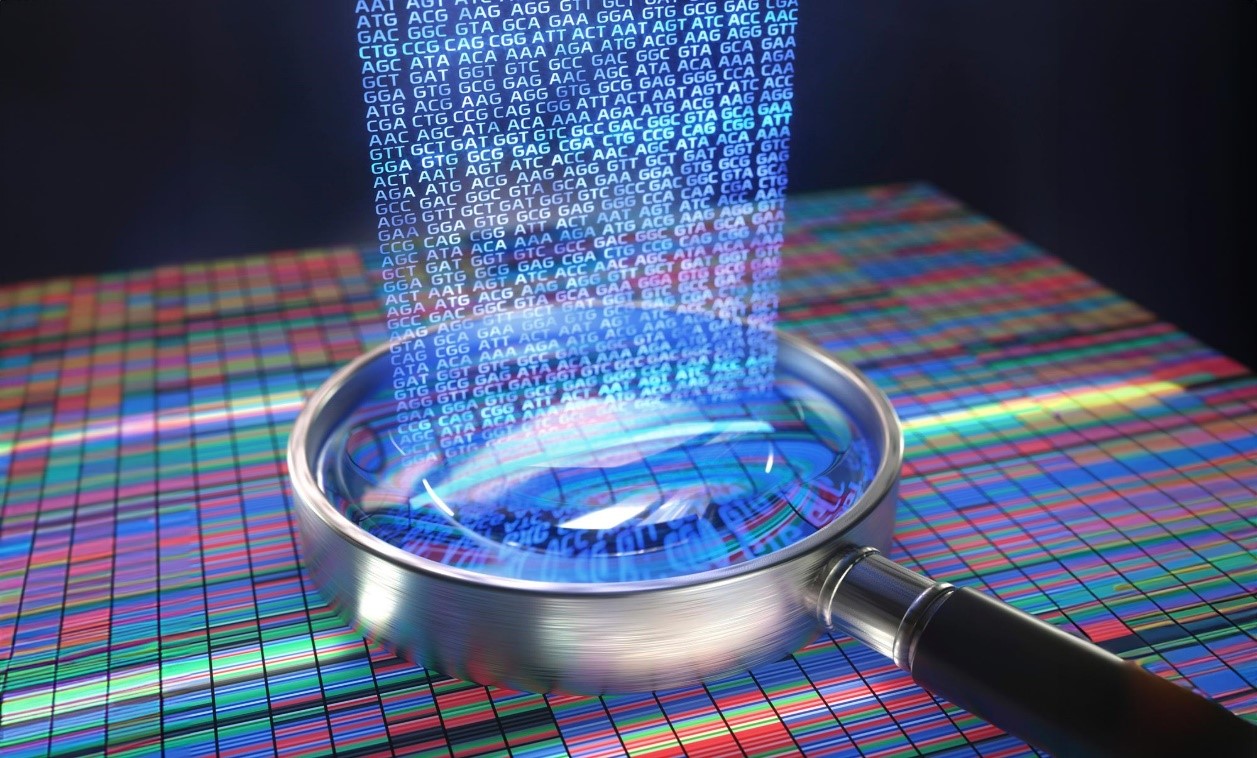
Figure 1. Bio-Hybrid DNA-Electronics Enables Efficient Computing
The team’s approach, described in Advanced Functional Materials and supported by a patent application, combines two key elements: synthetic DNA—engineered short sequences tailored for electronic functions—and crystalline perovskite, a semiconductor commonly used in solar cells, lasers, and data storage technologies. Figure 1 shows Bio-Hybrid DNA-Electronics Enables Efficient Computing.
According to Kavya S. Keremane of Pennsylvania State University, integrating biology with electronics required the creation of an entirely new materials platform. By merging DNA’s remarkable data storage capability with the strong electronic performance of perovskite semiconductors, the team developed a bio-hybrid system that could redefine the design of ultra-low-power memory devices.
Memristors Enable Brain-Like Computing
The researchers developed a device called a memristor, a low-energy component that can both store and process information. Unlike traditional resistors, which lose data when power is turned off, memristors retain memory by “remembering” the direction of previous electrical current, making them similar to how neurons function in the brain.
This brain-like behavior makes them highly promising for advanced computing, especially in systems inspired by neuromorphic computing. However, practical use has been limited by challenges in storage capacity and energy efficiency—issues that DNA helps address by storing vast amounts of data in a compact, low-energy form.
According to Bed Poudel of Pennsylvania State University, as demand for artificial intelligence grows, new solutions are needed for low-power, high-capacity devices. Their bio-hybrid system consumes up to 100 times less power while offering greater storage capacity than conventional technologies like flash drives, making it a strong candidate for future AI and computing applications.
Designing DNA for Electronic Applications
To build the device, the team incorporated silver nanoparticles into specially designed DNA sequences and combined them with thin layers of perovskite—a process known as doping, which modifies a ma terial’s properties. This enabled the DNA to conduct electricity and organize into a more structured arrangement.
Unlike natural DNA, which forms long, tangled strands that are difficult to use in precise nanoscale structures, short synthetic DNA fragments are rigid and highly controllable. This allows researchers to create ordered materials with tunable electrical properties that natural DNA cannot achieve in thin films.
As Yennawar explains, computational design allows them to select specific sequences and lengths for synthetic DNA, which can then be doped with silver or other ions and integrated with perovskites. This transforms DNA from a biological macromolecule into a programmable, multifunctional nanomaterials platform.
Advances in Performance and Stability
The hybrid of silver-doped DNA and perovskite creates conductive channels that efficiently guide electrical current. With less than 0.1 volt—far lower than a standard U.S. outlet—the device reliably moves electrons and responds consistently to changes in current direction.
It demonstrated remarkable stability, functioning at temperatures up to 250°F (121°C) and maintaining performance at room temperature for over six weeks [1]. This exceeds the capabilities of existing perovskite-based memory devices, providing similar storage while consuming only one-tenth of the power, making it highly promising for energy-efficient electronics.
As Kavya S. Keremane notes, the combination of DNA and perovskite is key, enabling high-density memory with minimal power usage—results neither material could achieve alone. The team aims to further refine the technology and explore additional ways that biology can inspire next-generation electronics. Bed Poudel emphasizes, “Nature provides the solutions—we just need to discover and apply them,” highlighting the potential of integrating DNA into electronic systems.
References:
- https://scitechdaily.com/dna-meets-electronics-scientists-create-ultra-low-power-memory-breakthrough/
Cite this article:
Janani R (2026), DNA Meets Electronics in Ultra-Low-Power Memory Breakthrough, AnaTechMaz, pp. 712
Recent Post
-
Breakthrough Treatment Rewires Immune Cells to Fight Cancer
A new approach to CAR-T therapy is changing how cancer-fighting immune cells are engineered......
-
Researchers Identify New Ovarian Cancer Therapy
Researchers at Mayo Clinic have identified an early survival response in ovarian......
Vitamin B2’s Hidden Risk: How a Key Nutrient May Aid Cancer Cell Survival
A widely used vitamin may also play an unexpected role in helping cancer......
Scientists Observe Sodium Pump in Action, Unraveling a Long-Standing Biological Mystery
A long-standing puzzle in bacterial bioenergetics is coming into......
Scientists Uncover Hidden “Death Signature” That Could Revolutionize Disease Treatment
cientists have discovered a previously unknown feature of cell death that......
-
Scientists Develop Innovative Healing Gel to Prevent Chronic Wounds from Becoming Life-Threatening
A newly developed oxygen......
-
DNA Meets Electronics in Ultra-Low-Power Memory Breakthrough
Scientists are exploring ways to merge biology with electronics, opening new......
-
Two Decades of Research Uncover Cholera’s Hidden Vulnerability
A long-term genomic study shows that cholera bacteria are locked in an ongoing......
-
Nerve Damage Healing Impeded: New Study Sheds Light
Researchers at the Icahn School of Medicine at Mount Sinai have discovered a molecular......
-
Scientists Uncover How Multiple Sclerosis Destroys Brain Cells
A hidden mechanism in multiple sclerosis (MS) may be harming neurons......