

MIT’s Quarton Coupler: Supercharged Qubits Propel Quantum Computing Forward
Unlocking the Speed Potential of Quantum Computing
Quantum computers hold the promise to transform fields like materials science and artificial intelligence. They could one day simulate intricate materials or supercharge machine learning models well beyond the limits of today’s systems.

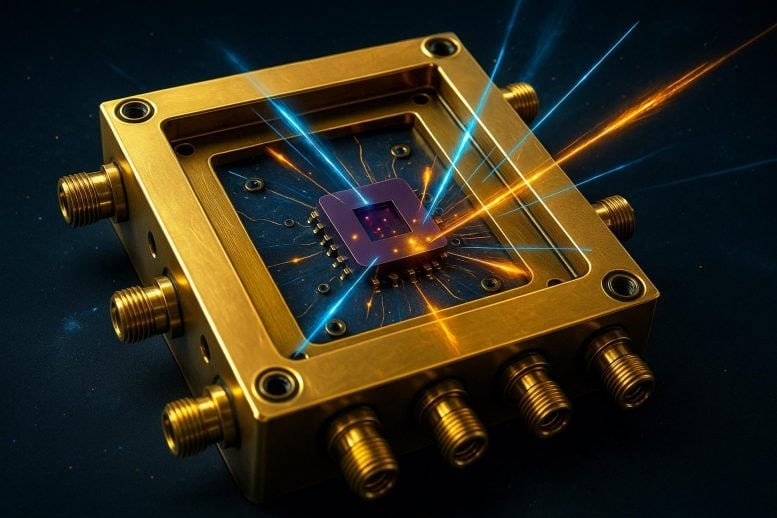
Figure 1. MIT’s Quarton Coupler: Powering Faster, Smarter Quantum Computing.
But realizing this potential hinge on speed. Quantum computers must operate with exceptional speed to be reliable—measuring quantum states and applying error corrections swiftly, before accumulating too many errors. This process, known as readout, relies heavily on how strongly photons (the light particles that carry quantum information) interact with artificial atoms, the quantum elements that store that information. Figure 1 shows MIT’s Quarton Coupler: Powering Faster, Smarter Quantum Computing.
Achieving Stronger Light-Matter Coupling
MIT researchers have achieved what may be the strongest nonlinear light-matter coupling ever observed in a quantum system—a breakthrough that could enable quantum computers to perform operations and readouts in just a few nanoseconds.
Using an innovative superconducting circuit design, the team demonstrated a coupling strength nearly 10 times greater than previous attempts. This dramatic increase could substantially boost the speed and performance of quantum processors.
Although the architecture isn't yet ready for practical deployment, validating the underlying physics marks a critical milestone, says lead author Yufeng “Bright”.
“This really tackles one of the key bottlenecks in quantum computing,” Ye explains. “Typically, you have to measure the results of computations between rounds of error correction. This development could significantly speed up our path to fault-tolerant quantum computing—and bring us closer to unlocking real-world applications and value.”
The Quarton Coupler Breakthrough
When Yufeng “Bright” Ye joined the lab as a PhD student in 2019, he set out to develop a specialized photon detector to enhance quantum information processing. In the process, he invented a novel type of quantum coupler—a device that enables interactions between qubits, the fundamental units of quantum computation.
Nonlinearity and Quantum Speed
The quarton coupler is a unique superconducting circuit capable of generating exceptionally strong nonlinear light-matter coupling, a critical requirement for executing most quantum algorithms. As researchers increase the current through the coupler, the strength of its nonlinear interaction also increases.
In this context, nonlinearity refers to a system behaving in a way that exceeds the sum of its individual parts—leading to richer, more complex interactions.
“Most of the useful interactions in quantum computing come from nonlinear coupling between light and matter,” Ye explains. “If you can achieve a broader range of coupling types and increase the coupling strength, you can dramatically boost a quantum computer’s processing speed.”
Measuring Quantum States Faster
Quantum readout—the process of determining a qubit’s state—relies on shining microwave light onto the qubit. Depending on whether it’s in state 0 or 1, the frequency of its associated resonator shifts. Measuring this shift reveals the qubit’s state.
To demonstrate this, the MIT team designed a chip architecture featuring a quarton coupler linked to two superconducting qubits. One qubit serves as a resonator, while the other acts as an artificial atom that stores quantum information, which is transmitted as microwave photons.
“The interaction between superconducting artificial atoms and the microwave light that routes signals is the foundation of how a superconducting quantum computer operates,” Ye notes.
Building the Fastest Readout Yet
The quarton coupler enabled nonlinear light-matter coupling nearly 10 times stronger than what previous designs had achieved—paving the way for quantum systems capable of near-instantaneous readout.
“This isn’t the final chapter,” says Professor William O’Brien. “This work demonstrates the fundamental physics, but we’re already developing circuitry—such as filters—that could lead to practical, ultra-fast readout systems integrated into larger quantum architectures.”
The team also demonstrated extremely strong matter-matter coupling, another crucial form of interaction between qubits essential for performing quantum operations. This will be a major focus in their ongoing research.
Toward a Fault-Tolerant Quantum Future
Fast operations and rapid readout are critical because qubits have limited coherence time—the window during which they retain their quantum state.
Stronger nonlinear coupling allows quantum processors to run faster and more reliably, enabling more operations and rounds of error correction within the lifespan of each qubit. This could bring us significantly closer to fault-tolerant quantum computing—and to unlocking its real-world potential.
Source: SciTECHDaily
Cite this article:
Priyadharshini S (2025), MIT’s Quarton Coupler: Supercharged Qubits Propel Quantum Computing Forward, AnaTechMaz, pp. 280
Recent Post
-

Scientists Create Ultra-Thin 2D Metals for The First Time, Going Beyond Graphene
TResearchers from the Institute of Physics (IOP) at the Chinese.....
-

Solving The Quantum Puzzle: 40-Year Entanglement Mystery Finally Unlocked
A breakthrough study published in Nature Physics by Victor Barizien and...

Dark Matter Unveiled? New Quantum Gravity Theory Redefines Einstein’s Concept of Spacetime
For decades, physicists have struggled to reconcile quantum mechanics and.....

Breakthrough in Quantum Computing: Scientists Overcome 25-Year Chip Fabrication Barrier
Quantum computers tap into the fundamental principles of quantum mechanics...

Quantum Rainfall: Ultracold Atoms Reveal the Secrets of Liquid Matter
In classical physics, surface tension arises from the cohesive forces.....
-

U.S. Military Initiates Effort to Identify the Top Quantum Computer
The U.S. Military has initiated a program to identify which companies...
-

Scientists Uncover New Type of “Hall Effect” That Could Transform Electronics
The classical Hall effect, first observed by Edwin Hall at Johns Hopkins...
-

Harvard Develops Chip-Sized Laser Powerful Enough to Reveal Hidden Worlds
The research was spearheaded by senior author Federico Capasso, the Robert...
-
Capturing Ghost Particles in 4D: How Quantum Sensors are Revolutionizing Collider Physics
To probe the fundamental nature of matter, energy, space, and time...
-
MIT’s Quarton Coupler: Supercharged Qubits Propel Quantum Computing Forward
Quantum computers hold the promise to transform fields like materials....
-
Breaking The Quantum Mirror: Hidden Chirality Discovered in A Symmetrical Crystal
This is somewhat like pointing the James Webb telescope at the quantum world...
-
MIT Captures Breathtaking First Images of Atoms Interacting in Open Space
MIT physicists have captured the first-ever direct images of individual...
-

Innovative Tunneling Method Uncovers Hidden Characteristics of High-Temperature Superconductors
Because their critical temperatures exceed the boiling point of.....
-
Quantum Computers Just Outperformed Supercomputers – Here's What They Achieved
In a significant scientific breakthrough, researchers at USC have...

Quantum Speed Hack: Additional Qubits Reduce Measurement Time Without Sacrificing Precision
Researchers have developed a novel method to accelerate quantum...