

Breaking The Quantum Mirror: Hidden Chirality Discovered in A Symmetrical Crystal
A Quantum Telescope for the Invisible
“This is somewhat like pointing the James Webb telescope at the quantum world and discovering something new,” said Hasan. “We’re finally able to resolve subtle quantum effects that had remained hidden in a topological quantum material.”
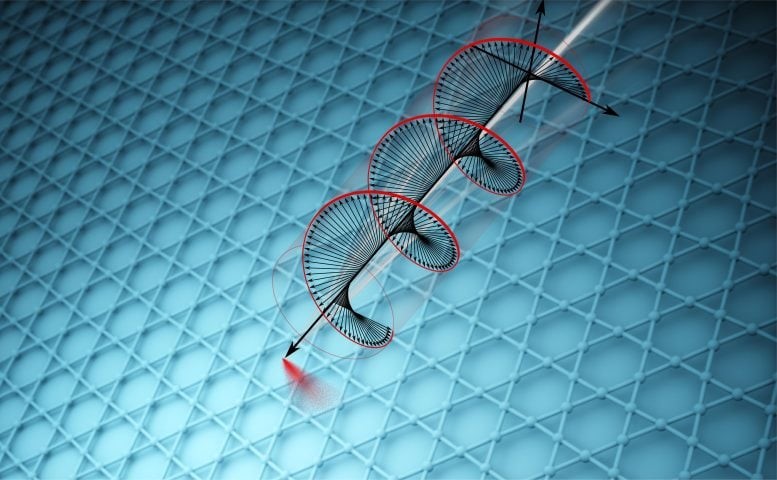
Figure 1. Shattering Quantum Symmetry: Hidden Chirality Unveiled in a Perfect Crystal.
The Kagome lattice—a two-dimensional geometric arrangement of corner-sharing triangles—has traditionally been seen as achiral, meaning it lacks handedness. Named after a classic Japanese basket-weaving pattern, the Kagome lattice has long served as a foundational platform for exploring exotic quantum phases. However, this perception shifted in 2021 when Hasan’s group, using a high-resolution scanning tunneling microscope (STM), found that under specific conditions, the material KV₃Sb₅ spontaneously forms a charge density wave—a regular modulation of electronic charge. This discovery, published in a widely cited Nature paper, sparked significant interest by suggesting that chirality—handedness—could emerge even in a structurally symmetric lattice. Figure 1 shows Shattering Quantum Symmetry: Hidden Chirality Unveiled in a Perfect Crystal.
A spontaneous charge order is a phase transition in which electric charges, initially distributed randomly, arrange themselves into an ordered pattern—much like water freezing into ice. This transformation occurs via spontaneous symmetry breaking, a key mechanism in quantum materials.
Yet, identifying exactly which symmetries break during such transitions has remained challenging, especially in topological quantum systems. Minute distinctions between left- and right-handed quantum states have consistently slipped past traditional detection methods—until now.
Revealing Chirality with Light
To uncover the hidden chirality in the material, graduate student Zi-Jia Cheng and postdoctoral researcher Shafayat Hossain—co-lead authors of the study—developed a specialized scanning photocurrent microscope (SPCM). Unlike the commonly used scanning tunneling microscope (STM), which excels in atomic-scale resolution, the SPCM is designed to probe optically active materials by analyzing their photocurrent behavior at the microscale. While not as high-resolution as STM, the SPCM complements it by capturing light-driven electronic responses, enabling a more complete picture of the quantum wavefunction when the two techniques are combined.
“In this setup, we shine and focus coherent light onto the sample, which is mounted within a custom-designed quantum device,” explained Hasan. “As the light interacts with the sample, it generates a measurable photocurrent.”
Together with former postdoctoral fellow Qi Zhang, the team fabricated ultra-clean quantum crystal devices and cooled them to just 4 degrees Kelvin to conduct the measurements.
At room temperature, the material showed no difference in response to left- or right-handed circularly polarized light. However, as the temperature dropped below the charge density wave transition point, the photocurrent became distinctly handed—an unambiguous sign of chirality. This phenomenon, known as the circular photogalvanic effect, provided definitive evidence that the material had entered a chiral state.
Measuring Broken Symmetry
To identify symmetry breaking in the material, the researchers illuminated the Kagome lattice first with right-handed circularly polarized light, then with left-handed light, measuring the resulting photocurrent each time. The stark difference in current between the two polarizations offered clear evidence of a broken symmetry in the material’s electronic state.
“Our measurements directly pinpoint broken inversion and mirror symmetries and shed light on the topological nature of this quantum material that exhibits charge order,” said Cheng. “This conclusively establishes the intrinsic chiral nature of the charge-ordered state in a topological material for the first time.”
Still, the underlying mechanism remains a mystery. “We confirmed the phenomenon, but we don’t yet have a rigorous theory as to why it occurs,” added Hasan. “We still don’t fully understand it.”
Even so, the implications extend far beyond fundamental physics. Hasan noted that chiral quantum states like this one could one day drive new generations of optoelectronic and photovoltaic technologies. “It’s surprising that an emergent chiral state can generate such a pronounced response that was never reported before,” he said. “This work also demonstrates that second-order electromagnetic measurements are a powerful method for uncovering subtle symmetry breaking in topological materials.”
Why Symmetry Breaking Matters
Symmetry breaking is central to understanding how order arises in nature. In physics, symmetric theories describe systems where the fundamental laws remain unchanged under specific transformations—such as rotations or reflections. These theories underpin much of modern physics. However, many real-world phenomena are not perfectly symmetric. Studying how, when, and why symmetry breaks is crucial to understanding phase transitions, magnetism, superconductivity, and the behavior of topological materials.
Understanding symmetry breaking doesn’t just satisfy scientific curiosity—it opens doors to new technologies and deeper insights into the fundamental structure of matter. As Hasan put it: “This is just the beginning. With these sensitive tools, who knows what hidden worlds of topological quantum matter we’ll uncover next.”
Legacy and Quantum Frontiers
This latest work builds on a rich legacy of research into topological effects in quantum materials, tracing back to the quantum Hall effect—recognized with the 1985 Nobel Prize in Physics. Princeton researchers have played a key role in this field. Daniel Tsui, now emeritus at Princeton, won the 1998 Nobel Prize for discovering the fractional quantum Hall effect. F. Duncan Haldane, also at Princeton, shared the 2016 Nobel Prize for groundbreaking theoretical work on topological phase transitions and two-dimensional topological insulators.
Hasan and his team have been at the forefront of this exploration. In 2007, they discovered the first three-dimensional topological insulator, a milestone in condensed matter physics. Since then, they’ve led a sustained effort to uncover novel quantum phenomena where symmetry and topology converge. Their latest findings show that some topological materials can host complex many-body quantum states that spontaneously break fundamental symmetries, revealing definite chirality at low temperatures—a new frontier in the study of quantum matter.
Source: SciTECHDaily
Cite this article:
Priyadharshini S (2025), Breaking The Quantum Mirror: Hidden Chirality Discovered in A Symmetrical Crystal, AnaTechMaz, pp. 281
Recent Post
-

Scientists Create Ultra-Thin 2D Metals for The First Time, Going Beyond Graphene
TResearchers from the Institute of Physics (IOP) at the Chinese.....
-
Solving The Quantum Puzzle: 40-Year Entanglement Mystery Finally Unlocked
A breakthrough study published in Nature Physics by Victor Barizien and...

Dark Matter Unveiled? New Quantum Gravity Theory Redefines Einstein’s Concept of Spacetime
For decades, physicists have struggled to reconcile quantum mechanics and.....

Breakthrough in Quantum Computing: Scientists Overcome 25-Year Chip Fabrication Barrier
Quantum computers tap into the fundamental principles of quantum mechanics...
Quantum Rainfall: Ultracold Atoms Reveal the Secrets of Liquid Matter
In classical physics, surface tension arises from the cohesive forces.....
-

U.S. Military Initiates Effort to Identify the Top Quantum Computer
The U.S. Military has initiated a program to identify which companies...
-

Scientists Uncover New Type of “Hall Effect” That Could Transform Electronics
The classical Hall effect, first observed by Edwin Hall at Johns Hopkins...
-
Harvard Develops Chip-Sized Laser Powerful Enough to Reveal Hidden Worlds
The research was spearheaded by senior author Federico Capasso, the Robert...
-
Capturing Ghost Particles in 4D: How Quantum Sensors are Revolutionizing Collider Physics
To probe the fundamental nature of matter, energy, space, and time...
-

MIT’s Quarton Coupler: Supercharged Qubits Propel Quantum Computing Forward
Quantum computers hold the promise to transform fields like materials....
-
Breaking The Quantum Mirror: Hidden Chirality Discovered in A Symmetrical Crystal
This is somewhat like pointing the James Webb telescope at the quantum world...
-
MIT Captures Breathtaking First Images of Atoms Interacting in Open Space
MIT physicists have captured the first-ever direct images of individual...
-
Innovative Tunneling Method Uncovers Hidden Characteristics of High-Temperature Superconductors
Because their critical temperatures exceed the boiling point of.....
-
Quantum Computers Just Outperformed Supercomputers – Here's What They Achieved
In a significant scientific breakthrough, researchers at USC have...

Quantum Speed Hack: Additional Qubits Reduce Measurement Time Without Sacrificing Precision
Researchers have developed a novel method to accelerate quantum...