

Quantum Computers Just Outperformed Supercomputers – Here's What They Achieved
Quantum Advantage Proven
In a significant scientific breakthrough, researchers at USC have demonstrated that quantum computers can outperform even the most powerful supercomputers when tackling certain complex problems.
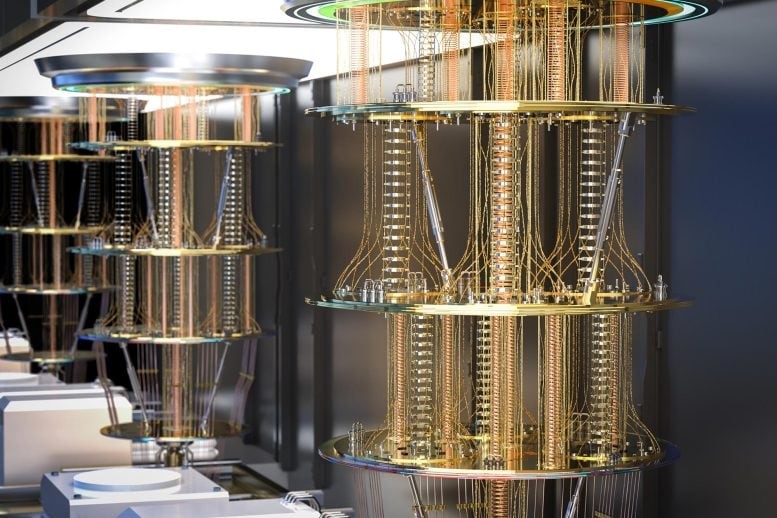
Figure 1. Quantum Computers Surpass Supercomputers: A New Milestone Unlocked
This milestone, known as quantum advantage, was achieved using a method called quantum annealing. This technique works like a highly efficient strategy for finding good—though not always perfect—solutions to difficult challenges that traditional computers find hard to solve. The findings were recently published in Physical Review Letters. Figure 1 shows Quantum Computers Surpass Supercomputers: A New Milestone Unlocked
“Quantum annealing identifies low-energy states in quantum systems, which represent optimal or near-optimal solutions to the problems at hand,” explained Daniel Lidar, the study’s corresponding author and a professor at the USC Viterbi School of Engineering and the USC Dornsife College of Letters, Arts and Sciences.
Embracing Approximate Optimization
For years, researchers have worked to show that quantum computers can maintain their edge over classical systems as problem sizes grow. This study takes a new angle by prioritizing near-optimal solutions over perfect ones—an approach that often proves more practical in real-world applications.
This strategy, known as approximate optimization, is especially valuable in fields like finance, logistics, and machine learning, where reaching a good-enough answer quickly often outweighs the need for absolute precision.
By leveraging quantum annealing, the researchers were able to outperform leading classical algorithms in speed and solution quality—representing a significant leap toward practical quantum computing.
Quantum annealing, a specialized form of quantum computing, applies the principles of quantum mechanics to efficiently tackle complex optimization problems. Instead of insisting on exact results, this study targeted solutions within a small margin (at least 1%) of the best possible outcome.
Practical Impact of Approximate Solutions
In many real-world scenarios, exact answers aren’t necessary—making the pursuit of approximate solutions both efficient and relevant. For instance, when building a mutual fund, the goal is often just to outperform a major market index, not to outdo every possible portfolio combination.
To showcase quantum scaling advantage in action, the researchers utilized a D-Wave Advantage quantum annealing processor, a specialized quantum device housed at USC’s Information Sciences Institute. Like all current quantum systems, this hardware faces significant challenges from noise, which can interfere with performance and limit quantum advantage.
To address this, the team applied a method known as quantum annealing correction (QAC) on the D-Wave system. This allowed them to construct over 1,300 error-suppressed logical qubits. The suppression of errors proved crucial in surpassing the performance of parallel tempering with isoenergetic cluster moves (PT-ICM)—the most advanced classical algorithm currently available for solving similar optimization problems.
Benchmarking with Spin-Glass Models
To demonstrate quantum advantage, the researchers employed a variety of methods focused on a specific class of problems: two-dimensional spin-glass models with high-precision interactions. “Spin-glass problems are complex optimization tasks rooted in statistical physics and based on disordered magnetic systems,” explained Lidar. Rather than aiming for exact solutions, the team measured time-to-epsilon performance—tracking how quickly each method could find answers within a defined margin of the optimal result.
Advancing Toward Practical Quantum Optimization
Looking ahead, the researchers plan to expand their work to more complex, denser, and higher-dimensional optimization problems, with a goal of applying these advances in real-world scenarios. Lidar noted that continued progress in quantum hardware and error-correction techniques could further enhance the quantum advantage. “This paves the way for new quantum algorithms aimed at solving practical optimization tasks where near-optimal solutions are not only sufficient but preferred.”
Source: SciTECHDaily
Cite this article:
Priyadharshini S (2025), Quantum Computers Just Outperformed Supercomputers – Here's What They Achieved, AnaTechMaz, pp. 284
Recent Post
-

Scientists Create Ultra-Thin 2D Metals for The First Time, Going Beyond Graphene
TResearchers from the Institute of Physics (IOP) at the Chinese.....
-

Solving The Quantum Puzzle: 40-Year Entanglement Mystery Finally Unlocked
A breakthrough study published in Nature Physics by Victor Barizien and...

Dark Matter Unveiled? New Quantum Gravity Theory Redefines Einstein’s Concept of Spacetime
For decades, physicists have struggled to reconcile quantum mechanics and.....

Breakthrough in Quantum Computing: Scientists Overcome 25-Year Chip Fabrication Barrier
Quantum computers tap into the fundamental principles of quantum mechanics...

Quantum Rainfall: Ultracold Atoms Reveal the Secrets of Liquid Matter
In classical physics, surface tension arises from the cohesive forces.....
-

U.S. Military Initiates Effort to Identify the Top Quantum Computer
The U.S. Military has initiated a program to identify which companies...
-

Scientists Uncover New Type of “Hall Effect” That Could Transform Electronics
The classical Hall effect, first observed by Edwin Hall at Johns Hopkins...
-

Harvard Develops Chip-Sized Laser Powerful Enough to Reveal Hidden Worlds
The research was spearheaded by senior author Federico Capasso, the Robert...
-

Capturing Ghost Particles in 4D: How Quantum Sensors are Revolutionizing Collider Physics
To probe the fundamental nature of matter, energy, space, and time...
-

MIT’s Quarton Coupler: Supercharged Qubits Propel Quantum Computing Forward
Quantum computers hold the promise to transform fields like materials....
-

Breaking The Quantum Mirror: Hidden Chirality Discovered in A Symmetrical Crystal
This is somewhat like pointing the James Webb telescope at the quantum world...
-

MIT Captures Breathtaking First Images of Atoms Interacting in Open Space
MIT physicists have captured the first-ever direct images of individual...
-

Innovative Tunneling Method Uncovers Hidden Characteristics of High-Temperature Superconductors
Because their critical temperatures exceed the boiling point of.....
-
Quantum Computers Just Outperformed Supercomputers – Here's What They Achieved
In a significant scientific breakthrough, researchers at USC have...

Quantum Speed Hack: Additional Qubits Reduce Measurement Time Without Sacrificing Precision
Researchers have developed a novel method to accelerate quantum...