

Dark Matter Unveiled? New Quantum Gravity Theory Redefines Einstein’s Concept of Spacetime
The Quest for Quantum Gravity
For decades, physicists have struggled to reconcile quantum mechanics and general relativity—two cornerstone theories that govern vastly different realms. While quantum mechanics describes the behavior of particles on the smallest scales, general relativity explains gravity and the large-scale structure of spacetime. Merging these two frameworks into a unified theory remains one of the most profound and complex challenges in theoretical physics.
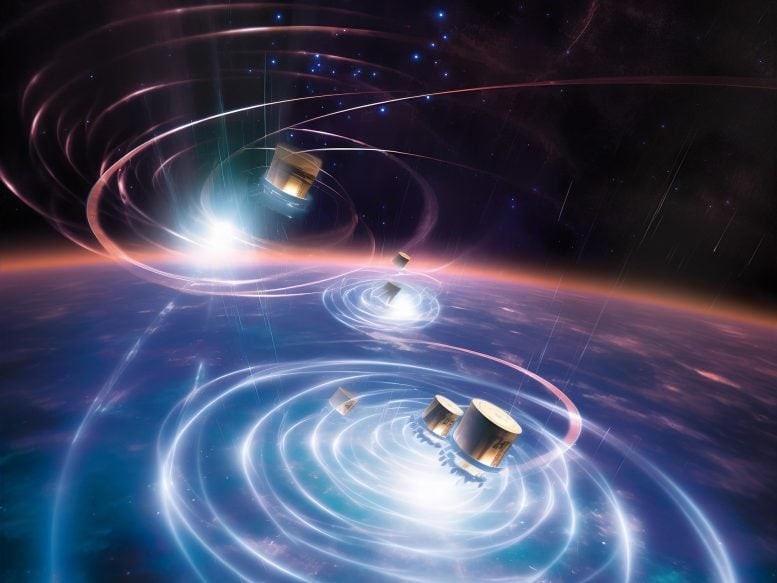
Figure 1. Quantum Twist on Spacetime: New Theory Sheds Light on Dark Matter.
Entropy and the Emergence of the G-Field
The research presents a novel concept known as entropic action, which measures the disparity between the spacetime metric and the metric generated by matter fields. This formulation leads to a modified version of Einstein’s equations that, under conditions of low energy and gentle curvature, naturally simplifies to the classical equations of general relativity. Figure 1 shows Quantum Twist on Spacetime: New Theory Sheds Light on Dark Matter.
What sets this theory apart is its prediction of a small, positive cosmological constant—an outcome that closely matches observed data on the universe’s accelerated expansion, offering a more accurate explanation than many earlier models.
The G-Field: A Bridge to Dark Matter and Quantum Gravity
A central innovation in the theory is the introduction of the G-field, an auxiliary field that functions as a Lagrangian multiplier. This field not only plays a pivotal role in the modified gravitational equations but also opens up exciting possibilities for rethinking dark matter—a mysterious, invisible substance that constitutes a large portion of the universe’s mass yet remains undetected.
The broader implications of this work are far-reaching. By connecting gravity with principles from quantum information theory, the study charts a promising route toward a unified theory of quantum gravity. At the same time, the G-field presents a fresh perspective on dark matter, potentially offering clues to its elusive nature.
“This research suggests that quantum gravity may have an entropic foundation,” says Professor Bianconi. “The G-field could even be a viable candidate for dark matter. Plus, our model’s prediction of an emergent cosmological constant aligns much more closely with observational data, helping to bridge the gap between theory and the measured expansion of the universe.”
What’s the Big Idea?
A new scientific theory proposes a groundbreaking way to rethink Einstein’s idea of spacetime—the fabric of the universe that bends and warps in the presence of mass and energy. This theory brings together two major pillars of physics that have never fully agreed: general relativity (Einstein’s theory of gravity) and quantum mechanics (the physics of the tiny).
What’s New in This Theory?
At the heart of this theory is a bold shift:
- Instead of treating spacetime as a smooth, classical field (as Einstein did),
- It treats spacetime itself as a quantum object using tools from quantum information theory.
This means the structure of the universe could be described not just in terms of curves and masses, but also in terms of entropy (a measure of information or disorder) and quantum operators.
What’s the Role of the G-Field?
The theory introduces a mysterious new ingredient: the G-field.
- It acts like a Lagrangian multiplier—a math tool that enforces certain conditions.
- But more than just math, the G-field might physically represent dark matter, the invisible substance that affects galaxies but doesn’t emit light.
In other words, dark matter might not be made of particles, as often assumed—it could be an emergent effect from spacetime’s quantum structure.
Why Does This Matter for Cosmology?
The theory doesn’t just aim to unify gravity and quantum mechanics—it also:
- Predicts a small, positive cosmological constant, which fits with how our universe is expanding faster and faster.
- Explains this better than many previous models, possibly solving the puzzle of dark energy too.
The Takeaway
This theory reimagines the universe from the ground up:
- Spacetime is quantum and entropic, not just a smooth background.
- Dark matter could be a byproduct of quantum gravity, not a separate substance.
- It moves us a step closer to the elusive goal of a Theory of Everything—a single framework that explains all of physics.
Source: SciTECHDaily
Cite this article:
Priyadharshini S (2025), Dark Matter Unveiled? New Quantum Gravity Theory Redefines Einstein’s Concept of Spacetime, AnaTechMaz, pp. 273
Recent Post
-
Scientists Create Ultra-Thin 2D Metals for The First Time, Going Beyond Graphene
TResearchers from the Institute of Physics (IOP) at the Chinese.....
-

Solving The Quantum Puzzle: 40-Year Entanglement Mystery Finally Unlocked
A breakthrough study published in Nature Physics by Victor Barizien and...
Dark Matter Unveiled? New Quantum Gravity Theory Redefines Einstein’s Concept of Spacetime
For decades, physicists have struggled to reconcile quantum mechanics and.....

Breakthrough in Quantum Computing: Scientists Overcome 25-Year Chip Fabrication Barrier
Quantum computers tap into the fundamental principles of quantum mechanics...
Quantum Rainfall: Ultracold Atoms Reveal the Secrets of Liquid Matter
In classical physics, surface tension arises from the cohesive forces.....
-
U.S. Military Initiates Effort to Identify the Top Quantum Computer
The U.S. Military has initiated a program to identify which companies...
-

Scientists Uncover New Type of “Hall Effect” That Could Transform Electronics
The classical Hall effect, first observed by Edwin Hall at Johns Hopkins...
-
Harvard Develops Chip-Sized Laser Powerful Enough to Reveal Hidden Worlds
The research was spearheaded by senior author Federico Capasso, the Robert...
-
Capturing Ghost Particles in 4D: How Quantum Sensors are Revolutionizing Collider Physics
To probe the fundamental nature of matter, energy, space, and time...
-
MIT’s Quarton Coupler: Supercharged Qubits Propel Quantum Computing Forward
Quantum computers hold the promise to transform fields like materials....
-

Breaking The Quantum Mirror: Hidden Chirality Discovered in A Symmetrical Crystal
This is somewhat like pointing the James Webb telescope at the quantum world...
-
MIT Captures Breathtaking First Images of Atoms Interacting in Open Space
MIT physicists have captured the first-ever direct images of individual...
-
Innovative Tunneling Method Uncovers Hidden Characteristics of High-Temperature Superconductors
Because their critical temperatures exceed the boiling point of.....
-
Quantum Computers Just Outperformed Supercomputers – Here's What They Achieved
In a significant scientific breakthrough, researchers at USC have...

Quantum Speed Hack: Additional Qubits Reduce Measurement Time Without Sacrificing Precision
Researchers have developed a novel method to accelerate quantum...