

Harvard Develops Chip-Sized Laser Powerful Enough to Reveal Hidden Worlds
Global Collaboration and Strong Support Network
The research was spearheaded by senior author Federico Capasso, the Robert L. Wallace Professor of Applied Physics at SEAS and Vinton Hayes Senior Research Fellow in Electrical Engineering. Backed by funding from the National Science Foundation and the Department of Defense, the project was a collaborative effort involving the Schwarz group at the Vienna University of Technology (TU Wien), a team of Italian researchers led by Luigi A. Lugiato, and Leonardo DRS Daylight Solutions under the leadership of Timothy Day.
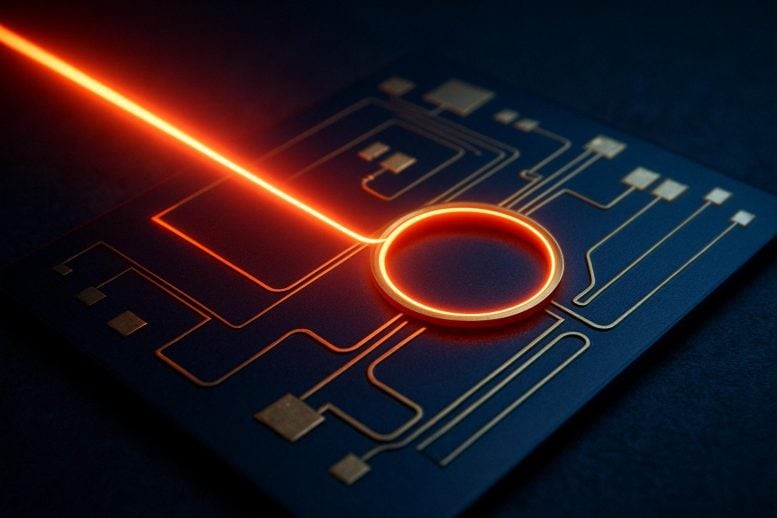
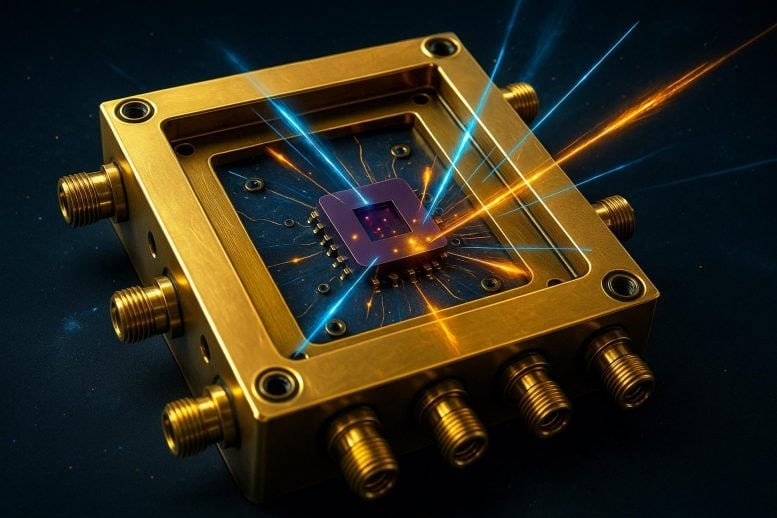
Figure 1. Harvard Unveils Tiny Laser Chip That Illuminates the Invisible.
“This is an exciting new technology that integrates on-chip nonlinear photonics to generate ultrashort pulses of light in the mid-infrared; no such thing existed until now,” Capasso stated. “Even more remarkable is that these devices can be easily manufactured at industrial laser foundries using standard semiconductor fabrication methods.” Figure 1 shows Harvard Unveils Tiny Laser Chip That Illuminates the Invisible.
Harnessing the Mid-Infrared for Advanced Gas Detection
The mid-infrared region, though invisible to the human eye, plays a vital role in environmental sensing. Many gases—including carbon dioxide and methane—absorb mid-infrared light with high efficiency, making this spectrum a key tool for monitoring atmospheric gases. Quantum cascade lasers (QCLs), first pioneered by Federico Capasso in the 1990s, have become essential in these applications.
The new research outlines a breakthrough approach for generating a broadband light source capable of detecting a wide range of gas absorption signatures within a single device.
“This represents a crucial step toward developing a supercontinuum source—one that can emit thousands of distinct light frequencies from a single chip,” explained Dmitry Kazakov, co-first author and research associate in Capasso’s lab. “That’s a real possibility for the future of this technology.”
Tackling the Challenge of Pulsed Emission in QCLs
Central to this advancement is the quantum cascade laser, which produces coherent mid-infrared light through precisely engineered layers of nanostructured semiconductor materials. While conventional semiconductor lasers have long used mode-locking to create ultrashort pulses, QCLs have resisted such techniques due to their rapid intrinsic dynamics.
Currently, generating mid-infrared pulses with QCLs requires bulky, complex setups and multiple hardware components, often with limitations in power and bandwidth. The new approach promises a more compact, integrated solution with expanded capabilities—paving the way for powerful, chip-scale sensors and spectroscopic tools.
Pulsing with Precision: Solitons and Microresonators Unite
In a groundbreaking move, the team developed a pulse generator that integrates multiple concepts from nonlinear integrated photonics and laser technology into a single, compact device. This system produces picosecond light pulses known as solitons—stable waveforms that maintain their shape over time and distance. Rather than relying on conventional mode-locking techniques, the researchers took inspiration from Kerr microresonators, devices typically used to manipulate light in entirely different ways.
“Our approach to measurement was pretty unconventional for quantum cascade laser research,” said co-first author Theodore Letsou, a graduate student at MIT and research fellow in Capasso’s group. “We essentially combined two fields, adapting techniques from the Kerr resonator community to work with our mid-infrared systems. That was an exciting leap.”
Co-author Benedikt Schwarz, professor at TU Wien, emphasized the broader significance: “What stands out to me—beyond the fascinating physics—is that we’ve now proven we can fabricate and operate complex, multi-component chip architectures. This was a major hurdle in mid-infrared integrated photonics, and we’ve overcome it. We're already designing next-generation systems with capabilities once thought impossible.”
Old Theory, New Reality: Bridging Decades of Discovery
The project also reimagines a theoretical foundation from the 1980s: the Lugiato-Lefever equation, originally developed to describe dynamics in passive Kerr resonators. One of the new study’s co-authors, Luigi Lugiato, helped repurpose this model to fit the dynamics of modern mid-infrared laser systems.
“This is the thrilling culmination of a journey that began decades ago,” said Lugiato, professor emeritus at the University of Insubria, Italy. “The Lugiato-Lefever equation has evolved into a universal framework for soliton frequency combs across all types of cavities. With this work, we've finally demonstrated solitons in optically driven quantum cascade lasers above threshold—a prediction now validated by experiment.”
Ready for Scale: Designed for Industrial Production
The newly developed mid-infrared laser system isn’t just a scientific breakthrough—it’s built with scalability in mind. The device can maintain stable pulse generation for hours and, importantly, is compatible with standard industrial fabrication methods. This design paves the way for mass production, accelerating the laser’s potential adoption across a range of applications.
The compact chip features a ring resonator that is externally driven, an integrated laser that powers the resonator, and a second active ring resonator that serves as a filter. All components were fabricated at TU Wien, showcasing the platform’s manufacturability.
“This technology has the potential to be a true game-changer in mid-infrared spectroscopy,” said Timothy Day, Senior Vice President and General Manager of Leonardo DRS’ Daylight Solutions. “It’s compatibility with existing fabrication techniques means we can produce it at commercial volumes—opening doors for next-gen solutions in environmental monitoring, industrial process control, life sciences, and medical diagnostics.”
Source: SciTECHDaily
Cite this article:
Priyadharshini S (2025), Harvard Develops Chip-Sized Laser Powerful Enough to Reveal Hidden Worlds, AnaTechMaz, pp. 278
Recent Post
-

Scientists Create Ultra-Thin 2D Metals for The First Time, Going Beyond Graphene
TResearchers from the Institute of Physics (IOP) at the Chinese.....
-
Solving The Quantum Puzzle: 40-Year Entanglement Mystery Finally Unlocked
A breakthrough study published in Nature Physics by Victor Barizien and...

Dark Matter Unveiled? New Quantum Gravity Theory Redefines Einstein’s Concept of Spacetime
For decades, physicists have struggled to reconcile quantum mechanics and.....

Breakthrough in Quantum Computing: Scientists Overcome 25-Year Chip Fabrication Barrier
Quantum computers tap into the fundamental principles of quantum mechanics...
Quantum Rainfall: Ultracold Atoms Reveal the Secrets of Liquid Matter
In classical physics, surface tension arises from the cohesive forces.....
-
U.S. Military Initiates Effort to Identify the Top Quantum Computer
The U.S. Military has initiated a program to identify which companies...
-

Scientists Uncover New Type of “Hall Effect” That Could Transform Electronics
The classical Hall effect, first observed by Edwin Hall at Johns Hopkins...
-
Harvard Develops Chip-Sized Laser Powerful Enough to Reveal Hidden Worlds
The research was spearheaded by senior author Federico Capasso, the Robert...
-
Capturing Ghost Particles in 4D: How Quantum Sensors are Revolutionizing Collider Physics
To probe the fundamental nature of matter, energy, space, and time...
-

MIT’s Quarton Coupler: Supercharged Qubits Propel Quantum Computing Forward
Quantum computers hold the promise to transform fields like materials....
-
Breaking The Quantum Mirror: Hidden Chirality Discovered in A Symmetrical Crystal
This is somewhat like pointing the James Webb telescope at the quantum world...
-
MIT Captures Breathtaking First Images of Atoms Interacting in Open Space
MIT physicists have captured the first-ever direct images of individual...
-

Innovative Tunneling Method Uncovers Hidden Characteristics of High-Temperature Superconductors
Because their critical temperatures exceed the boiling point of.....
-
Quantum Computers Just Outperformed Supercomputers – Here's What They Achieved
In a significant scientific breakthrough, researchers at USC have...

Quantum Speed Hack: Additional Qubits Reduce Measurement Time Without Sacrificing Precision
Researchers have developed a novel method to accelerate quantum...