

Breakthrough in Quantum Computing: Scientists Overcome 25-Year Chip Fabrication Barrier
Harnessing the Power of Quantum Mechanics
Quantum computers tap into the fundamental principles of quantum mechanics—the very laws that govern the universe. This includes remarkable phenomena like superposition, where qubits can exist in multiple states at once, and quantum entanglement, where qubits become deeply interconnected regardless of distance.

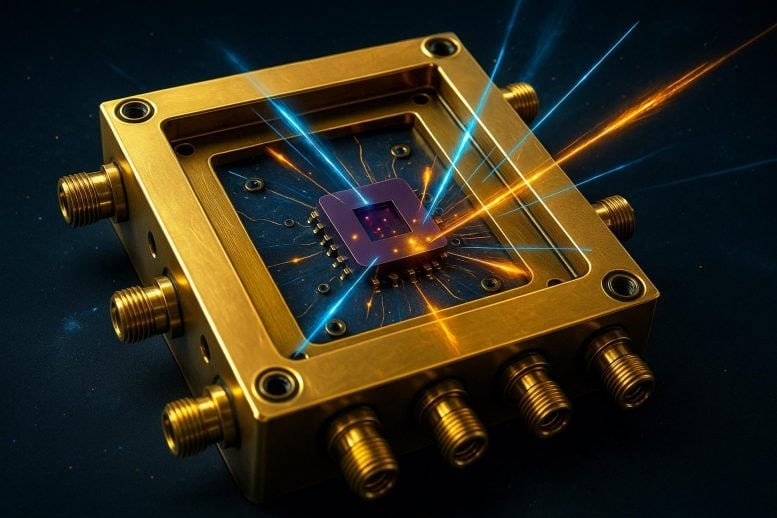
Figure 1. Quantum Leap: Cracking a 25-Year Chip Challenge.
These capabilities allow quantum computers to approach complex problems in entirely new ways. Instead of analyzing each possible outcome one by one, as traditional computers do, quantum systems can evaluate countless possibilities simultaneously. For certain problems with astronomical complexity, this means quantum machines could solve in moments what would take today’s most powerful supercomputers millions of years. Figure 1 shows Quantum Leap: Cracking a 25-Year Chip Challenge.
A Major Step Toward Scalable Quantum Devices
"The most advanced quantum computing systems today still face two major challenges: reducing qubit error rates and scaling up the number of qubits."
"Our work shows that reliable, atomically precise fabrication could pave the way for building scalable quantum computers in silicon. It was previously assumed that using arsenic for single-atom placement would encounter the same limitations as phosphorus. However, our calculations suggested otherwise—and we’ve now demonstrated that single arsenic atoms can, in fact, be positioned more reliably. We've conservatively estimated a placement accuracy of 97%, but we believe 100% is within reach soon."
Currently, the technique requires each atom to be positioned manually, a process that takes several minutes per atom. While the method is theoretically repeatable without limit, achieving practical, large-scale quantum computing will require full automation and industrialization—enabling the creation of qubit arrays numbering in the millions or even billions.
Industry Collaboration and Future Outlook
The researchers highlight that the global silicon semiconductor industry—currently valued at approximately $550 billion—has a vital role to play in accelerating progress in quantum computing. Since both arsenic and silicon are already widely used in conventional semiconductor manufacturing, the technique developed in this study is expected to be highly compatible with existing fabrication processes. With further engineering innovation, this method could be seamlessly integrated into established production lines.
"Being able to place atoms in silicon with near-perfect precision and in a scalable way marks a major milestone in the quest for quantum computing. This is the first time we’ve demonstrated a method that delivers both the accuracy and potential scale required."
"There’s still a major engineering challenge ahead—to make this process faster and more efficient—but for the first time, I truly believe a universal quantum computer is within reach."
The Quantum Promise
Quantum computers are designed to solve problems that are practically impossible for traditional computers. Instead of using regular bits (which represent either a 0 or 1), quantum computers use qubits, which can exist in multiple states at once thanks to a strange quantum property called superposition.
They can also exhibit entanglement, meaning the state of one qubit can instantly affect another, no matter how far apart they are. These properties allow quantum computers to explore many possible solutions simultaneously—making them incredibly powerful for complex tasks like drug discovery, materials science, cryptography, and more.
The 25-Year Roadblock
While the theory behind quantum computing is well understood, building reliable quantum machines has been extremely difficult. Two major challenges are:
- Error rates – Qubits are fragile and easily disturbed by their environment, leading to errors.
- Scalability – Creating enough qubits, with precision, to perform meaningful calculations has been nearly impossible.
For 25 years, scientists have struggled to reliably place single atoms into a silicon chip—the kind of atomically precise construction needed for scalable, stable quantum systems. Until now, most attempts involved phosphorus atoms, which proved too unstable for large-scale use.
The Breakthrough
Researchers at UCL have made a major breakthrough by successfully placing single arsenic atoms into silicon chips with a precision rate of at least 97%—a level never achieved before. They believe that accuracy can soon reach 100%.
This technique is highly compatible with existing semiconductor manufacturing technologies, which means the multi-billion-dollar classical computing industry could help accelerate quantum progress. For now, atoms are still placed one-by-one by hand, but the team is confident that with automation, the process can be scaled to build quantum chips with millions—or even billions—of qubits.
Source: SciTECHDaily
Cite this article:
Priyadharshini S (2025), Breakthrough in Quantum Computing: Scientists Overcome 25-Year Chip Fabrication Barrier, AnaTechMaz, pp. 274
Recent Post
-

Scientists Create Ultra-Thin 2D Metals for The First Time, Going Beyond Graphene
TResearchers from the Institute of Physics (IOP) at the Chinese.....
-

Solving The Quantum Puzzle: 40-Year Entanglement Mystery Finally Unlocked
A breakthrough study published in Nature Physics by Victor Barizien and...

Dark Matter Unveiled? New Quantum Gravity Theory Redefines Einstein’s Concept of Spacetime
For decades, physicists have struggled to reconcile quantum mechanics and.....
Breakthrough in Quantum Computing: Scientists Overcome 25-Year Chip Fabrication Barrier
Quantum computers tap into the fundamental principles of quantum mechanics...

Quantum Rainfall: Ultracold Atoms Reveal the Secrets of Liquid Matter
In classical physics, surface tension arises from the cohesive forces.....
-

U.S. Military Initiates Effort to Identify the Top Quantum Computer
The U.S. Military has initiated a program to identify which companies...
-

Scientists Uncover New Type of “Hall Effect” That Could Transform Electronics
The classical Hall effect, first observed by Edwin Hall at Johns Hopkins...
-

Harvard Develops Chip-Sized Laser Powerful Enough to Reveal Hidden Worlds
The research was spearheaded by senior author Federico Capasso, the Robert...
-
Capturing Ghost Particles in 4D: How Quantum Sensors are Revolutionizing Collider Physics
To probe the fundamental nature of matter, energy, space, and time...
-

MIT’s Quarton Coupler: Supercharged Qubits Propel Quantum Computing Forward
Quantum computers hold the promise to transform fields like materials....
-

Breaking The Quantum Mirror: Hidden Chirality Discovered in A Symmetrical Crystal
This is somewhat like pointing the James Webb telescope at the quantum world...
-
MIT Captures Breathtaking First Images of Atoms Interacting in Open Space
MIT physicists have captured the first-ever direct images of individual...
-

Innovative Tunneling Method Uncovers Hidden Characteristics of High-Temperature Superconductors
Because their critical temperatures exceed the boiling point of.....
-
Quantum Computers Just Outperformed Supercomputers – Here's What They Achieved
In a significant scientific breakthrough, researchers at USC have...

Quantum Speed Hack: Additional Qubits Reduce Measurement Time Without Sacrificing Precision
Researchers have developed a novel method to accelerate quantum...