

Solving The Quantum Puzzle: 40-Year Entanglement Mystery Finally Unlocked
Cracking a 40-Year Quantum Mystery
A breakthrough study published in Nature Physics by Victor Barizien and Jean-Daniel Bancal of the Institute of Theoretical Physics (IPhT) has resolved a decades-old question surrounding the limits of quantum entanglement.
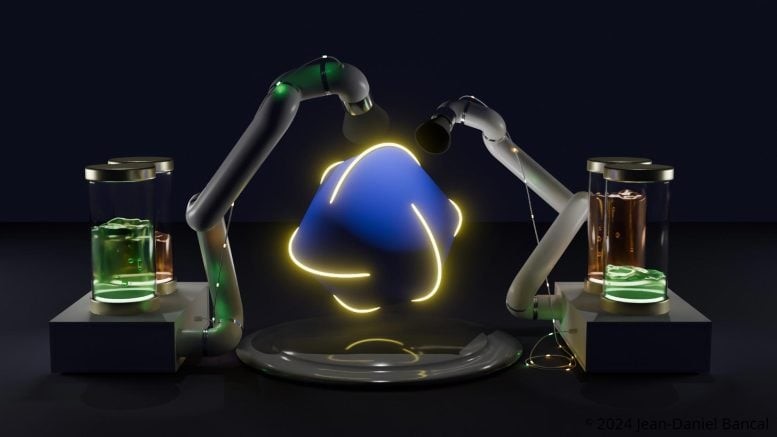
Figure 1. Quantum Breakthrough: Entanglement Puzzle Finally Solved.
Quantum entanglement, a cornerstone of the second quantum revolution, powers cutting-edge technologies such as quantum computers and sensors. However, even in classic experimental setups like Bell tests—recognized by the 2022 Nobel Prize in Physics—the precise role and boundaries of entanglement remained elusive. This new theoretical advancement marks the first time researchers have definitively outlined the full scope of entanglement in such experiments. Figure 1 shows Quantum Breakthrough: Entanglement Puzzle Finally Solved.
Decoding the Hidden Patterns
Entangled systems consist of two parts that are profoundly linked, such that measuring one instantly influences the other. This connection reveals itself through distinctive patterns—or frequencies—in the measurement results. These patterns are a signature feature of quantum mechanics and form the foundation of quantum information science.
Until now, the statistical data generated by entangled measurements had resisted full interpretation. In their new work, the researchers have identified all the frequencies required to completely describe these quantum systems. This achievement marks the first explicit and thorough characterization of a set of quantum statistics, offering a deeper understanding of the hidden structure behind entangled measurements.
Pushing Quantum Boundaries
This breakthrough carries both foundational and practical implications. The type of reconstruction achieved by the researchers underpins some of the most advanced methods used to validate quantum devices. Their work lays the groundwork for developing more comprehensive and precise testing procedures for emerging quantum technologies.
On a deeper level, by mapping out the full extent of quantum statistics, the study also reveals the boundaries of quantum physics itself. It not only clarifies the reach of quantum theory but also opens new avenues for exploring and understanding its fundamental nature.
What’s the Quantum Puzzle?
At the heart of quantum physics is entanglement—a strange connection between particles where one instantly affects the other, no matter how far apart they are. This is one of the most puzzling and powerful parts of quantum mechanics.
For the past 40 years, scientists have known that entanglement plays a key role in things like quantum computers and quantum sensors, but they didn’t fully understand how far entanglement could go or what limits it had in certain experiments—like Bell tests (famous experiments used to test quantum theory).
What’s Been Solved?
Two researchers—Victor Barizien and Jean-Daniel Bancal—finally cracked it. In their new paper, they showed exactly what kinds of patterns appear in measurements when particles are entangled. For the first time, they gave a complete and detailed description of the statistical behavior of these systems.
That means we now know everything we need to describe how entangled particles behave during measurement. This was the missing piece in understanding how entanglement shows up in real-world data.
Why Patterns Matter
When scientists measure entangled particles, they look at how often certain outcomes happen—like a heads or tails result in a quantum coin flip. These frequencies reveal hidden patterns that only quantum physics can explain.
But for decades, those patterns were only partially understood. Now, thanks to this research, we can fully decode the results. That helps scientists validate what they’re seeing and prove that a system is truly quantum.
Why It’s Important
This isn’t just a theory—it has big practical uses. The results improve how we test and validate quantum devices, making them more trustworthy and efficient. It's like having a better checklist for whether your quantum computer is working as it should.
Source: SciTECHDaily
Cite this article:
Priyadharshini S (2025), Solving the Quantum Puzzle: 40-Year Entanglement Mystery Finally Unlocked, AnaTechMaz, pp. 272
Recent Post
-

Scientists Create Ultra-Thin 2D Metals for The First Time, Going Beyond Graphene
TResearchers from the Institute of Physics (IOP) at the Chinese.....
-
Solving The Quantum Puzzle: 40-Year Entanglement Mystery Finally Unlocked
A breakthrough study published in Nature Physics by Victor Barizien and...

Dark Matter Unveiled? New Quantum Gravity Theory Redefines Einstein’s Concept of Spacetime
For decades, physicists have struggled to reconcile quantum mechanics and.....

Breakthrough in Quantum Computing: Scientists Overcome 25-Year Chip Fabrication Barrier
Quantum computers tap into the fundamental principles of quantum mechanics...
Quantum Rainfall: Ultracold Atoms Reveal the Secrets of Liquid Matter
In classical physics, surface tension arises from the cohesive forces.....
-
U.S. Military Initiates Effort to Identify the Top Quantum Computer
The U.S. Military has initiated a program to identify which companies...
-

Scientists Uncover New Type of “Hall Effect” That Could Transform Electronics
The classical Hall effect, first observed by Edwin Hall at Johns Hopkins...
-

Harvard Develops Chip-Sized Laser Powerful Enough to Reveal Hidden Worlds
The research was spearheaded by senior author Federico Capasso, the Robert...
-
Capturing Ghost Particles in 4D: How Quantum Sensors are Revolutionizing Collider Physics
To probe the fundamental nature of matter, energy, space, and time...
-

MIT’s Quarton Coupler: Supercharged Qubits Propel Quantum Computing Forward
Quantum computers hold the promise to transform fields like materials....
-

Breaking The Quantum Mirror: Hidden Chirality Discovered in A Symmetrical Crystal
This is somewhat like pointing the James Webb telescope at the quantum world...
-
MIT Captures Breathtaking First Images of Atoms Interacting in Open Space
MIT physicists have captured the first-ever direct images of individual...
-

Innovative Tunneling Method Uncovers Hidden Characteristics of High-Temperature Superconductors
Because their critical temperatures exceed the boiling point of.....
-
Quantum Computers Just Outperformed Supercomputers – Here's What They Achieved
In a significant scientific breakthrough, researchers at USC have...

Quantum Speed Hack: Additional Qubits Reduce Measurement Time Without Sacrificing Precision
Researchers have developed a novel method to accelerate quantum...