

MIT Captures Breathtaking First Images of Atoms Interacting in Open Space
Catching Atoms in Motion
MIT physicists have captured the first-ever direct images of individual atoms interacting freely in open space — a breakthrough that sheds light on subtle quantum correlations previously seen only in theory. Published in Physical Review Letters, the discovery opens a new window into observing elusive quantum behaviors in real space.
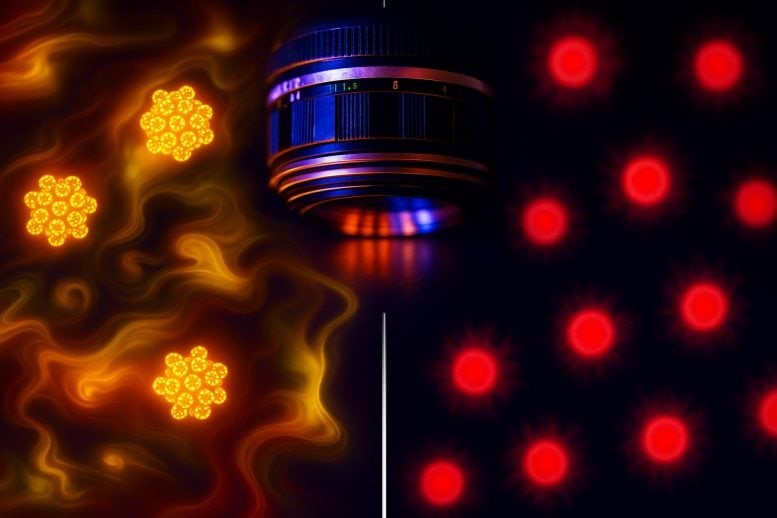
Figure 1. MIT Unveils First Stunning Images of Atoms Interacting in Free Space.
To take these remarkable images, the team allowed a cloud of atoms to move and interact naturally. Then, using a grid of laser beams known as an optical lattice, they momentarily froze the atoms in place. A quick burst of precisely tuned laser light illuminated the suspended atoms, allowing researchers to photograph their exact positions before the cloud dispersed. Figure 1 shows MIT Unveils First Stunning Images of Atoms Interacting in Free Space.
Revealing Quantum Interactions
With their innovative imaging technique, the MIT team successfully photographed different types of atomic clouds, achieving several groundbreaking firsts. They captured images of bosons, which clustered together to form quantum waves, and observed fermions pairing up in free space — a fundamental behavior behind superconductivity.
“We can now see individual atoms in these fascinating quantum clouds and observe how they relate to one another. It’s truly beautiful,” says Martin Zwierlein, the Thomas A. Frank Professor of Physics at MIT.
The same issue of Physical Review Letters features two related breakthroughs from other research groups. One team, led by Nobel laureate Wolfgang Ketterle, also at MIT, imaged enhanced pair correlations among bosons. Another, led by Tarik Yefsah at École Normale Supérieure in Paris, visualized a cloud of noninteracting fermions.
Peering Into the Quantum Cloud
Atoms are incredibly small — about one-tenth of a nanometer in size, or roughly a million times thinner than a human hair. But what makes atoms especially challenging to understand is their quantum behavior: you can’t simultaneously pinpoint both their exact location and speed. Traditional imaging techniques like absorption imaging can capture the general shape of an atom cloud by casting shadows, but they can’t resolve individual atoms.
“It’s like seeing a cloud in the sky without being able to spot the water molecules,” explains MIT physicist Martin Zwierlein.
A Breakthrough in Atom Imaging
To truly observe how atoms interact in free space, Zwierlein and his team developed a new method called atom-resolved microscopy. First, they trap a cloud of atoms using a gentle laser beam that allows them to move and interact naturally. Then, they activate a lattice of laser light to freeze the atoms in place. A second, finely tuned laser briefly illuminates the atoms, allowing researchers to capture their positions based on emitted fluorescence.
“The hardest part was collecting light from the atoms without disturbing them,” Zwierlein says. “It’s like trying to photograph snowflakes without melting them. We’ve finally figured out how to freeze the motion of interacting atoms and see them clearly — one by one.”
Bosons and Fermions in Focus
Applying this method, the team imaged interactions between two fundamental types of quantum particles: bosons and fermions. Bosons, like photons, tend to bunch together; fermions, like electrons, tend to repel one another unless they’re of opposite types.
First, the researchers imaged bosonic sodium atoms cooled into a Bose-Einstein condensate — a special quantum state where all atoms share the same wave function. Zwierlein’s team managed to capture these atoms “bunching” together, as predicted by Louis de Broglie’s wave theory — making the de Broglie wave visible for the first time in such a setting.
“We can now see these wave-like quantum behaviors, which were once only abstract ideas,” Zwierlein notes.
Capturing Quantum Pairing
The team also observed fermionic lithium atoms. Though identical fermions repel, opposite types can pair up — a critical behavior behind phenomena like superconductivity. Using their imaging setup, the researchers directly saw these fermion pairs forming in real space, visualizing a quantum interaction long described only in mathematical models.
“This kind of pairing was once just a theoretical concept,” says study co-author Richard Fletcher. “Now we’re seeing it for real — in an actual photograph.”
Looking Ahead: Quantum Hall and Beyond
The MIT team hopes to apply this imaging technology to more exotic quantum behaviors, like those found in quantum Hall physics, where electrons form strange, correlated patterns under magnetic fields.
“That’s where theory gets messy,” Zwierlein adds. “Physicists often rely on cartoons and simplified models. Now we can actually test whether these strange quantum states exist — by seeing them with our own eyes.”
Source: SciTECHDaily
Cite this article:
Priyadharshini S (2025), MIT Captures Breathtaking First Images of Atoms Interacting in Open Space, AnaTechMaz, pp. 282
Recent Post
-

Scientists Create Ultra-Thin 2D Metals for The First Time, Going Beyond Graphene
TResearchers from the Institute of Physics (IOP) at the Chinese.....
-
Solving The Quantum Puzzle: 40-Year Entanglement Mystery Finally Unlocked
A breakthrough study published in Nature Physics by Victor Barizien and...

Dark Matter Unveiled? New Quantum Gravity Theory Redefines Einstein’s Concept of Spacetime
For decades, physicists have struggled to reconcile quantum mechanics and.....

Breakthrough in Quantum Computing: Scientists Overcome 25-Year Chip Fabrication Barrier
Quantum computers tap into the fundamental principles of quantum mechanics...
Quantum Rainfall: Ultracold Atoms Reveal the Secrets of Liquid Matter
In classical physics, surface tension arises from the cohesive forces.....
-
U.S. Military Initiates Effort to Identify the Top Quantum Computer
The U.S. Military has initiated a program to identify which companies...
-

Scientists Uncover New Type of “Hall Effect” That Could Transform Electronics
The classical Hall effect, first observed by Edwin Hall at Johns Hopkins...
-
Harvard Develops Chip-Sized Laser Powerful Enough to Reveal Hidden Worlds
The research was spearheaded by senior author Federico Capasso, the Robert...
-
Capturing Ghost Particles in 4D: How Quantum Sensors are Revolutionizing Collider Physics
To probe the fundamental nature of matter, energy, space, and time...
-

MIT’s Quarton Coupler: Supercharged Qubits Propel Quantum Computing Forward
Quantum computers hold the promise to transform fields like materials....
-
Breaking The Quantum Mirror: Hidden Chirality Discovered in A Symmetrical Crystal
This is somewhat like pointing the James Webb telescope at the quantum world...
-
MIT Captures Breathtaking First Images of Atoms Interacting in Open Space
MIT physicists have captured the first-ever direct images of individual...
-
Innovative Tunneling Method Uncovers Hidden Characteristics of High-Temperature Superconductors
Because their critical temperatures exceed the boiling point of.....
-
Quantum Computers Just Outperformed Supercomputers – Here's What They Achieved
In a significant scientific breakthrough, researchers at USC have...

Quantum Speed Hack: Additional Qubits Reduce Measurement Time Without Sacrificing Precision
Researchers have developed a novel method to accelerate quantum...