

Capturing Ghost Particles in 4D: How Quantum Sensors are Revolutionizing Collider Physics
Unlocking the Universe with Particle Colliders
To probe the fundamental nature of matter, energy, space, and time, physicists rely on powerful machines known as particle accelerators. These devices smash high-energy particles together, producing bursts of millions of new particles with varying masses and velocities every second. Occasionally, these collisions yield particles that defy the expectations of the Standard Model—the dominant theory describing the universe’s most basic components.
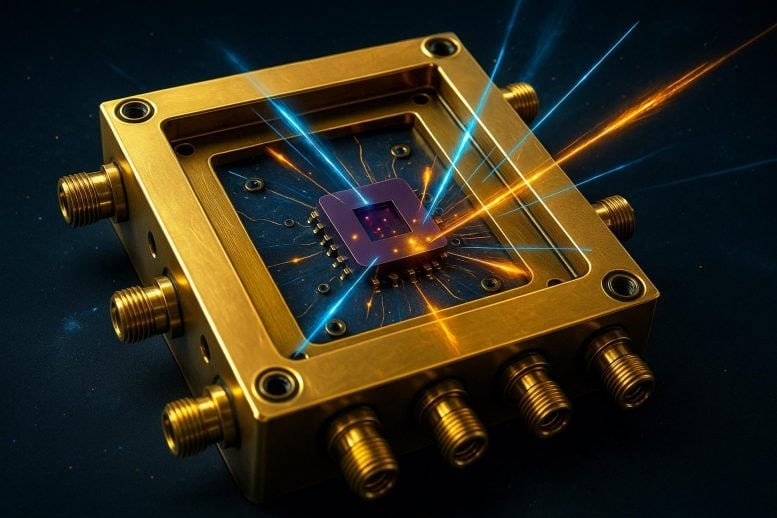
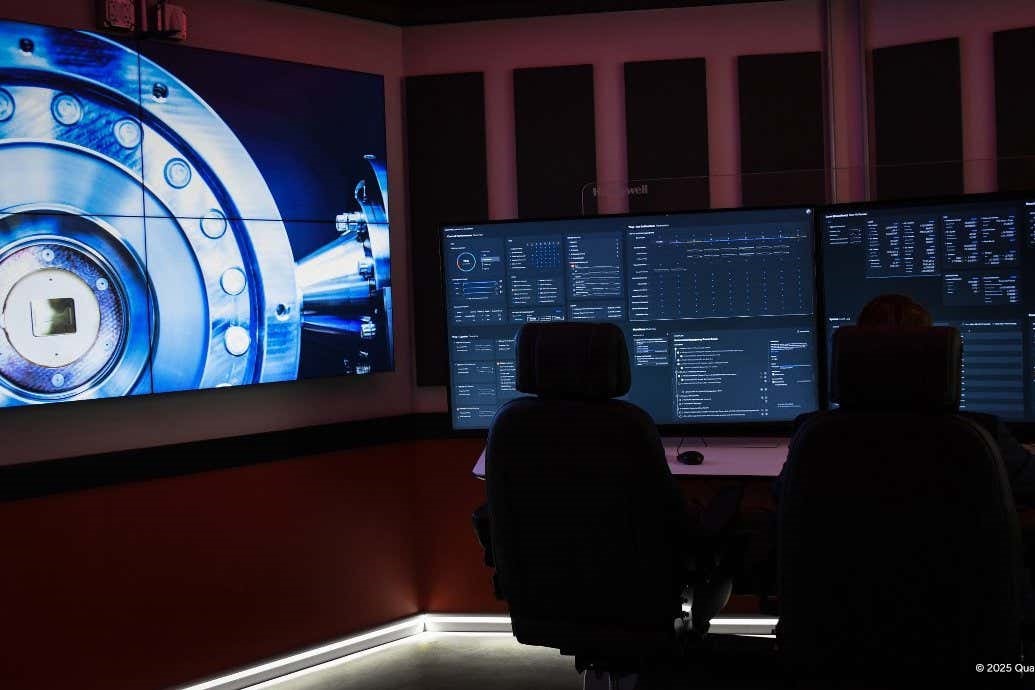
Figure 1. Capturing Ghost Particles in 4D: The Quantum Sensor Revolution in Collider Physics.
As scientists prepare to develop even more powerful accelerators capable of producing higher-intensity collisions, a new challenge emerges: how can they sift through the resulting subatomic chaos to uncover meaningful insights? Figure 1 shows Capturing Ghost Particles in 4D: The Quantum Sensor Revolution in Collider Physics.
Quantum Sensors: A Precision Breakthrough
The breakthrough may lie in quantum sensors. Researchers from the U.S. Department of Energy's Fermilab, Caltech, NASA’s Jet Propulsion Laboratory (JPL), and other institutions are pioneering a new type of particle detection system utilizing quantum sensors—highly sensitive devices capable of detecting individual particles with exceptional precision.
"In the next 20 to 30 years, we will see a paradigm shift in particle colliders as they become more powerful in both energy and intensity," says Maria Spiropulu, Shang-Yi Ch’en Professor of Physics at Caltech. "This means we need more precise detectors. This is why we are developing quantum technology now, to include quantum sensing in our toolkit for optimizing next-generation searches for new particles, dark matter, and to explore the origins of space and time."
First Real-World Test of Quantum Detectors
“This is a significant step toward developing advanced detectors for future particle physics experiments,” says co-author Si Xie, a scientist at Fermilab and research scientist at Caltech. “This is just the beginning. We have the potential to detect lighter particles and exotic ones, such as those that could make up dark matter.”
Origins in Astronomy and Quantum Networks
The quantum sensors in this study are similar to a related family of sensors, called superconducting nanowire single-photon detectors (SNSPDs), which are used in quantum networks and astronomy. For example, researchers at JPL, recognized leaders in designing and fabricating these sensors, recently deployed them in the Deep Space Optical Communications experiment. This demonstration used lasers to transmit high-definition data from space to Earth.
New Capabilities for Particle Physics
In their particle physics experiments, the researchers chose to use SMSPDs instead of SNSPDs due to their larger surface area, which is more effective at collecting the showers of particles produced in collisions. This marked the first time the sensors were used to detect charged particles—a feature essential for particle physics but unnecessary for quantum networks or astronomy. "The novelty of this study is that we demonstrated the sensors can efficiently detect charged particles," explains Xie.
The SMSPD sensors also offer enhanced precision in detecting particles in both space and time. "We call them 4D sensors because they improve both spatial and time resolution simultaneously," Xie says. "Typically, in particle physics experiments, you must adjust sensors to optimize either time or spatial resolution, but not both at once."
Why 4D Matters in Particle Tracking
When analyzing the streams of particles produced by high-speed collisions, researchers aim to trace their exact paths in both space and time. Think of it like trying to track a person in a crowd at Grand Central Station, where people are flooding in from different trains. You'd want to have enough spatial resolution to identify individuals, but also sufficient time resolution to capture the movement of the person you're tracking. If you only had images every 10 seconds, you might miss key moments, but with photos taken every second, you'd have a far better chance of tracking your person of interest.
Paving the Way for Future Colliders
“We’re incredibly excited to work on groundbreaking detector research like SMSPDs, as they could be crucial for major projects in the field, such as the Future Circular Collider or a muon collider,” says Fermilab scientist and Caltech alumnus Cristián Peña (PhD ’17), who led the research. “It’s also exciting to have brought together a world-class team from multiple institutions to advance this emerging research to the next level.”
Source: SciTECHDaily
Cite this article:
Priyadharshini S (2025), Capturing Ghost Particles in 4D: How Quantum Sensors are Revolutionizing Collider Physics, AnaTechMaz, pp. 279
Recent Post
-

Scientists Create Ultra-Thin 2D Metals for The First Time, Going Beyond Graphene
TResearchers from the Institute of Physics (IOP) at the Chinese.....
-
Solving The Quantum Puzzle: 40-Year Entanglement Mystery Finally Unlocked
A breakthrough study published in Nature Physics by Victor Barizien and...
Dark Matter Unveiled? New Quantum Gravity Theory Redefines Einstein’s Concept of Spacetime
For decades, physicists have struggled to reconcile quantum mechanics and.....

Breakthrough in Quantum Computing: Scientists Overcome 25-Year Chip Fabrication Barrier
Quantum computers tap into the fundamental principles of quantum mechanics...
Quantum Rainfall: Ultracold Atoms Reveal the Secrets of Liquid Matter
In classical physics, surface tension arises from the cohesive forces.....
-
U.S. Military Initiates Effort to Identify the Top Quantum Computer
The U.S. Military has initiated a program to identify which companies...
-
Scientists Uncover New Type of “Hall Effect” That Could Transform Electronics
The classical Hall effect, first observed by Edwin Hall at Johns Hopkins...
-
Harvard Develops Chip-Sized Laser Powerful Enough to Reveal Hidden Worlds
The research was spearheaded by senior author Federico Capasso, the Robert...
-
Capturing Ghost Particles in 4D: How Quantum Sensors are Revolutionizing Collider Physics
To probe the fundamental nature of matter, energy, space, and time...
-
MIT’s Quarton Coupler: Supercharged Qubits Propel Quantum Computing Forward
Quantum computers hold the promise to transform fields like materials....
-
Breaking The Quantum Mirror: Hidden Chirality Discovered in A Symmetrical Crystal
This is somewhat like pointing the James Webb telescope at the quantum world...
-
MIT Captures Breathtaking First Images of Atoms Interacting in Open Space
MIT physicists have captured the first-ever direct images of individual...
-
Innovative Tunneling Method Uncovers Hidden Characteristics of High-Temperature Superconductors
Because their critical temperatures exceed the boiling point of.....
-
Quantum Computers Just Outperformed Supercomputers – Here's What They Achieved
In a significant scientific breakthrough, researchers at USC have...

Quantum Speed Hack: Additional Qubits Reduce Measurement Time Without Sacrificing Precision
Researchers have developed a novel method to accelerate quantum...