

US Startup Introduces Scalable Sodium-Ion Energy Storage Solution
US-based energy storage company ESS has introduced Bridge, a modular sodium-ion battery energy storage system (BESS) designed for utilities, data centers, critical infrastructure, and commercial users seeking a safer alternative to conventional lithium-ion batteries.
Developed to meet the growing energy demands of AI-driven computing and modern digital infrastructure, Bridge expands ESS's portfolio of U.S.-manufactured, non-lithium energy storage solutions. The launch follows strong market interest in sodium-ion technology, with the company recently reporting more than $1 billion in early-stage customer opportunities after entering the sodium-ion battery market.
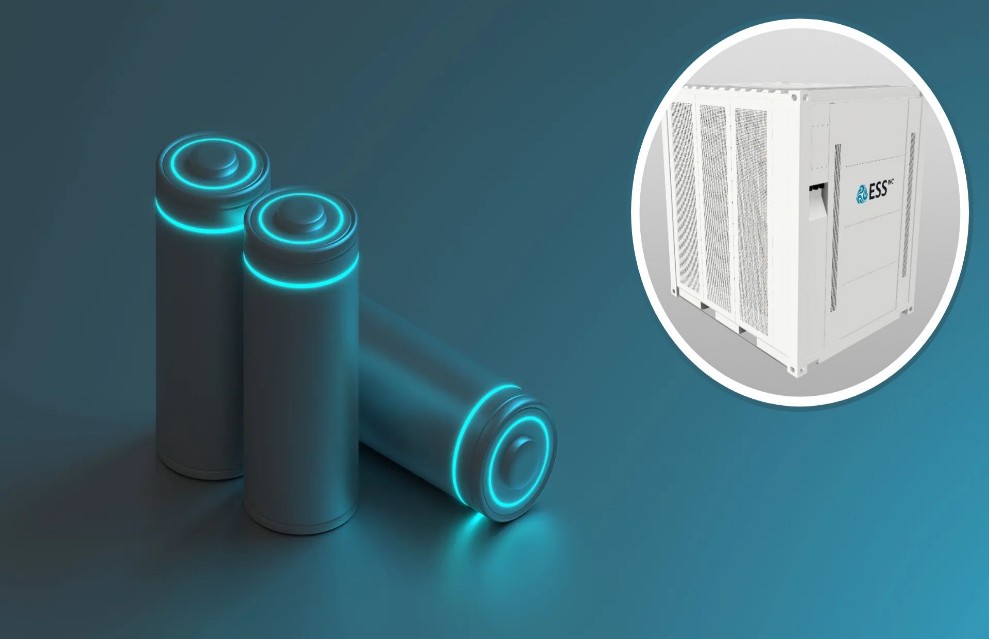
Figure 1. Sodium-ion Battery.
Modular Design for Flexible Deployment
Bridge is built around a 1.2 MWh AC battery module housed in a compact 10-foot container. Multiple units can be combined to provide up to 4.8 MWh of energy storage within the footprint of a standard 20-foot battery container. This modular architecture allows customers to expand storage capacity without increasing installation space.
The system integrates sodium-ion battery cells, power conversion equipment, battery management software, cabling, and an advanced energy management platform into a single plug-and-play solution. Designed for quick deployment, Bridge can be installed using a heavy-duty forklift and operates with a simple air-cooling system, eliminating the complexity of liquid cooling. Figure 1 illustrate sodium-ion battery.
A Safer Alternative to Lithium-Ion
Unlike traditional lithium-ion batteries, Bridge is engineered to eliminate the risk of thermal runaway, significantly reducing fire hazards while lowering maintenance requirements and operating costs. The system supports charge and discharge durations ranging from one hour to more than 16 hours, depending on deployment needs.
Bridge is also built for demanding environments, operating reliably in temperatures from -40°F to 122°F. With a projected lifespan of 20 years, the system minimizes battery replacement requirements and improves long-term investment value.
According to ESS CEO Drew Buckley, the increasing energy requirements of AI-powered data centers are driving demand for next-generation storage technologies, with sodium-ion batteries offering a safer and more efficient solution for these evolving workloads.
Built for Energy Security and Supply Chain Resilience
ESS says Bridge is manufactured using abundant, widely available materials, reducing reliance on critical minerals commonly used in lithium-ion batteries [1]. This approach strengthens domestic energy storage supply chains while helping customers reduce exposure to supply chain risks associated with Foreign Entities of Concern.
Chief Commercial Officer Randall Selesky noted that energy storage operators are increasingly seeking solutions that improve safety, simplify operations, provide greater flexibility, and support long-term energy security goals.
As electricity demand continues to rise across utilities and AI-powered data centers, ESS believes sodium-ion technology is well positioned to become a reliable, domestically sourced alternative for grid-scale energy storage. With the launch of Bridge, the company aims to accelerate the adoption of safer, scalable, and more sustainable battery systems for the next generation of energy infrastructure.
References
- https://interestingengineering.com/energy/ess-bridge-sodium-ion-battery-data-centers-utilities
Cite this article:
Keerthana S (2026), US Startup Introduces Scalable Sodium-Ion Energy Storage Solution, AnaTechMaz, pp.437
Recent Post
-

Grain-Sized Crystal Challenges Conventional Physics with Magnetic Field Breakthrough
Scientists at Institute of Science and Technology Austria have....
-

Ultra-Fast Flexible Transistors Reach 100 GHz Milestone
Researchers have achieved a major breakthrough in flexible electronics by developing carbon....
-

Ancient Chemical Method Inspires Breakthrough in Advanced Glass Engineering
Scientists have revived a centuries-old glassmaking principle to...
-
Cracking the Code of High-Temperature Superconductors
For decades, the mystery of high-temperature superconductivity has challenged some of the..
-

Unlocking the Atomic Secrets of Record-Breaking Superconductors
The quest for lossless electricity transmission has taken a major step forward. An international...
-
New Artificial Leaf Uses Sunlight to Turn CO₂ into Clean Methanol
Researchers at Yale University have developed a solar-powered artificial leaf capable of converting carbon ...
-
Solidion Unveils Extreme-Climate Battery Platform for Future Space Missions
Battery manufacturer Solidion Technology has introduced a...
-
Revolutionary Mass Spectrometry System Detects Billions of Molecules at Once
Mass spectrometry has long been one of the most important tools...
-
Recycling for Technology: New Partnership Extracts Semiconductor Resources from Aluminum Scrap
A new partnership between ...
-
Smart Thermal Tags Offer a Breakthrough in Plastic Waste Sorting
Plastic waste remains one of the world's most pressing...
-

Physicists Detect Unusual Quantum Rotation Phenomenon That Challenges Intuition
Researchers have found that atomic-scale rotations inside a crystal....
-

Scientists Discover Low-Cost Route to Clean Hydrogen Production
Researchers at the University of Birmingham have developed a new technique for producing hydrogen...
-

Scientists Harvest Electricity from Moisture in the Air Using Common Materials
A study published in Nano Energy reports the development of a....
-
Scientists Solve Long-Standing Mystery of High-Temperature Superconductors
New experimental measurements of nickelate superconductors...
-

Breakthrough Discovery Unveils Previously Hidden State of Matter
Scientists have achieved a major breakthrough by capturing a long-theorized hidden state of....