

Scientists Confirm Genuine One-Dimensional Electronic Behavior in a Material
Chains of Phosphorus Atoms
Recently, researchers have managed to create one-dimensional structures in which phosphorus atoms align into short chains on a silver substrate under specific conditions. While these chains are morphologically one-dimensional, they may still interact laterally with neighboring chains. Such interactions can alter their electronic structure, potentially disrupting their pure one-dimensional nature. Until now, however, accurately measuring these effects in experiments has remained a challenge.
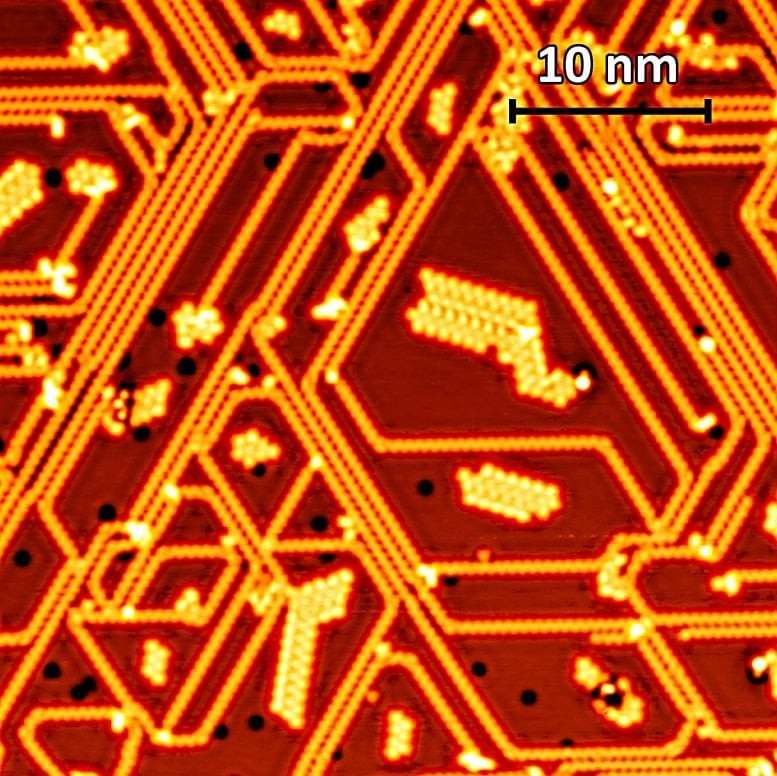
Figure 1. Scientists Unveil True One-Dimensional Electronic Properties in a Material.
“Through a detailed analysis of measurements conducted at BESSY II, we have now demonstrated that these phosphorus chains truly exhibit a one-dimensional electronic structure,” explains Professor Oliver Rader, head of the Spin and Topology in Quantum Materials department at HZB. Figure 1 shows Scientists Unveil True One-Dimensional Electronic Properties in a Material.
Using angle-resolved photoemission spectroscopy (ARPES) at BESSY II, the researchers confirmed the one-dimensional electronic structure. “We obtained exceptionally high-quality results that allowed us to observe standing electron waves forming between the chains,” says Varykhalov.
Phase Transition Predicted with Increasing Chain Density
Density functional theory (DFT) calculations supported these findings and led to an intriguing prediction: as the phosphorus chains become more closely packed, their interactions intensify. This suggests a phase transition—from semiconducting to metallic behavior—as the chain density increases. In such a configuration, a two-dimensional network of phosphorus chains would exhibit metallic properties.
Building One-Dimensional Phosphorus Chains
Researchers have successfully created structures where phosphorus atoms align into short chains on a silver substrate. These chains are physically one-dimensional, but scientists suspected that neighboring chains might interact and disrupt their electronic purity. Until recently, experimental methods were not precise enough to confirm whether these chains truly behaved as one-dimensional electronic systems.
Experimental Proof from BESSY II
Using advanced techniques at BESSY II, Professor Oliver Rader’s team at HZB conducted a detailed investigation. Dr. Andrei Varykhalov and his group used a cryogenic scanning tunneling microscope (STM) to visualize phosphorus chains arranged at 120-degree angles. Then, with angle-resolved photoemission spectroscopy (ARPES), they confirmed a genuinely one-dimensional electronic structure. Remarkably, they observed standing electron waves forming between the chains—clear evidence of distinct 1D behavior.
Predicting a Phase Transition
Further analysis by Dr. Maxim Krivenkov and Dr. Maryam Sajedi revealed that as these chains are brought closer together, their interactions strengthen. Supported by density functional theory (DFT) calculations, the findings predict a phase transition: the material could shift from a semiconductor to a metal as chain density increases. This opens an entirely new frontier in condensed matter physics, where manipulating atomic arrangements could lead to novel electronic materials with tunable properties.
Source:SciTECHDaily
Cite this article:
Priyadharshini S (2025), Scientists Confirm Genuine One-Dimensional Electronic Behavior in a Material, AnaTechMaz, pp. 300
Recent Post
-

Scientists Solve Century-Old Puzzle by Measuring Tiny Electron Fraction, Shedding Light on Catalysis
When molecules approach a catalyst....
-
Scientists Develop 3D Printing Technique That Makes Metal 20 Times Stronger
Vat photopolymerization is a 3D printing process in which a light....
-

Scientists Discover Hidden Atomic Structures in Everyday Metals, Upending Long-Held Theories
For Freitas—an early-career scientist—the discovery validates....
-

When Atoms Break the Rules: High-Entropy MXenes Challenge Materials Science
By disrupting atomic order, scientists have crafted....
-

America’s Strongest Laser Delivers its First 2-Petawatt Blast
Research at ZEUS promises advancements in medicine, national security, materials science, ....
-
Scientists Reveal the World’s First 2D Computer — Marking the Dawn of a Post-Silicon Era
“That’s the core breakthrough of our work,” said Das. “For the....
-

Scientists Develop Next-Generation “Superalloy” Poised to Transform Jet Engines and Power Plants
Although these metals boast exceptional thermal stability, they....
-

Silver Made to Shine 77× Brighter by Scientists
To investigate the structure–property relationship in more detail, the team synthesized and ....
-

Gold-Based Catalyst Breaks Longstanding Record in Sustainable Chemistry
To enhance the efficiency of converting bioethanol into acetaldehyde....
-

Physicists Discover Hidden Quantum Mirrors That Confine Light Within 2D Materials
The breakthrough traces its origins to Hamburg, where McIver....
-

Scientists Create “Unbreakable” Quantum Sensor Capable of Withstanding 30,000 Atmospheres
To create the new sensors, researchers bombarded....
-
This Breakthrough Material Could Transform the Future of Renewable Energy
“Our goal is to deepen our understanding of how materials....
-

MIT’s Groundbreaking Technique Allows Scientists to Peer Inside Atoms
Within radium monofluoride molecules, researchers precisely tracke....
-

Scientists Solve a Long-Standing Mystery in Chemistry
Similar to traditional palladium catalysis, the reactivity of photoexcited palladium ....
-
Scientists Confirm Genuine One-Dimensional Electronic Behavior in a Material
Recently, researchers have managed to create one-dimensional....