

This Breakthrough Material Could Transform the Future of Renewable Energy
Understanding Catalytic Functionality
“Our goal is to deepen our understanding of how materials function as catalysts under electrocatalytic conditions,” said Djire. “Ultimately, this knowledge could help us pinpoint the essential components needed to produce chemicals and fuels from earth-abundant resources.”
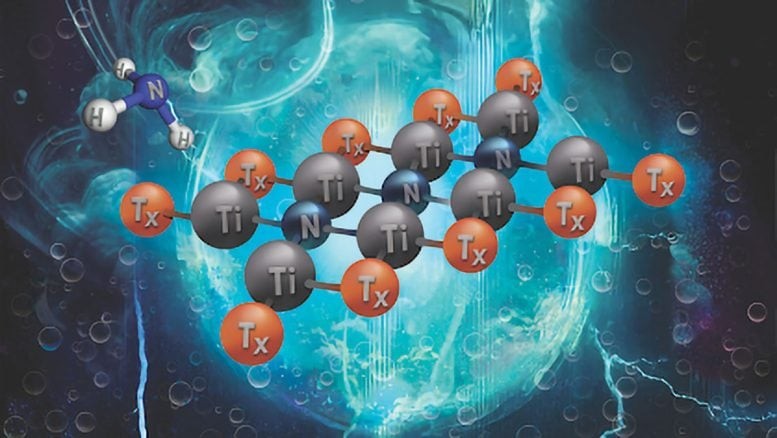
Figure 1. Breakthrough Material Poised to Transform Renewable Energy.
The structure of MXenes plays a crucial role in determining their catalytic behavior. By adjusting the lattice nitrogen reactivity—specifically by substituting a carbon atom with a nitrogen atom—researchers can alter the material’s vibrational properties, which describe how molecules move and interact with energy. Figure 1 shows Breakthrough Material Poised to Transform Renewable Energy.
According to Yoo, this tunability makes MXenes highly adaptable for specialized renewable energy applications. Their customizable nature positions them as strong candidates to replace current electrocatalyst materials, which are often costly and less efficient.
“MXenes are ideal candidates among transition metal-based materials,” Yoo said. “Nitride MXenes, in particular, show enhanced electrocatalytic performance compared to their more commonly studied carbide counterparts.”
Computational and Experimental Insights
The study was supported by first-principles computational analyses conducted by Ph.D. student Hao-En Lai from Dr. Balbuena’s group. The researchers evaluated changes in surface vibrational modes when MXenes interacted with energy-relevant solvents. These insights allowed the team to quantify molecular interactions—particularly in processes such as ammonia synthesis—further advancing the understanding of MXene-based catalysis.
Probing Vibrational Behavior with Raman Spectroscopy
Throughout this research, Djire, Yoo, and their team have explored the vibrational properties of titanium nitride using Raman spectroscopy—a non-destructive analytical technique that provides detailed insight into a material’s chemical structure and bonding.
“One of the most significant aspects of this work is Raman spectroscopy’s ability to reveal lattice nitrogen reactivity,” said Yoo. “This fundamentally reshapes our understanding of the electrocatalytic systems involving MXenes.”
Yoo added that continued Raman spectroscopic studies of nitride MXenes, especially in combination with polar solvents, could pave the way for major scientific breakthroughs.
“We demonstrate that electrochemical ammonia synthesis can occur through the protonation and replenishment of lattice nitrogen,” Djire explained. “Ultimately, our goal is to achieve an atomistic-level understanding of how individual atoms within a material’s structure contribute to its overall function.”
Source:SciTECHDaily
Cite this article:
Priyadharshini S (2025), This Breakthrough Material Could Transform the Future of Renewable Energy, AnaTechMaz, pp. 297
Recent Post
-
Scientists Solve Century-Old Puzzle by Measuring Tiny Electron Fraction, Shedding Light on Catalysis
When molecules approach a catalyst....
-

Scientists Develop 3D Printing Technique That Makes Metal 20 Times Stronger
Vat photopolymerization is a 3D printing process in which a light....
-

Scientists Discover Hidden Atomic Structures in Everyday Metals, Upending Long-Held Theories
For Freitas—an early-career scientist—the discovery validates....
-

When Atoms Break the Rules: High-Entropy MXenes Challenge Materials Science
By disrupting atomic order, scientists have crafted....
-

America’s Strongest Laser Delivers its First 2-Petawatt Blast
Research at ZEUS promises advancements in medicine, national security, materials science, ....
-

Scientists Reveal the World’s First 2D Computer — Marking the Dawn of a Post-Silicon Era
“That’s the core breakthrough of our work,” said Das. “For the....
-

Scientists Develop Next-Generation “Superalloy” Poised to Transform Jet Engines and Power Plants
Although these metals boast exceptional thermal stability, they....
-

Silver Made to Shine 77× Brighter by Scientists
To investigate the structure–property relationship in more detail, the team synthesized and ....
-

Gold-Based Catalyst Breaks Longstanding Record in Sustainable Chemistry
To enhance the efficiency of converting bioethanol into acetaldehyde....
-

Physicists Discover Hidden Quantum Mirrors That Confine Light Within 2D Materials
The breakthrough traces its origins to Hamburg, where McIver....
-

Scientists Create “Unbreakable” Quantum Sensor Capable of Withstanding 30,000 Atmospheres
To create the new sensors, researchers bombarded....
-
This Breakthrough Material Could Transform the Future of Renewable Energy
“Our goal is to deepen our understanding of how materials....
-

MIT’s Groundbreaking Technique Allows Scientists to Peer Inside Atoms
Within radium monofluoride molecules, researchers precisely tracke....
-

Scientists Solve a Long-Standing Mystery in Chemistry
Similar to traditional palladium catalysis, the reactivity of photoexcited palladium ....
-
Scientists Confirm Genuine One-Dimensional Electronic Behavior in a Material
Recently, researchers have managed to create one-dimensional....