

Scientists Solve Century-Old Puzzle by Measuring Tiny Electron Fraction, Shedding Light on Catalysis
How Molecules Interact with Catalysts
When molecules approach a catalyst surface, they share electrons with the catalytic metal—such as gold, silver, or platinum—stabilizing the molecules in a way that drives the desired chemical reactions. While this electron-sharing process has been theorized for over a century, directly measuring these minuscule fractions of an electron has remained impossible—until now.
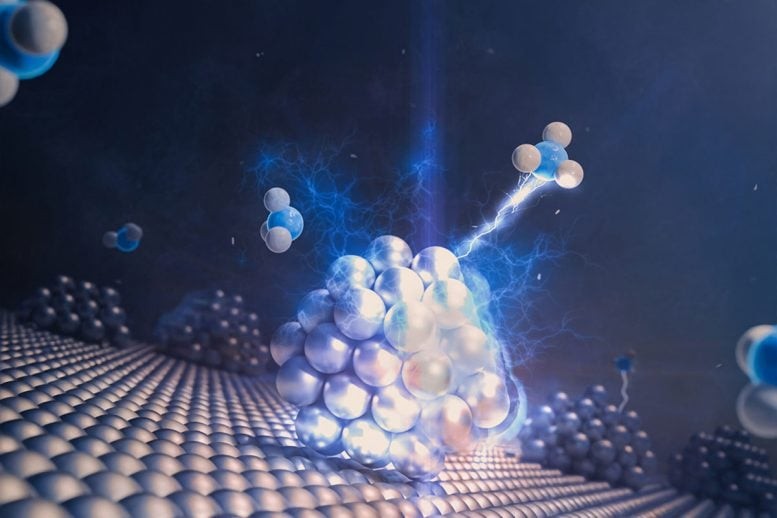
Figure 1. Measuring Tiny Electron Fractions: Unlocking the Secrets of Catalysis.
Researchers at the Center for Programmable Energy Catalysis at the University of Minnesota have developed a new technique, Isopotential Electron Titration (IET), that allows direct measurement of electron sharing at catalytic surfaces. Figure 1 shows Measuring Tiny Electron Fractions: Unlocking the Secrets of Catalysis.
“Measuring fractions of an electron at such tiny scales gives the clearest view yet of how molecules behave on catalysts,” said Justin Hopkins, a chemical engineering Ph.D. student at the University of Minnesota and lead author of the study. “Previously, catalyst engineers relied on indirect measurements under idealized conditions. This new method provides a tangible description of surface bonding under catalytically relevant conditions.”
Understanding the amount of electron transfer is crucial for predicting catalyst performance. Molecules that share electrons more readily bind more strongly, increasing reactivity. Precious metals exhibit the precise electron-sharing behavior required to drive catalysis—behavior that had never been directly measured until this breakthrough.
The Power of Isopotential Electron Titration (IET)
Isopotential Electron Titration (IET) now provides a powerful experimental tool for characterizing new catalyst formulations, enabling researchers to screen and identify optimal catalytic materials more efficiently.
“IET allowed us to measure electron sharing at levels below one percent—for example, a hydrogen atom binding to a platinum surface shares only 0.2% of an electron,” said Omar Abdelrahman, corresponding author and associate professor at the University of Houston’s Cullen College of Engineering. “Yet this tiny fraction is critical, making hydrogen reactive enough for industrial chemical processes.”
With advances in nanotechnology for catalyst synthesis and machine learning to explore large datasets, researchers have discovered numerous potential catalytic materials. IET now offers a direct, fundamental method to characterize these materials at the electron level.
“Fundamental research has always been the foundation for new catalytic technologies,” said Paul Dauenhauer, Distinguished Professor and director of the Center for Programmable Energy Catalysis at the University of Minnesota. “Our discovery of fractional electron distribution provides an entirely new scientific framework for understanding catalysts—one that we expect will guide the development of next-generation energy technologies for decades to come.”
Source:SciTECHDaily
Cite this article:
Priyadharshini S (2025), Scientists Solve Century-Old Puzzle by Measuring Tiny Electron Fraction, Shedding Light on Catalysis, AnaTechMaz, pp. 286
Recent Post
-
Scientists Solve Century-Old Puzzle by Measuring Tiny Electron Fraction, Shedding Light on Catalysis
When molecules approach a catalyst....
-
Scientists Develop 3D Printing Technique That Makes Metal 20 Times Stronger
Vat photopolymerization is a 3D printing process in which a light....
-

Scientists Discover Hidden Atomic Structures in Everyday Metals, Upending Long-Held Theories
For Freitas—an early-career scientist—the discovery validates....
-

When Atoms Break the Rules: High-Entropy MXenes Challenge Materials Science
By disrupting atomic order, scientists have crafted....
-

America’s Strongest Laser Delivers its First 2-Petawatt Blast
Research at ZEUS promises advancements in medicine, national security, materials science, ....
-

Scientists Reveal the World’s First 2D Computer — Marking the Dawn of a Post-Silicon Era
“That’s the core breakthrough of our work,” said Das. “For the....
-

Scientists Develop Next-Generation “Superalloy” Poised to Transform Jet Engines and Power Plants
Although these metals boast exceptional thermal stability, they....
-

Silver Made to Shine 77× Brighter by Scientists
To investigate the structure–property relationship in more detail, the team synthesized and ....
-

Gold-Based Catalyst Breaks Longstanding Record in Sustainable Chemistry
To enhance the efficiency of converting bioethanol into acetaldehyde....
-

Physicists Discover Hidden Quantum Mirrors That Confine Light Within 2D Materials
The breakthrough traces its origins to Hamburg, where McIver....
-

Scientists Create “Unbreakable” Quantum Sensor Capable of Withstanding 30,000 Atmospheres
To create the new sensors, researchers bombarded....
-
This Breakthrough Material Could Transform the Future of Renewable Energy
“Our goal is to deepen our understanding of how materials....
-

MIT’s Groundbreaking Technique Allows Scientists to Peer Inside Atoms
Within radium monofluoride molecules, researchers precisely tracke....
-

Scientists Solve a Long-Standing Mystery in Chemistry
Similar to traditional palladium catalysis, the reactivity of photoexcited palladium ....
-
Scientists Confirm Genuine One-Dimensional Electronic Behavior in a Material
Recently, researchers have managed to create one-dimensional....