

Scientists Reveal the World’s First 2D Computer — Marking the Dawn of a Post-Silicon Era
Building a 2D CMOS Computer
“That’s the core breakthrough of our work,” said Das. “For the first time, we’ve successfully built a CMOS computer entirely from 2D materials, integrating large-area molybdenum disulfide and tungsten diselenide transistors.”
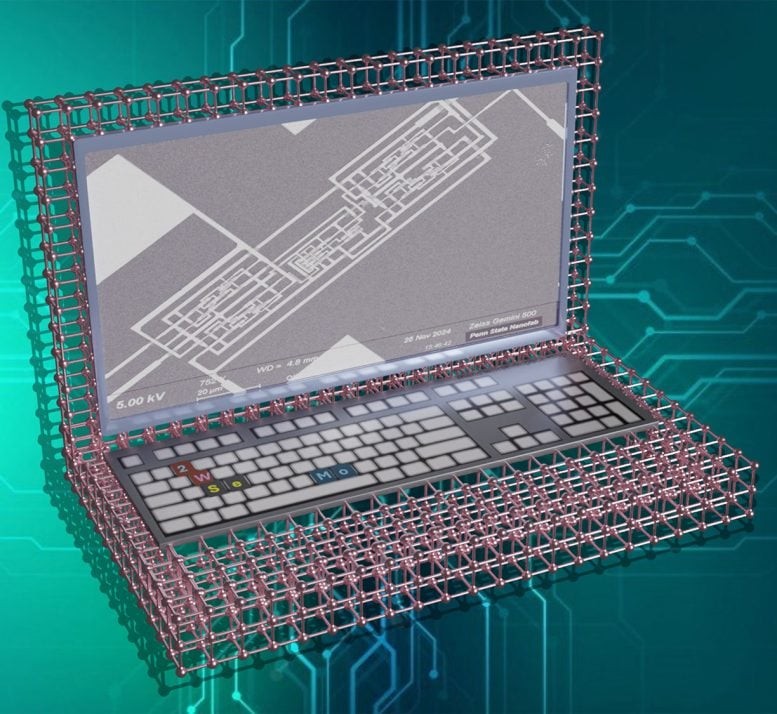
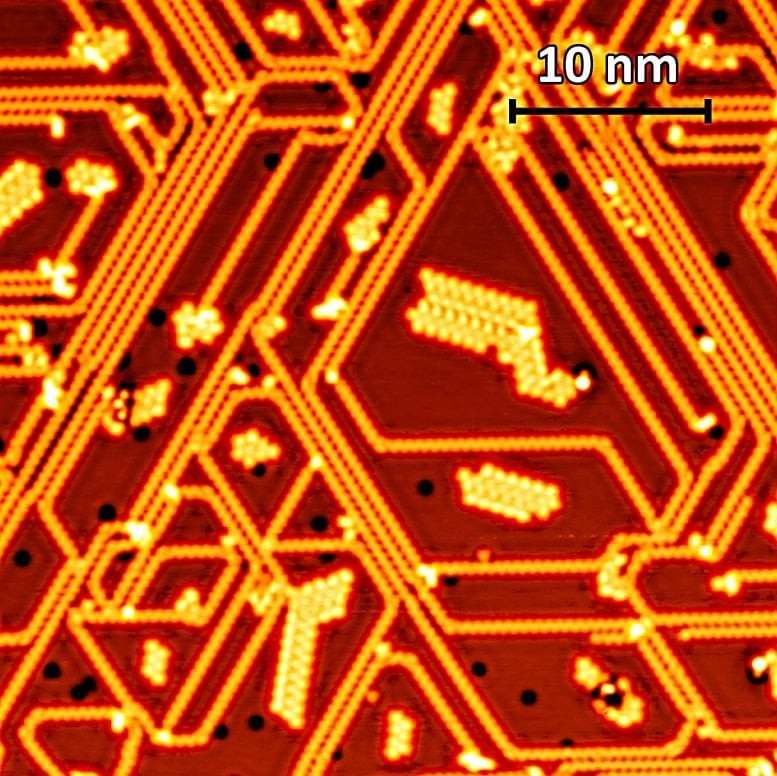
Figure 1. World’s First 2D Computer Unveiled — Ushering in the Post-Silicon Age.
To achieve this, the researchers used metal-organic chemical vapor deposition (MOCVD) — a process that vaporizes materials, drives a chemical reaction, and deposits the resulting compounds onto a substrate. Using this technique, they grew large sheets of molybdenum disulfide and tungsten diselenide, fabricating more than 1,000 transistors of each type. By precisely fine-tuning the fabrication and post-processing stages, the team adjusted the threshold voltages of both n-type and p-type transistors, enabling the creation of fully operational CMOS logic circuits. Figure 1 shows World’s First 2D Computer Unveiled — Ushering in the Post-Silicon Age.
“Our 2D CMOS computer runs at low supply voltages, consumes very little power, and can perform simple logic operations at frequencies up to 25 kilohertz,” explained first author Subir Ghosh, a doctoral student in engineering science and mechanics under Das’s supervision.
Ghosh acknowledged that the operating frequency is much lower than that of traditional silicon-based CMOS circuits. However, the prototype — a one-instruction-set computer — can still execute fundamental logic operations efficiently.
He added, “We also developed a computational model, calibrated with experimental data and device variability, to predict the performance of our 2D CMOS computer and compare it with leading-edge silicon technology. While there’s still room for improvement, this achievement represents a major step forward in utilizing 2D materials to push the boundaries of electronics.”
Das agreed that additional development is required before 2D CMOS computers can see widespread application, but emphasized how rapidly the field is advancing compared to silicon’s evolution.
“Silicon technology has been refined for roughly 80 years, whereas research into 2D materials only began around 2010,” Das noted. “The development of 2D material-based computers will also be a gradual journey, but this work marks a remarkable leap forward relative to silicon’s historical pace.”
The End of the Silicon Era?
For decades, silicon has been the backbone of modern electronics — powering everything from smartphones to supercomputers. But as transistors shrink to atomic scales, silicon’s physical limits are becoming more apparent. Researchers around the world have been searching for alternatives that can deliver faster, smaller, and more energy-efficient computing. That search has now led to a revolutionary breakthrough: a computer made entirely from two-dimensional (2D) materials.
Building the World’s First 2D CMOS Computer
A research team led by Saptarshi Das has created the first fully functional 2D CMOS computer, constructed entirely from ultra-thin layers of molybdenum disulfide (MoS₂) and tungsten diselenide (WSe₂). Using metal-organic chemical vapor deposition (MOCVD), they grew large-area 2D sheets and fabricated thousands of transistors. These were then fine-tuned to achieve both n-type and p-type characteristics, allowing the creation of complete CMOS logic circuits.
A Glimpse into the Post-Silicon Future
While the prototype operates at modest speeds compared to traditional silicon processors, it represents a monumental step toward energy-efficient, atomically thin computers. The researchers believe that, as fabrication techniques mature, 2D materials could one day surpass silicon in both performance and flexibility.
As Das put it, silicon technology has evolved over 80 years — but 2D materials research only began in 2010. Yet, in just over a decade, it has achieved what once seemed impossible. The 2D computer is not the end of silicon — but it may well mark the beginning of its successor.
Source:SciTECHDaily
Cite this article:
Priyadharshini S (2025), Scientists Reveal the World’s First 2D Computer — Marking the Dawn of a Post-Silicon Era, AnaTechMaz, pp. 291
Recent Post
-
Scientists Solve Century-Old Puzzle by Measuring Tiny Electron Fraction, Shedding Light on Catalysis
When molecules approach a catalyst....
-
Scientists Develop 3D Printing Technique That Makes Metal 20 Times Stronger
Vat photopolymerization is a 3D printing process in which a light....
-

Scientists Discover Hidden Atomic Structures in Everyday Metals, Upending Long-Held Theories
For Freitas—an early-career scientist—the discovery validates....
-

When Atoms Break the Rules: High-Entropy MXenes Challenge Materials Science
By disrupting atomic order, scientists have crafted....
-

America’s Strongest Laser Delivers its First 2-Petawatt Blast
Research at ZEUS promises advancements in medicine, national security, materials science, ....
-
Scientists Reveal the World’s First 2D Computer — Marking the Dawn of a Post-Silicon Era
“That’s the core breakthrough of our work,” said Das. “For the....
-

Scientists Develop Next-Generation “Superalloy” Poised to Transform Jet Engines and Power Plants
Although these metals boast exceptional thermal stability, they....
-

Silver Made to Shine 77× Brighter by Scientists
To investigate the structure–property relationship in more detail, the team synthesized and ....
-

Gold-Based Catalyst Breaks Longstanding Record in Sustainable Chemistry
To enhance the efficiency of converting bioethanol into acetaldehyde....
-

Physicists Discover Hidden Quantum Mirrors That Confine Light Within 2D Materials
The breakthrough traces its origins to Hamburg, where McIver....
-

Scientists Create “Unbreakable” Quantum Sensor Capable of Withstanding 30,000 Atmospheres
To create the new sensors, researchers bombarded....
-
This Breakthrough Material Could Transform the Future of Renewable Energy
“Our goal is to deepen our understanding of how materials....
-

MIT’s Groundbreaking Technique Allows Scientists to Peer Inside Atoms
Within radium monofluoride molecules, researchers precisely tracke....
-

Scientists Solve a Long-Standing Mystery in Chemistry
Similar to traditional palladium catalysis, the reactivity of photoexcited palladium ....
-
Scientists Confirm Genuine One-Dimensional Electronic Behavior in a Material
Recently, researchers have managed to create one-dimensional....