

UK Invests £3 Million to Aid the Search for Alien Life
A £3 million investment from the UK Space Agency is supporting the development of advanced technology that could play a key role in NASA’s future search for life beyond Earth. The project aims to help detect faint, Earth-like planets orbiting nearby stars by separating their weak light from the overwhelming brightness of their host stars, enabling scientists to study their atmospheres for potential signs of life.
The funding will advance a proposed core instrument for NASA’s Habitable Worlds Observatory (HWO), a next-generation flagship space telescope expected to launch in the 2040s after the Nancy Grace Roman Space Telescope. The investment positions the UK to contribute significantly to one of NASA’s most ambitious exoplanet missions.
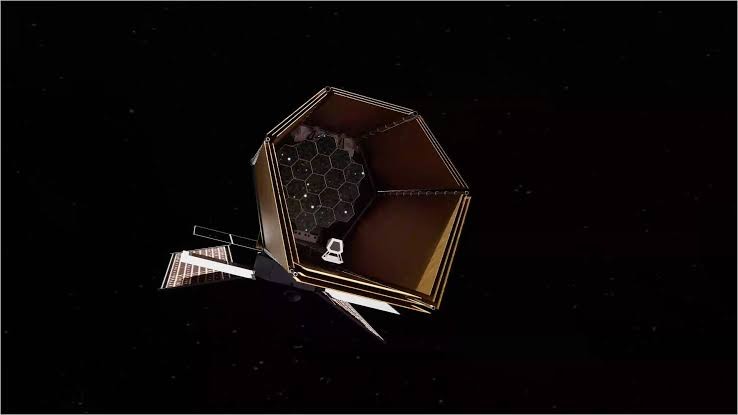
Figure 1. Habitable Worlds Observatory Concept.
The new UK Space Agency funding builds on earlier UK-led instrument studies that have already been submitted to NASA, helping shape the next phase of development for the Habitable Worlds Observatory (HWO). The continued investment strengthens the UK's role in designing technology for the mission. Figure 1 shows Habitable Worlds Observatory Concept.
Scientists say the HWO will address one of astronomy’s biggest questions—whether life exists beyond Earth. By identifying Earth-like planets around nearby stars and analyzing their atmospheres, the observatory will search for potential signs of life outside our Solar System.
Finding Another Earth Requires Atomic Precision
Directly imaging an Earth-like exoplanet requires extraordinary precision. To detect the faint light of a distant planet, NASA’s Habitable Worlds Observatory (HWO) must keep its 8-meter mirror stable to within the width of an atom while precisely blocking the overwhelming glare of the host star. This level of accuracy is essential for revealing planets that would otherwise remain invisible.
Researchers say the mission builds on the UK’s long-standing contributions to major NASA observatories, including Hubble and the James Webb Space Telescope, and positions the country to lead the development of a key HWO instrument. Scientists also describe the observatory as a landmark mission that could provide the first direct evidence of life beyond Earth, making it one of the most ambitious space science projects ever undertaken.
Britain Eyes a Key Role in HWO
UK researchers are leading the development of the High Resolution Imager (HRI) and Multi-Object Spectrograph (MOS), two proposed core instruments for NASA’s Habitable Worlds Observatory (HWO). A new £3 million investment from the UK Space Agency will expand the project, helping transform these advanced instrument concepts into operational hardware while building on earlier design studies.
The initiative brings together experts from leading UK universities and research institutions, reinforcing the country's role in one of NASA’s most ambitious space missions. By supporting the development of key HWO technologies, the funding aims to position the UK at the forefront of the search for potentially habitable planets and evidence of life beyond our Solar System.
Funding Cuts Threaten Future Leadership
Although NASA’s Habitable Worlds Observatory (HWO) is not expected to begin operations until the 2040s, today’s early-career researchers will play a crucial role in analyzing its data and leading future discoveries. Scientists warn that recent funding cuts to UK research institutions could jeopardize the expertise needed to fully participate in the mission.
Researchers stress that developing advanced instruments alone is not enough—long-term investment in scientific talent and research programs is equally essential. Without sustained support, the UK risks losing its leadership role in the mission and may be unable to fully capitalize on the groundbreaking discoveries expected from the Habitable Worlds Observatory.
Nearby Stars Are Prime Targets
The Habitable Worlds Observatory (HWO) will focus on finding Earth-like planets orbiting nearby stars and studying their atmospheres for potential signs of life. Rather than surveying the entire Milky Way, the telescope will target promising planetary systems within about 30 light-years of Earth, while also serving as a powerful general-purpose observatory for research on stars, galaxies, and the evolution of the universe.
Led by NASA with contributions from international partners, the mission is expected to include major UK-built instruments, including a camera at the telescope’s focal plane. Building on the UK's successful roles in the Hubble Space Telescope and the James Webb Space Telescope, researchers are preparing for the next phase of instrument development [1]. As one of NASA’s next-generation flagship Great Observatories, HWO aims to transform our understanding of planetary systems and address one of humanity’s most profound questions—whether life exists beyond Earth.
Reference:
- https://scitechdaily.com/uks-3-million-bet-could-help-nasa-find-life-on-nearby-planets/
Cite this article:
Janani R (2026), UK Invests £3 Million to Aid the Search for Alien Life, AnaTechMaz, pp.954.
Recent Post
-

Star Circles the Milky Way’s Black Hole at 8% Light Speed
A rapidly moving star orbiting the Milky Way’s central supermassive black hole offers scientists a rare...
-
Earth Twice as Vulnerable to Extreme Solar Storms, Scientists Warn
Earth may be significantly more vulnerable to extreme solar......
-

Hidden Black Holes May Be Triggering Supernova Explosions
Researchers suggest that some Type Ia supernovae may be triggered when primordial black holes....
-

Hidden Dark Matter Force Could Transform Our View of the Universe
Dark matter is known to shape galaxies and the large-scale structure of the Universe through gravity, but.....
-
NASA Astronaut Returns After Completing 3,856 Earth Orbits
After circling Earth 3,856 times and traveling more than 102 million miles, NASA astronaut Chris.....
-
Europa’s Ocean Could Be Trapped Beneath Thick Ice
New simulations suggest Europa’s thick ice shell may act as a stronger barrier than previously thought,.....
-

Scientists Detect Ongoing Activity Beneath Venus’s Surface
Venus may still be actively reshaping its surface. New computer simulations indicate that massive....
-
Hidden Giant Exoplanet Revealed After 11 Years
A giant exoplanet remained hidden for more than a decade within one of the most closely studied...
-
UK Invests £3 Million to Aid the Search for Alien Life
A £3 million investment from the UK Space Agency is supporting the development of advanced....