

Star Circles the Milky Way’s Black Hole at 8% Light Speed
A rapidly moving star orbiting the Milky Way’s central supermassive black hole offers scientists a rare opportunity to test gravity in one of the universe’s most extreme environments. While Newton’s law accurately describes most stellar motions around Sagittarius A*, the star’s exceptional speed and proximity to the black hole make it an ideal target for studying the more subtle effects predicted by Einstein’s general theory of relativity.
Although Einstein’s general theory of relativity predicts phenomena such as gravitational waves that Newton’s theory cannot, both models produce nearly identical results in most situations. Differentiating general relativity from other relativistic gravity theories is even more challenging because their predictions diverge only in the most extreme environments. A newly identified star orbiting close to the Milky Way’s central black hole may provide a rare chance to test these competing theories under such conditions.
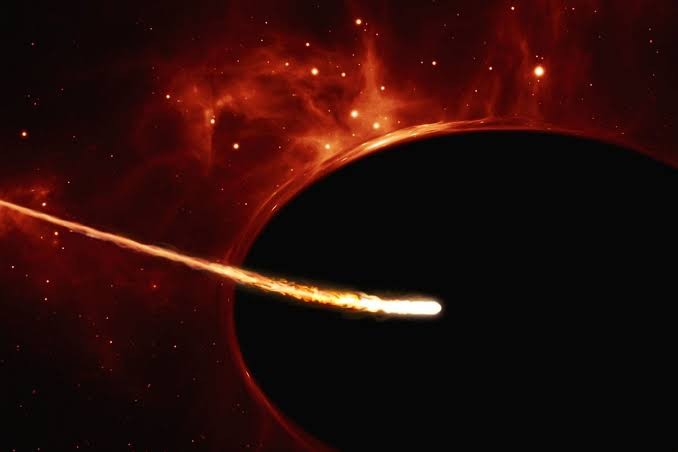
Figure 1. Star Speeds Around the Galactic Black Hole.
Star Enters an Extreme Gravity Zone
S301, the 301st identified member of the S-star cluster orbiting Sagittarius A*, is slightly more massive than the Sun and completes a full orbit in just 8.7 years—the shortest orbital period recorded for any known S-star. Its highly elongated orbit brings it within about 24 astronomical units (AU) of the supermassive black hole, where it accelerates to more than 8% of the speed of light. This close approach places S301 in one of the most extreme gravitational environments known, making it an exceptional target for testing the laws of gravity. Figure 1 shows Star Speeds Around the Galactic Black Hole.
Star’s Orbit Amplifies Relativistic Effects
S301 is the most relativistic star observed to date, making it an exceptional natural laboratory for testing Einstein’s general theory of relativity. Its orbit precesses by about 2 degrees per orbit—far greater than the subtle precession seen in Mercury’s orbit—allowing scientists to observe relativistic effects such as gravitational redshift and the transverse Doppler effect in a real astrophysical environment. Over time, continued observations of S301 could also help researchers evaluate alternative theories of gravity beyond general relativity.
Future Telescopes Could Probe Deeper Gravity Theories
Einstein’s general theory of relativity is difficult to reconcile with quantum mechanics, and many proposed unifying theories differ from it only under extreme conditions. S301’s high-speed orbit around the Milky Way’s central black hole could reveal these subtle effects, including influences from the black hole’s spin. Future observatories such as the Giant Magellan Telescope (GMT) may be able to measure these tiny deviations with unprecedented precision [1]. For now, however, observations remain challenging because dust obscures the galactic center and S301 is too faint to provide detailed spectral data. As more powerful telescopes come online, scientists expect to unlock new tests of gravity in this extreme environment.
Reference:
- https://scitechdaily.com/this-star-is-racing-around-the-milky-ways-black-hole-at-8-the-speed-of-light/
Cite this article:
Janani R (2026), Star Circles the Milky Way’s Black Hole at 8% Light Speed, AnaTechMaz, pp.946.
Recent Post
-
Star Circles the Milky Way’s Black Hole at 8% Light Speed
A rapidly moving star orbiting the Milky Way’s central supermassive black hole offers scientists a rare...
-
Earth Twice as Vulnerable to Extreme Solar Storms, Scientists Warn
Earth may be significantly more vulnerable to extreme solar......
-
Hidden Black Holes May Be Triggering Supernova Explosions
Researchers suggest that some Type Ia supernovae may be triggered when primordial black holes....
-
Hidden Dark Matter Force Could Transform Our View of the Universe
Dark matter is known to shape galaxies and the large-scale structure of the Universe through gravity, but.....
-
NASA Astronaut Returns After Completing 3,856 Earth Orbits
After circling Earth 3,856 times and traveling more than 102 million miles, NASA astronaut Chris.....
-
Europa’s Ocean Could Be Trapped Beneath Thick Ice
New simulations suggest Europa’s thick ice shell may act as a stronger barrier than previously thought,.....
-
Scientists Detect Ongoing Activity Beneath Venus’s Surface
Venus may still be actively reshaping its surface. New computer simulations indicate that massive....
-
Hidden Giant Exoplanet Revealed After 11 Years
A giant exoplanet remained hidden for more than a decade within one of the most closely studied...
-
UK Invests £3 Million to Aid the Search for Alien Life
A £3 million investment from the UK Space Agency is supporting the development of advanced....