

Earth Twice as Vulnerable to Extreme Solar Storms, Scientists Warn
Earth may be significantly more vulnerable to extreme solar storms than previously believed, with new research suggesting powerful events could disrupt modern technology far more intensely than earlier models predicted. Scientists found that Earth's magnetic shield may offer less protection during the strongest solar storms, allowing disturbances in the upper atmosphere to become up to twice as severe as once thought.
The study challenges a long-standing assumption that Earth's geomagnetic response reaches a natural limit during extreme solar storms. Instead, researchers found that the planet's magnetic activity may continue intensifying as solar conditions worsen, increasing the potential risk to satellites, GPS, radio communications, aviation, and power grids that modern society relies on.
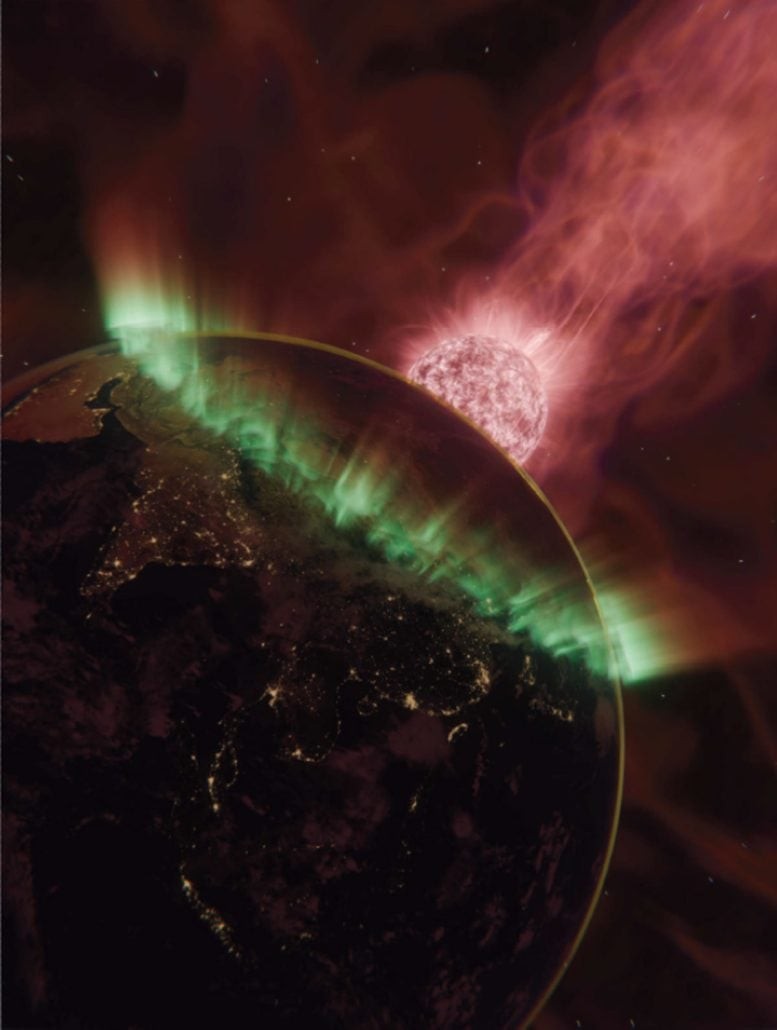
Figure 1. Extreme Solar Storm Triggers Brilliant Auroras.
A new study published in Nature, led by researchers from NASA’s Goddard Space Flight Center and Lancaster University, investigated why geomagnetic activity has long appeared to reach a maximum limit during powerful solar storms. Their findings suggest this apparent ceiling may be misleading, reshaping scientists' understanding of Earth's response to extreme space weather. Figure 1 shows Extreme Solar Storm Triggers Brilliant Auroras.
How Space Weather Puts Modern Technology at Risk
Space weather is driven by activity on the Sun, where streams of charged particles and powerful solar eruptions interact with Earth's magnetic field. While these interactions often create spectacular auroras, the most intense events can disrupt satellites, GPS, radio communications, aviation, and power grids, while increasing radiation exposure for astronauts and high-altitude flights. Researchers note that although Earth's magnetic field provides strong protection, extreme solar storms can still trigger major technological disruptions.
Rethinking Earth's Magnetic Shield
Scientists once believed Earth's magnetic field had a natural limit on how strongly it could respond to intense solar storms, with atmospheric currents appearing to level off as solar wind strength increased. However, the new study suggests this apparent ceiling may be a statistical illusion caused by uncertainties in solar wind measurements taken far from Earth. Because spacecraft monitor space weather from about 1 million miles away at the L1 point, the solar wind can change before reaching the planet, making extreme readings less representative of the conditions that actually impact Earth's magnetosphere.
The Regression to the Mean Effect
The researchers found that the apparent limit on Earth's geomagnetic response may be explained by a statistical effect known as regression to the mean, where extreme solar wind measurements are more likely to include large uncertainties. By analyzing more than one million observations from NASA spacecraft closer to Earth and correcting for timing and measurement errors, they found that the supposed saturation largely disappeared. Their results show that Earth's magnetic response continues to increase with stronger solar wind, suggesting the impacts of the most extreme solar storms could be about twice as severe as previous models predicted.
Preparing for Extreme Solar Storms
The study does not conclude that Earth's response to solar storms increases without limit, but it finds no strong evidence for the long-assumed protective ceiling built into many space weather models [1]. Because the most extreme solar storms are exceptionally rare, scientists have limited data on their full effects. The findings suggest current models may underestimate the risks posed by these rare but potentially devastating events, highlighting the need to improve forecasting and preparedness for extreme space weather.
Reference:
- https://scitechdaily.com/earth-may-be-twice-as-vulnerable-to-extreme-solar-storms-as-scientists-thought/
Cite this article:
Janani R (2026), Earth Twice as Vulnerable to Extreme Solar Storms, Scientists Warn, AnaTechMaz, pp.947.
Recent Post
-
Star Circles the Milky Way’s Black Hole at 8% Light Speed
A rapidly moving star orbiting the Milky Way’s central supermassive black hole offers scientists a rare...
-
Earth Twice as Vulnerable to Extreme Solar Storms, Scientists Warn
Earth may be significantly more vulnerable to extreme solar......
-
Hidden Black Holes May Be Triggering Supernova Explosions
Researchers suggest that some Type Ia supernovae may be triggered when primordial black holes....
-
Hidden Dark Matter Force Could Transform Our View of the Universe
Dark matter is known to shape galaxies and the large-scale structure of the Universe through gravity, but.....
-
NASA Astronaut Returns After Completing 3,856 Earth Orbits
After circling Earth 3,856 times and traveling more than 102 million miles, NASA astronaut Chris.....
-
Europa’s Ocean Could Be Trapped Beneath Thick Ice
New simulations suggest Europa’s thick ice shell may act as a stronger barrier than previously thought,.....
-
Scientists Detect Ongoing Activity Beneath Venus’s Surface
Venus may still be actively reshaping its surface. New computer simulations indicate that massive....
-
Hidden Giant Exoplanet Revealed After 11 Years
A giant exoplanet remained hidden for more than a decade within one of the most closely studied...
-
UK Invests £3 Million to Aid the Search for Alien Life
A £3 million investment from the UK Space Agency is supporting the development of advanced....