

Hidden Dark Matter Force Could Transform Our View of the Universe
Dark matter is known to shape galaxies and the large-scale structure of the Universe through gravity, but scientists still do not know whether gravity is its only interaction. Researchers suggest that dark matter particles may also experience an additional hidden attractive force that acts only between themselves, potentially influencing how the Universe evolves without affecting ordinary matter.
In a study published in the Journal of Cosmology and Astroparticle Physics (JCAP), researchers found that a hidden attractive force between dark matter particles could produce an unexpected effect. Rather than speeding up the formation of cosmic structures, the force generally suppresses their growth, even as it pulls particles closer together. The findings may help explain persistent discrepancies between precise measurements of the Universe’s expansion and observations of how galaxies and large-scale cosmic structures have evolved over time.
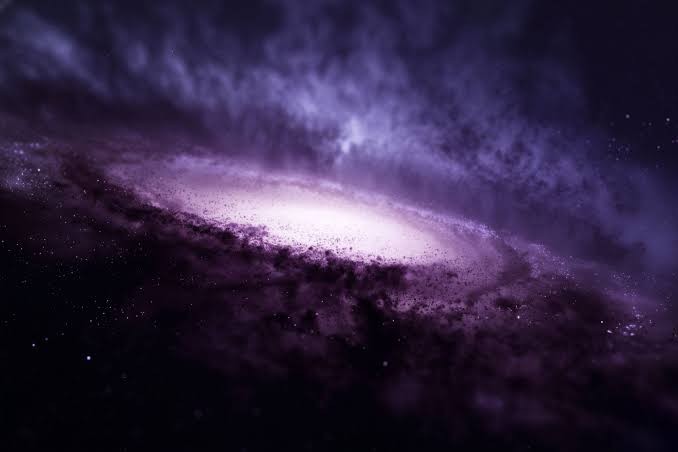
Figure 1. Dark Matter’s Hidden Force.
Some observations of the distant Universe suggest that cosmic expansion may have occurred slightly more slowly than predicted by the standard cosmological model, while measurements of the cosmic microwave background indicate that matter may be more strongly clustered on the largest scales. Although these differences are small, they have prompted scientists to investigate whether dark matter possesses previously unknown properties or whether another missing ingredient is needed to fully explain the Universe’s evolution. Figure 1 shows Dark Matter’s Hidden Force.
A Hidden Force May Bridge the Cosmic Gap
Researchers investigated the possibility that dark matter particles interact through a hidden long-range “dark force” in addition to gravity. Because such a force could influence both the Universe’s expansion and the formation of galaxies and other large-scale structures, it may help explain persistent discrepancies in cosmological observations. By combining theoretical models with observational data, the team analyzed how this additional interaction could alter cosmic expansion and affect the growth of structure across the Universe.
Experimental Setup Reveals Competing Memories in Suspended Particles
At first glance, scientists expected that an additional attractive force would cause dark matter to clump together more rapidly, leading to denser cosmic structures. However, the researchers found that the situation is more complex. While the hidden force does strengthen the attraction between dark matter particles, another competing effect also emerges, altering the overall outcome and preventing structure growth from simply accelerating as initially expected.
Dark Matter May Grow Lighter Over Time
The researchers found that the same hidden interaction that increases attraction between dark matter particles also causes the particles to gradually lose mass as the Universe expands. As their mass declines, so does their gravitational pull, offsetting the stronger clustering produced by the additional force. As a result, the hidden interaction does not amplify dark matter’s influence on the cosmic microwave background and, in most scenarios, actually slows the growth of large-scale cosmic structures rather than accelerating it.
Findings Narrow the Range of Dark Matter Theories
The findings may have implications beyond simple dark force theories, including models proposed to explain recent observations from the Dark Energy Spectroscopic Instrument (DESI) [1]. The researchers suggest that many of these theories must account for a key trade-off: while hidden interactions increase the attraction between dark matter particles, they can also reduce the particles’ effective mass over time. Ignoring this balance could lead to incorrect predictions, showing that stronger attraction alone does not necessarily produce more cosmic structure.
As astronomical surveys and observatories deliver increasingly precise measurements, scientists will be able to test dark matter models more rigorously and place tighter limits on the hidden interactions it may possess. The researchers emphasize that the Universe often behaves in unexpected ways, making it essential to continually compare theoretical predictions with observations to refine our understanding of dark matter and cosmic evolution.
Reference:
- https://scitechdaily.com/dark-matters-secret-force-could-reshape-our-understanding-of-the-universe/
Cite this article:
Janani R (2026), Hidden Dark Matter Force Could Transform Our View of the Universe, AnaTechMaz, pp.949.
Recent Post
-
Star Circles the Milky Way’s Black Hole at 8% Light Speed
A rapidly moving star orbiting the Milky Way’s central supermassive black hole offers scientists a rare...
-
Earth Twice as Vulnerable to Extreme Solar Storms, Scientists Warn
Earth may be significantly more vulnerable to extreme solar......
-
Hidden Black Holes May Be Triggering Supernova Explosions
Researchers suggest that some Type Ia supernovae may be triggered when primordial black holes....
-
Hidden Dark Matter Force Could Transform Our View of the Universe
Dark matter is known to shape galaxies and the large-scale structure of the Universe through gravity, but.....
-

NASA Astronaut Returns After Completing 3,856 Earth Orbits
After circling Earth 3,856 times and traveling more than 102 million miles, NASA astronaut Chris.....
-
Europa’s Ocean Could Be Trapped Beneath Thick Ice
New simulations suggest Europa’s thick ice shell may act as a stronger barrier than previously thought,.....
-
Scientists Detect Ongoing Activity Beneath Venus’s Surface
Venus may still be actively reshaping its surface. New computer simulations indicate that massive....
-
Hidden Giant Exoplanet Revealed After 11 Years
A giant exoplanet remained hidden for more than a decade within one of the most closely studied...
-
UK Invests £3 Million to Aid the Search for Alien Life
A £3 million investment from the UK Space Agency is supporting the development of advanced....