

Scientists Detect Ongoing Activity Beneath Venus’s Surface
Venus may still be actively reshaping its surface. New computer simulations indicate that massive rift valleys continue to form across the planet, suggesting its interior remains geologically active despite its extreme surface conditions.
The findings strengthen evidence that Venus is still geologically active rather than a dormant world. Alongside previously identified active volcanoes in archival spacecraft data, the study suggests that the planet’s vast rift systems are another indication that internal heat and tectonic forces continue to reshape its surface.
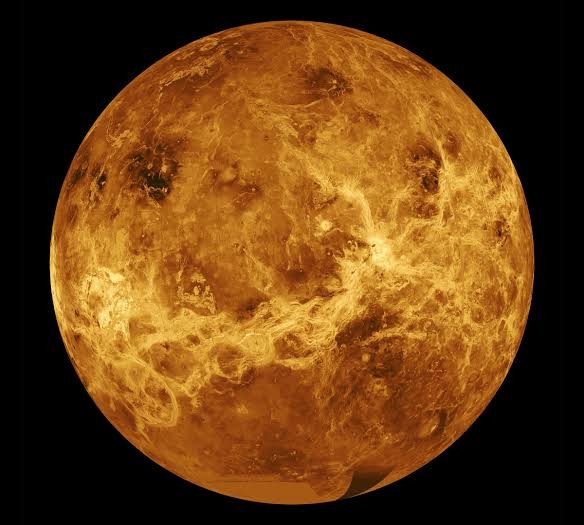
Figure 1. Venus’s Hidden Geological Activity.
venus: Earth Twin, but Far More Hostile
Although Venus is often called Earth's twin because of its similar size, mass, and rocky makeup, its surface is vastly more extreme. With a dense carbon dioxide atmosphere, no oceans, and temperatures averaging 465°C (869°F), the planet is intensely hostile. While Venus lacks Earth's global network of tectonic plates, heat rising from its interior still causes the crust to stretch, crack, and form enormous rift valleys spanning thousands of kilometers. Figure 1 shows Venus’s Hidden Geological Activity.
Without oceans or significant rainfall, Venus experiences very little erosion, allowing ancient and relatively recent geological features to appear remarkably similar. As a result, determining the age of surface formations from spacecraft images alone is a major challenge.
Modeling Venus’s Massive Rift Valleys
Scientists have long believed that Venus’s major rift valleys formed more than 100 million years ago, but new research challenges that assumption. Using the first high-resolution 3D simulations of Venus’s crust and mantle, researchers found that some of the planet’s vast rift systems may still be developing today, offering fresh insights into its ongoing geological activity.
Rift Flanks Reveal Venus’s Geological History
The simulations uncovered a potential geological clock in the shape of Venus’s rift valleys. Young, actively forming rifts are marked by broad, steep rift flanks created as rising material lifts the crust. As geological activity slows, these elevated ridges gradually subside and flatten, providing researchers with a way to estimate the relative age of the planet’s rift systems.
By comparing their simulations with radar maps from NASA’s Magellan spacecraft, researchers found that several Venusian rift systems—including Ganis Chasma, Dali Chasma, and Devana Chasma—closely match the features of young, actively forming rifts, suggesting these regions may still be geologically evolving.
Evidence of Rapid Crustal Motion
The simulations suggest that some of Venus’s giant rift systems may still be active or became inactive only within the last few tens of millions of years. They may also be widening at rates of 3–10 centimeters per year—similar to the movement of some of Earth’s tectonic plates—driven by hot material rising from the planet’s interior rather than by plate tectonics.
Future Missions Aim to Explore Venus’s Active Surface
The newly identified rift systems provide promising targets for future missions searching for signs of active geological deformation on Venus [1]. Upcoming spacecraft—including NASA’s VERITAS and DAVINCI missions and ESA’s EnVision orbiter—will use advanced instruments to map the planet in greater detail and investigate how its interior, surface, and atmosphere are linked.
Reference:
- https://scitechdaily.com/something-is-still-moving-beneath-venuss-scorching-surface/
Cite this article:
Janani R (2026), Scientists Detect Ongoing Activity Beneath Venus’s Surface, AnaTechMaz, pp.952.
Recent Post
-
Star Circles the Milky Way’s Black Hole at 8% Light Speed
A rapidly moving star orbiting the Milky Way’s central supermassive black hole offers scientists a rare...
-
Earth Twice as Vulnerable to Extreme Solar Storms, Scientists Warn
Earth may be significantly more vulnerable to extreme solar......
-
Hidden Black Holes May Be Triggering Supernova Explosions
Researchers suggest that some Type Ia supernovae may be triggered when primordial black holes....
-

Hidden Dark Matter Force Could Transform Our View of the Universe
Dark matter is known to shape galaxies and the large-scale structure of the Universe through gravity, but.....
-
NASA Astronaut Returns After Completing 3,856 Earth Orbits
After circling Earth 3,856 times and traveling more than 102 million miles, NASA astronaut Chris.....
-
Europa’s Ocean Could Be Trapped Beneath Thick Ice
New simulations suggest Europa’s thick ice shell may act as a stronger barrier than previously thought,.....
-
Scientists Detect Ongoing Activity Beneath Venus’s Surface
Venus may still be actively reshaping its surface. New computer simulations indicate that massive....
-
Hidden Giant Exoplanet Revealed After 11 Years
A giant exoplanet remained hidden for more than a decade within one of the most closely studied...
-
UK Invests £3 Million to Aid the Search for Alien Life
A £3 million investment from the UK Space Agency is supporting the development of advanced....