

Hidden Black Holes May Be Triggering Supernova Explosions
Researchers suggest that some Type Ia supernovae may be triggered when primordial black holes—hypothetical black holes formed shortly after the Big Bang—pass through white dwarf stars. According to a study published in The Astrophysical Journal, these invisible objects could ignite stellar explosions while leaving distinctive chemical signatures that match patterns observed throughout the Milky Way, offering a potential new explanation for some supernova events.
Primordial black holes (PBHs) are hypothetical objects thought to have formed from density fluctuations in the early Universe and are considered potential candidates for dark matter, which makes up most of the Universe’s matter. Researchers propose that as these black holes travel through space, some may pass through white dwarfs—the dense remnants of Sun-like stars. The immense tidal forces generated during such encounters could ignite the stars, triggering Type Ia supernovae.
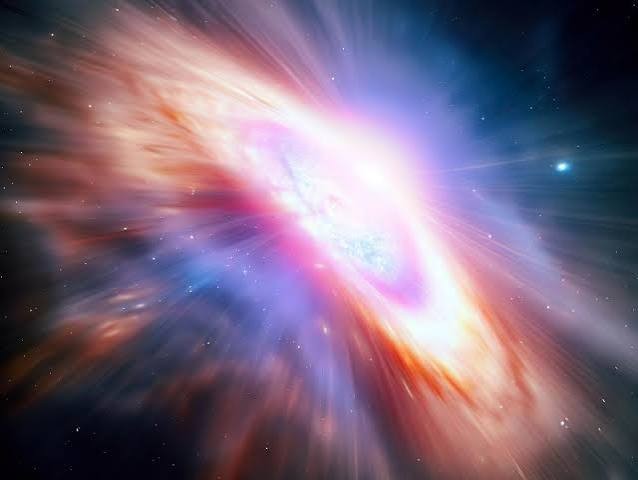
Figure 1. Hidden Black Holes Ignite Supernovae.
Invisible Black Holes May Ignite Dying Stars
Led by Shing-Chi Leung of the SUNY Polytechnic Institute and researchers at The University of Tokyo’s Kavli Institute for the Physics and Mathematics of the Universe (Kavli IPMU), the team investigated the motion, brightness, and chemical fingerprints of supernovae that could be triggered by primordial black holes. Building on their 2025 study, the researchers found that these PBH-induced explosions can closely resemble conventional Type Ia supernovae, making them difficult to distinguish using traditional observations alone. Figure 1 shows Hidden Black Holes Ignite Supernovae.
Observations Support the Proposed Supernova Model
In their latest study, the researchers compared their models with well-known supernova remnants—including Tycho, Kepler, and 3C 397—as well as nearby Type Ia supernovae such as SN 2011fe and SN 2012cg. They found that primordial black hole (PBH)-triggered explosions could reproduce many of the observed properties of these events. By analyzing radioactive isotopes like nickel-56 and nickel-57, along with stable elements such as manganese and nickel, the team estimated the masses and chemical compositions of the original stars. Their models also showed that a small but significant fraction of Type Ia supernovae may need to be triggered by primordial black holes to explain the chemical abundance patterns observed across the Milky Way.
The researchers say that although primordial black holes cannot be observed directly, they may reveal their presence through the distinctive supernovae they trigger and the chemical signatures they leave behind. Going forward, the team plans to investigate how these PBH-induced explosions influence the overall population and frequency of Type Ia supernovae, helping to further test whether these elusive objects play a role in shaping the Universe.
Reference:
- https://scitechdaily.com/scientists-discover-two-competing-memories-in-matter/
Cite this article:
Janani R (2026), Hidden Black Holes May Be Triggering Supernova Explosions, AnaTechMaz, pp.948.
Recent Post
-
Star Circles the Milky Way’s Black Hole at 8% Light Speed
A rapidly moving star orbiting the Milky Way’s central supermassive black hole offers scientists a rare...
-
Earth Twice as Vulnerable to Extreme Solar Storms, Scientists Warn
Earth may be significantly more vulnerable to extreme solar......
-
Hidden Black Holes May Be Triggering Supernova Explosions
Researchers suggest that some Type Ia supernovae may be triggered when primordial black holes....
-
Hidden Dark Matter Force Could Transform Our View of the Universe
Dark matter is known to shape galaxies and the large-scale structure of the Universe through gravity, but.....
-
NASA Astronaut Returns After Completing 3,856 Earth Orbits
After circling Earth 3,856 times and traveling more than 102 million miles, NASA astronaut Chris.....
-
Europa’s Ocean Could Be Trapped Beneath Thick Ice
New simulations suggest Europa’s thick ice shell may act as a stronger barrier than previously thought,.....
-
Scientists Detect Ongoing Activity Beneath Venus’s Surface
Venus may still be actively reshaping its surface. New computer simulations indicate that massive....
-
Hidden Giant Exoplanet Revealed After 11 Years
A giant exoplanet remained hidden for more than a decade within one of the most closely studied...
-
UK Invests £3 Million to Aid the Search for Alien Life
A £3 million investment from the UK Space Agency is supporting the development of advanced....