

Scientists Detect Possible Dark Matter Signature in a Black Hole Collision
Researchers have developed a new method that could use black hole collisions as natural detectors for dark matter, by analyzing faint imprints hidden within gravitational waves.
Although dark matter is thought to make up most of the universe’s mass, it interacts with visible matter primarily through gravity, making it extremely difficult to detect directly. Scientists propose that when black holes merge in regions with high dark matter density, the resulting gravitational waves may carry subtle signatures of this invisible substance.
Researchers suggest that these potential dark matter signals could be identified in gravitational waves detected on Earth.
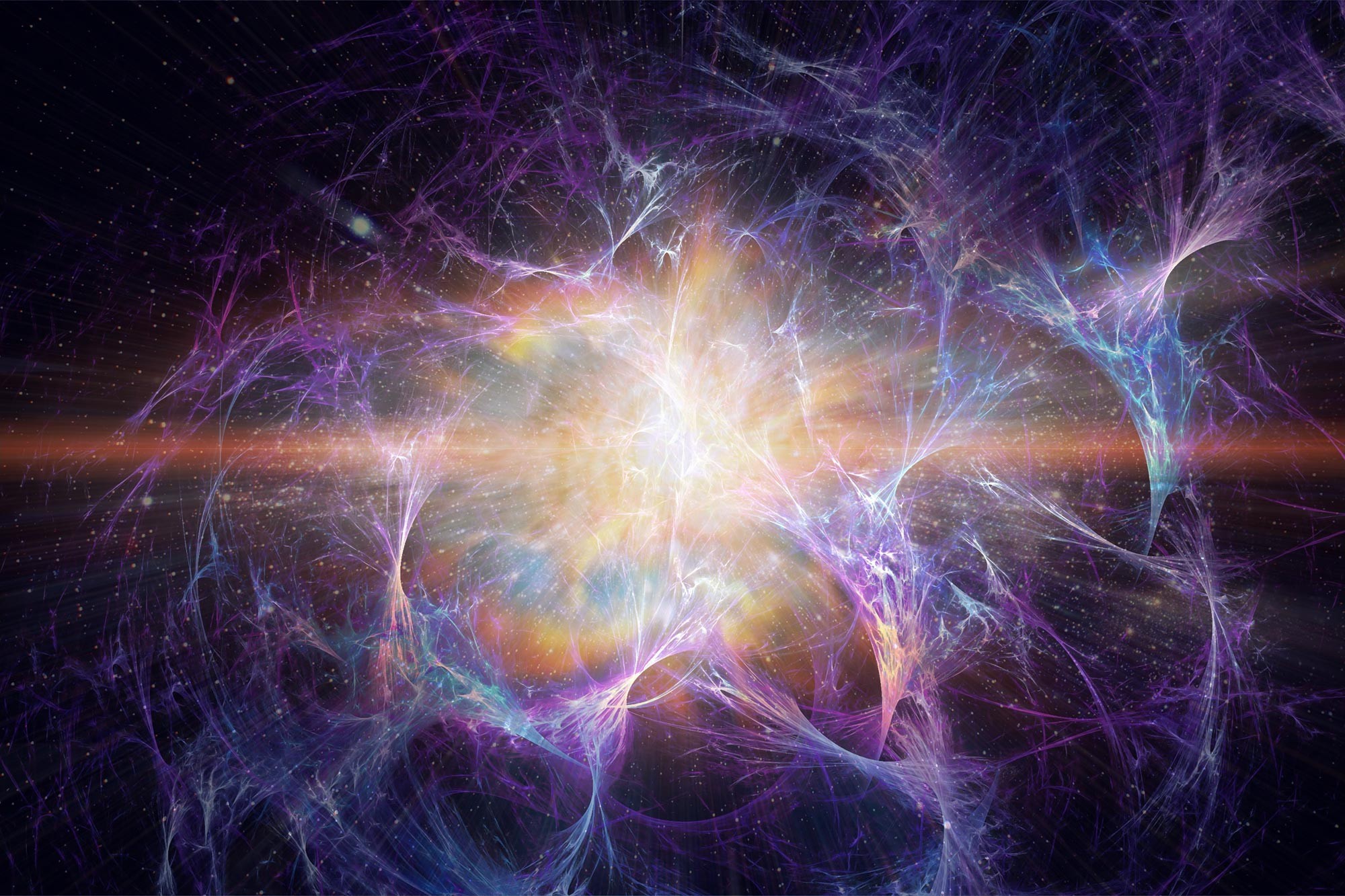
Figure 1. Gravitational Waves May Reveal Dark Matter Clues in Black Hole Collisions
A team from MIT and European collaborators created a model to predict how gravitational wave patterns would change if black hole mergers occurred in regions containing dark matter rather than empty space. They then applied this approach to publicly available observations from the LIGO-Virgo-KAGRA (LVK) network, which records gravitational waves produced by events such as black hole collisions across the universe. Figure 1 shows Gravitational Waves May Reveal Dark Matter Clues in Black Hole Collisions.
The researchers examined data from the LIGO-Virgo-KAGRA (LVK) collaboration’s first three observing runs. Of the 28 strongest gravitational-wave events analyzed, 27 were consistent with black hole mergers occurring in empty space, while one event, GW190728, showed a possible deviation that could hint at a dark matter influence.
However, the team emphasizes that this is not direct evidence of dark matter detection. Instead, the approach provides a new framework for identifying subtle patterns in gravitational-wave data that can be further investigated in future studies.
According to MIT postdoctoral researcher Josu Aurrekoetxea, dark matter is expected to be present throughout space but may only become detectable where it is sufficiently concentrated. He explained that black hole mergers could amplify these effects, making it possible to search for dark matter signatures in the resulting gravitational waves.
Aurrekoetxea and collaborators published their results in Physical Review Letters. The research team also included LVK member Soumen Roy from Université Catholique de Louvain (UCLouvain) in Belgium, along with Rodrigo Vicente of the University of Amsterdam, Katy Clough of Queen Mary University of London, and Pedro Ferreira of the University of Oxford.
Why Dark Matter Is So Difficult to Detect
Dark matter is one of physics’ greatest unsolved mysteries because it does not interact with light or electromagnetic radiation, making it invisible to direct observation. Its existence is inferred only through gravitational effects.
Astronomers first proposed dark matter while studying gravitational lensing, where light from distant galaxies is bent in ways that visible matter alone cannot explain. This led to the conclusion that an unseen form of matter must account for most of the universe’s mass, with current estimates suggesting it makes up over 85% of all matter.
One hypothesis suggests dark matter could consist of very light “scalar” particles that can behave like waves, especially near black holes [1]. In these environments, rapidly spinning black holes may transfer energy to dark matter through a process called superradiance, increasing its density around them. If this buildup becomes strong enough, it could leave detectable imprints in the gravitational waves produced during black hole mergers.
Reference:
- https://scitechdaily.com/scientists-may-have-found-dark-matters-fingerprint-in-a-black-hole-collision/
Cite this article:
Janani R (2026), Scientists Detect Possible Dark Matter Signature in a Black Hole Collision, AnaTechMaz, pp.869
Recent Post
-
NASA’s Psyche Spacecraft Prepares for an Extremely Close Flyby of Mars
NASA’s Psyche is preparing for a dramatic close flyby of Mars to....
-
James Webb Telescope Uncovers the Universe’s Hidden Cosmic Web in Remarkable Detail
Using the James Webb Space Telescope, astronomers have...
-
NASA’s Psyche Probe Set for an Extremely Close Flyby of Mars
NASA’s Psyche spacecraft is gearing up for a daring flyby of Mars to gain a crucial speed boost on its long...
-
Stubborn Mars Rock Clung to NASA’s Curiosity Rover
NASA’s Curiosity Rover accidentally pulled a rock loose from the Martian surface and then spent several...
-
Scientists Say the Brain Can Keep Improving at Any Age
A new long-term study suggests that brain health can continue improving throughout life through....
-

Strange Molecular Signal Could Be the Strongest Hint of Alien Life Yet
Scientists may have uncovered a hidden chemical pattern that could help identify alien life beyond....
-

Europe Introduces a Major Competitor to SpaceX’s Starship Program
A DLR analysis indicates that while Starship could shape the...
-
Researchers Discover a Surprisingly Practical Method to Mine Asteroids for Mars Missions
Asteroids drifting through space may one day supply the metals....

NASA’s Roman Telescope May Uncover the Milky Way’s Missing Neutron Stars
Astronomers believe the Milky Way should contain vast numbers of...
-
NASA’s Roman Space Telescope Moves Closer to Launch
NASA’s Nancy Grace Roman Space Telescope is moving closer to launch and could soon begin an...
-

Scientists Develop Revolutionary Supermaterial That Could Replace Plastic
Scientists have developed a new method for producing bacterial....
-
NASA’s Hubble Captures Unexpected Comet Breakup in Space
In a rare and fortunate observation, NASA’s Hubble Space...
-
Scientists Detect Possible Dark Matter Signature in a Black Hole Collision
Researchers have developed a new method that could use black...
-
NASA’s Hubble Unexpectedly Captured a Comet Breaking Apart
In a remarkable stroke of chance, NASA’s Hubble Space Telescope captured a comet breaking apart...