

NASA’s Roman Telescope May Uncover the Milky Way’s Missing Neutron Stars
Astronomers believe the Milky Way should contain vast numbers of neutron stars formed after massive stars explode as supernovae, yet most of these extremely dense stellar remnants remain undetectable with current telescopes. A new study published in Astronomy and Astrophysics suggests that NASA’s upcoming Nancy Grace Roman Space Telescope could finally reveal many of these hidden objects.
Using advanced simulations of the Milky Way and predictions of Roman’s future observations, researchers estimated that the telescope may detect dozens of isolated neutron stars through gravitational microlensing, a phenomenon in which a massive object bends and magnifies light from distant stars. The findings suggest Roman could provide one of the clearest views yet of the galaxy’s invisible neutron star population.
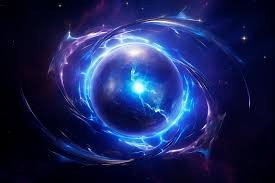
Figure 1. NASA’s Roman Telescope Could Reveal the Milky Way’s Hidden Neutron Stars
How Gravitational Microlensing Detects Invisible Cosmic Objects
Neutron stars pack more mass than the Sun into a sphere about the size of a city, making them some of the densest objects in the universe. Scientists study them to learn more about stellar evolution, supernova explosions, and how heavy elements are spread across the cosmos. These extreme objects also provide a rare opportunity to investigate matter under enormous pressures and densities. However, most neutron stars are extremely difficult to observe because they emit little visible light unless they appear as radio-emitting pulsars or strong X-ray sources. Figure 1. NASA’s Roman Telescope Could Reveal the Milky Way’s Hidden Neutron Stars Figure 1shows NASA’s Roman Telescope Could Reveal the Milky Way’s Hidden Neutron Stars.
The upcoming Nancy Grace Roman Space Telescope may detect these hidden objects indirectly through gravitational microlensing. When a neutron star passes in front of a distant star, its gravity bends and magnifies the background star’s light while slightly shifting its apparent position in the sky. Although many telescopes can observe the temporary brightening caused by microlensing, Roman is expected to measure both the brightness change and the tiny positional shift with remarkable precision, potentially revealing otherwise invisible neutron stars.
Because neutron stars are more massive than many other objects that produce microlensing events, they create a much stronger shift in a background star’s apparent position. This stronger astrometric signal could allow the upcoming Nancy Grace Roman Space Telescope not only to detect isolated neutron stars, but also to directly measure their masses — a task that is extremely challenging using brightness measurements alone.
Peter McGill explained that while photometry can reveal that an unseen object passed in front of a star, the tiny positional deflection caused by gravity is what reveals the object’s mass. By precisely measuring this subtle movement in the sky, scientists may be able to “weigh” otherwise invisible neutron stars for the first time.
The upcoming Nancy Grace Roman Space Telescope could help astronomers answer major unanswered questions about neutron stars and black holes, including whether a true mass gap exists between the two types of objects. Researchers also hope the telescope will reveal how fast neutron stars move through the Milky Way after being launched by powerful supernova explosions.
Scientists are particularly interested in the intense “kicks” neutron stars receive during these explosions, which can send them racing across the galaxy at hundreds of miles per second. To detect such objects, researchers plan to use Roman’s future Galactic Bulge Time Domain Survey, which will repeatedly monitor dense star fields containing millions of stars in search of gravitational microlensing events.
Peter McGill said researchers expect to begin identifying promising events soon after Roman starts collecting data. Even a modest number of confirmed neutron star discoveries could significantly improve scientific models of stellar explosions, compact objects, and matter under extreme conditions. McGill noted that astronomers still do not fully understand the mass distribution of neutron stars and black holes or where one category ends and the other begins, adding that Roman could represent a major breakthrough in solving these mysteries.
Only a few thousand neutron stars have been identified so far, mostly as pulsars, even though astronomers estimate the Milky Way may contain tens to hundreds of millions of them. Researchers have also only been able to directly measure neutron star masses in binary systems where two objects orbit each other [1]. According to Kaczmarek, current observations represent only a small and likely unrepresentative sample of the galaxy’s true neutron star population. Even a single confirmed isolated neutron star with a direct mass measurement could significantly advance the field.
The study suggests that NASA’s Nancy Grace Roman Space Telescope may open an unexpected new avenue of discovery. Although Roman’s microlensing survey was originally designed to search for exoplanets through brightness changes, its highly precise astrometric capabilities could also reveal hidden objects such as neutron stars and black holes through their gravitational effects.
Peter McGill said this capability was not part of the mission’s original goals, but Roman’s precision makes it exceptionally well suited for detecting otherwise invisible compact objects. If successful, the mission could produce the first large catalog of isolated neutron stars discovered solely through gravitational microlensing, while also uncovering hidden populations of rogue planets and black holes throughout the galaxy.
Reference:
- https://scitechdaily.com/nasas-roman-space-telescope-could-finally-find-the-milky-ways-missing-neutron-stars/
Cite this article:
Janani R (2026), NASA’s Roman Telescope May Uncover the Milky Way’s Missing Neutron Stars, AnaTechMaz, pp.865
Recent Post
-
NASA’s Psyche Spacecraft Prepares for an Extremely Close Flyby of Mars
NASA’s Psyche is preparing for a dramatic close flyby of Mars to....
-
James Webb Telescope Uncovers the Universe’s Hidden Cosmic Web in Remarkable Detail
Using the James Webb Space Telescope, astronomers have...
-
NASA’s Psyche Probe Set for an Extremely Close Flyby of Mars
NASA’s Psyche spacecraft is gearing up for a daring flyby of Mars to gain a crucial speed boost on its long...
-
Stubborn Mars Rock Clung to NASA’s Curiosity Rover
NASA’s Curiosity Rover accidentally pulled a rock loose from the Martian surface and then spent several...
-

Scientists Say the Brain Can Keep Improving at Any Age
A new long-term study suggests that brain health can continue improving throughout life through....
-
Strange Molecular Signal Could Be the Strongest Hint of Alien Life Yet
Scientists may have uncovered a hidden chemical pattern that could help identify alien life beyond....
-

Europe Introduces a Major Competitor to SpaceX’s Starship Program
A DLR analysis indicates that while Starship could shape the...
-
Researchers Discover a Surprisingly Practical Method to Mine Asteroids for Mars Missions
Asteroids drifting through space may one day supply the metals....
NASA’s Roman Telescope May Uncover the Milky Way’s Missing Neutron Stars
Astronomers believe the Milky Way should contain vast numbers of...
-
NASA’s Roman Space Telescope Moves Closer to Launch
NASA’s Nancy Grace Roman Space Telescope is moving closer to launch and could soon begin an...
-

Scientists Develop Revolutionary Supermaterial That Could Replace Plastic
Scientists have developed a new method for producing bacterial....
-
NASA’s Hubble Captures Unexpected Comet Breakup in Space
In a rare and fortunate observation, NASA’s Hubble Space...
-
Scientists Detect Possible Dark Matter Signature in a Black Hole Collision
Researchers have developed a new method that could use black...
-
NASA’s Hubble Unexpectedly Captured a Comet Breaking Apart
In a remarkable stroke of chance, NASA’s Hubble Space Telescope captured a comet breaking apart...